
What Is a Property Manager Role: A Clear Guide


A property manager is a professional contracted to oversee the day-to-day operations of rental properties on behalf of the owner, keeping them occupied, compliant, functional, and profitable. Understanding what is a property manager role means recognizing that this position spans tenant relations, maintenance coordination, financial administration, and legal compliance. The role is governed by a formal management agreement that defines delegated authority and fiduciary obligations. Whether you are an aspiring manager, a landlord evaluating your options, or a real estate student building foundational knowledge, the property manager’s scope is broader and more legally structured than most people initially expect.
What are the primary responsibilities of a property manager?

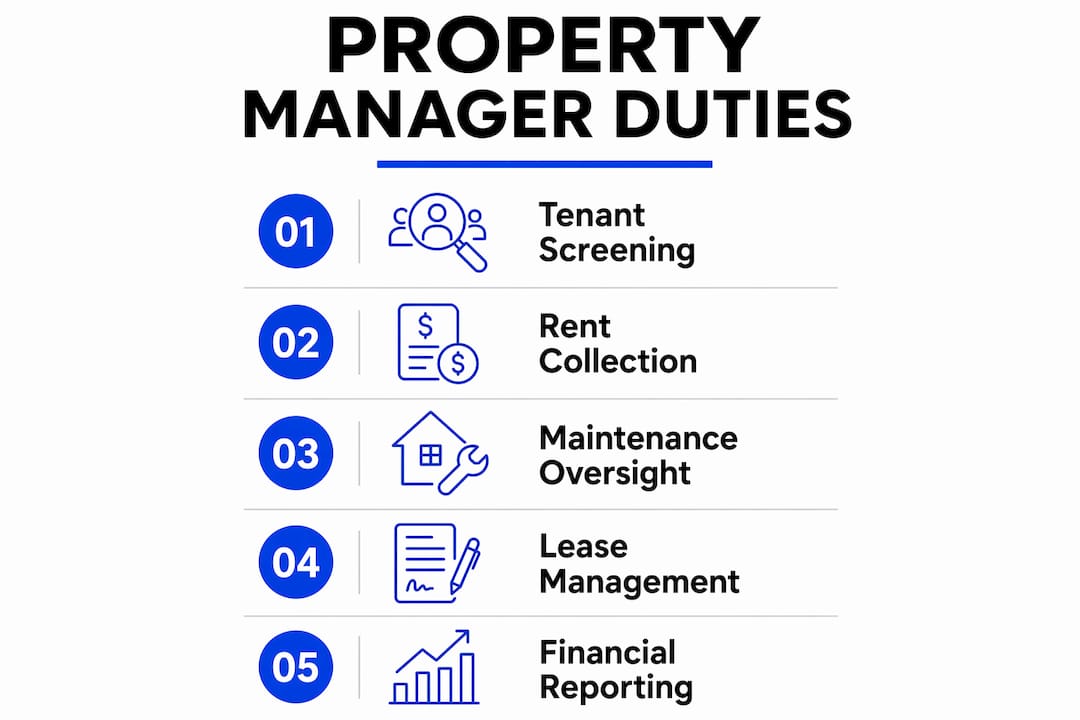
A property manager’s core responsibility areas include leasing and tenant interactions, maintenance coordination, and financial and regulatory oversight. These three pillars define the full operational scope of the role, regardless of portfolio size or property type. Each area demands consistent execution, not just competent one-time action.
Tenant management duties cover the full tenant lifecycle:
Screening applicants using credit checks, income verification, and rental history
Marketing vacancies across platforms like Zillow, Apartments.com, and MLS feeds
Executing leases, collecting security deposits, and enforcing lease terms
Handling maintenance requests, complaints, and lease renewals
Managing the eviction process in compliance with state-specific landlord-tenant law
Maintenance and physical asset duties require both reactive and proactive effort:
Coordinating repairs with licensed vendors and tracking work orders to completion
Scheduling preventive inspections, typically twice per year for occupied units
Managing emergency repairs, often requiring 24-hour response capability
Overseeing capital improvement projects when authorized by the owner
Financial and compliance duties protect the owner’s investment and legal standing:
Collecting rent, processing disbursements, and maintaining accurate ledgers
Preparing monthly owner reports with income, expenses, and variance analysis
Budgeting for operating expenses and capital reserves
Staying current on Fair Housing requirements and local landlord-tenant regulations
Pro Tip: When evaluating a property management company, ask for a sample owner report. The quality of that document tells you everything about their financial discipline and transparency.
How does the management agreement define a manager’s authority?
The property management agreement is a legal agency contract that activates the principal-agent relationship between owner and manager. Authority depends on the written scope of that contract, not the job title alone. Two managers at competing firms can carry identical titles but operate with dramatically different levels of delegated power.
Agreement types vary significantly in scope and operational authority:
Agreement Type | Scope of Authority | Best For |
Full-service management | Broad authority: leasing, maintenance, finances, compliance | Investors who want hands-off operations |
Leasing-only | Limited to tenant placement; no ongoing management | Owners who self-manage after occupancy |
Consulting/advisory | No agency authority; guidance only | Experienced landlords seeking a second opinion |
The most consequential clause in any management agreement is the spending authority threshold. Managers can approve routine maintenance below a set dollar amount without owner approval. Typical thresholds range from $200 to $500, depending on the agreement. A low threshold means more owner contacts per month and slower repair response times. A higher threshold gives the manager more operational flexibility but requires greater trust in their judgment.
The distinction between general agency and special agency also matters. A general agent holds broad authority to act across all property operations. A special agent holds limited authority for specific tasks only. Both carry fiduciary duties, but their operational reach differs considerably.
Pro Tip: Before signing a management agreement, negotiate the spending threshold to match your risk tolerance. A $300 cap on a 20-unit building creates unnecessary friction. A $750 cap on a single-family home may feel too loose. Calibrate it to your portfolio.
What fiduciary duties must property managers uphold?
Fiduciary duties of loyalty, care, and disclosure bind property managers to act in the owner’s best interest at all times. These obligations are not informal expectations. They are legal requirements tied to the principal-agent framework and enforceable through licensing boards and civil courts.
Fiduciary duty begins at contract execution and governs every decision the manager makes on the owner’s behalf. Loyalty means the manager cannot prioritize their own financial interests or those of a vendor over the owner’s. Care means decisions must be made with professional competence and reasonable diligence. Disclosure means the manager must inform the owner of any material facts affecting the property, including conflicts of interest, known defects, or tenant disputes.
“A property manager who steers repair work to a vendor they have a financial relationship with, without disclosing that relationship to the owner, has breached their fiduciary duty. That breach can result in license revocation, civil liability, and termination of the management agreement.”
Real-world breaches often involve vendor kickbacks, undisclosed markups on maintenance invoices, or failure to report tenant damage promptly. The legal and licensing consequences of a breach are serious. In most states, property managers must hold a real estate license, and a fiduciary breach can trigger disciplinary action from the state real estate commission. For investors, this is why vetting a manager’s professional history and references is not optional. It is a due diligence requirement.
How do property managers balance tenant relations and physical property management?
The dual focus on tenant satisfaction and physical asset preservation is where most property managers either build or lose their reputation. These two areas are deeply connected. A well-maintained property attracts better tenants. Responsive tenant communication reduces turnover. Both outcomes directly protect your cash flow and long-term asset value.
Here is how effective managers handle this balance in practice:
Respond to tenant inquiries within 24 hours. Owners hire property managers partly to serve as a local point of contact, reducing tenant frustration caused by slow landlord responses. A 24-hour response standard is the baseline expectation in professional management.
Conduct move-in and move-out inspections with documentation. Photo and video documentation at both ends of a tenancy protects the owner in security deposit disputes and creates a maintenance baseline for the unit.
Build a vetted vendor network before you need it. Emergency plumbing calls at 11 PM are not the time to find a plumber. Effective managers maintain pre-approved relationships with licensed plumbers, electricians, HVAC technicians, and general contractors. Resources like apartment maintenance coordination outline the systems that keep these workflows organized.
Schedule preventive inspections proactively. Catching a slow roof leak during a routine inspection costs far less than addressing water damage after a tenant complaint. Preventive maintenance is one of the highest-ROI activities a manager performs.
Enforce lease terms consistently and without exception. Selective enforcement creates legal exposure under Fair Housing law and erodes tenant respect for the rules. Consistency protects both the owner and the manager.
Local expertise amplifies all of these efforts. A manager who knows the neighborhood, the local court system for evictions, and the city’s code enforcement priorities operates with a meaningful advantage over one managing remotely without that context.
What practical skills drive success in property management?
Success in property management depends on consistent processes rather than one-time transactions. The leasing call is the beginning, not the goal. What happens across the full tenancy determines whether the property performs.
The skills and systems that separate high-performing managers from average ones include:
Tenant screening discipline. Using a written, documented screening system with consistent criteria for every applicant eliminates subjective decisions and reduces Fair Housing risk. Criteria should include minimum income ratios, credit score floors, and rental history requirements applied uniformly.
Communication clarity. Managers who document every owner and tenant interaction in writing reduce disputes and create an audit trail. Tools like AppFolio, Buildium, and Rentec Direct include built-in communication logs for this purpose.
Maintenance workflow management. A work order system that tracks request date, vendor assigned, completion date, and cost gives owners visibility and managers accountability. Without it, deferred maintenance accumulates silently.
Financial reporting accuracy. Monthly owner reports should reconcile every dollar collected and disbursed. Owners who receive clean, timely reports trust their managers more and require less hand-holding.
Technology adoption. Platforms like AppFolio and Buildium automate rent collection, maintenance requests, and owner disbursements. Managers who rely on spreadsheets and email chains introduce unnecessary error and delay.
Understanding property management services in full before entering the field gives aspiring managers a realistic picture of the operational load. The job is rewarding, but it rewards systems thinkers more than relationship-only managers.
Key takeaways
A property manager’s effectiveness is determined by the clarity of their management agreement, the strength of their fiduciary discipline, and the consistency of their operational processes across tenant, maintenance, and financial functions.
Point | Details |
Core role definition | A property manager oversees operations, tenant relations, maintenance, finances, and compliance on the owner’s behalf. |
Management agreement authority | The written contract defines spending limits and agency scope; authority follows the contract, not the job title. |
Fiduciary obligations | Duties of loyalty, care, and disclosure are legally binding and enforceable through licensing boards and civil courts. |
Tenant and asset balance | Responsive communication and preventive maintenance together protect cash flow and long-term asset value. |
Skills that matter most | Consistent screening, documented communication, work order tracking, and financial reporting accuracy drive performance. |
The role is bigger than most people realize
After working alongside property managers across residential and commercial portfolios, the pattern I see most often is this: landlords hire a manager expecting leasing help and are surprised to discover the role extends into compliance monitoring, vendor oversight, financial reporting, and legal risk management. That gap in expectations causes friction on both sides.
The management agreement is the document that closes that gap. When it is written with precision, including clear spending thresholds, defined reporting schedules, and explicit scope of authority, the relationship between owner and manager runs with far less conflict. When it is vague, everyone fills in the blanks differently, and the results are predictable.
Local knowledge is the underrated differentiator. A manager who knows which local contractors deliver quality work at fair prices, which neighborhoods have specific code enforcement patterns, and how the local court handles eviction timelines operates at a level that no remote management platform can replicate. For investors building a portfolio in a specific market, that local expertise compounds in value over time.
If you are considering property management as a career, treat the management agreement as your operating manual, not just a contract. Understand every clause before you sign one on behalf of an owner. And if you are a landlord evaluating managers, read the management agreement terms before you evaluate the personality. The contract tells you more than the pitch.
— Main
How 2ndstreetpropertymanagement supports your investment
2ndstreetpropertymanagement was built by investors who understand what it takes to protect and grow a rental portfolio. The team handles tenant screening, maintenance coordination, compliance monitoring, and owner reporting with the transparency and discipline that serious investors require.

Every management agreement is written with clear spending thresholds, defined reporting schedules, and explicit scope so you always know what your manager is authorized to do and why. Whether you own a single-family rental or a growing multi-unit portfolio, 2ndstreetpropertymanagement delivers the operational consistency your investment deserves. Connect with the team at 2ndstreetpropertymanagement to discuss a management approach built around your goals.
FAQ
What is a property manager’s main job?
A property manager oversees the day-to-day operations of rental properties on behalf of the owner, covering tenant relations, maintenance, financial administration, and legal compliance. The goal is to keep the property occupied, functional, and profitable.
How does a property management agreement affect the manager’s duties?
The management agreement is a legal contract that defines the manager’s scope of authority, spending limits, and specific responsibilities. A manager’s actual authority follows the written contract, not their job title.
What are fiduciary duties in property management?
Fiduciary duties require property managers to act with loyalty, care, and full disclosure toward the property owner at all times. Breaching these duties can result in license revocation and civil liability.
What skills does a property manager need?
Effective property managers need strong tenant screening discipline, clear written communication habits, organized maintenance workflows, and accurate financial reporting practices. Technology platforms like AppFolio and Buildium support all of these functions.
How do I become a property manager?
Most states require a real estate license to manage properties for others. Beyond licensing, aspiring managers should build knowledge of landlord-tenant law, Fair Housing regulations, and property management agreement structures before taking on their first portfolio.
Recommended
Comments