
What Is a HELOC for Rentals? A Guide for Investors
- Rey Rey Rodriguez

- 11 minutes ago
- 13 min read

A HELOC for rentals is a revolving line of credit secured by the equity in a rental property, letting you borrow, repay, and borrow again against the home’s value rather than taking one lump-sum loan. It’s a real option, but it’s a narrower one than the HELOC on your primary residence. A HELOC on an investment property(https://www.bankrate.com/home-equity/heloc-on-investment-property/) is less common and comes with stricter terms, because lenders view non-owner-occupied collateral as riskier than a house you live in.
You’ll find fewer lenders willing to offer this product, and the ones who do will ask for more equity, better credit, and documented rental income before they approve you. Investors typically use these lines for three things:
Funding renovations that raise rent or resale value
Bridging the gap between selling one property and closing on another
Building a reserve fund for vacancies or emergency repairs
The tradeoff is real: rates float with the market, and the property backing the line sits at risk if cash flow tightens. Before you draw a dollar, you need to know exactly how the mechanics differ from a standard HELOC and whether your rental’s numbers can absorb a rate increase.
Key Takeaways
A rental HELOC gives investors flexible access to equity for renovations and reserves, but only pays off when paired with documented income, real reserves, and a stress-tested exit plan.
Point | Details |
Stricter underwriting applies | Investment-property HELOCs require higher credit scores, lower CLTV limits, and larger reserves than primary-residence lines. |
Rate premium is common | Expect roughly 0.5% to 2.0% higher pricing than a primary-residence HELOC, per Finder’s lender data. |
Document rental income thoroughly | Lenders want Schedule E, signed leases, and rent deposits showing at least two years of stable income. |
Stress-test before drawing | Model a 2 to 4 point rate increase plus one to three months of vacancy before committing to a draw. |
Execution risk needs management | 2ndstreetpropertymanagement provides vendor oversight and timeline controls to keep HELOC-funded renovations on budget. |
Table of Contents
How a Rental HELOC Works Compared With a Primary-Residence HELOC
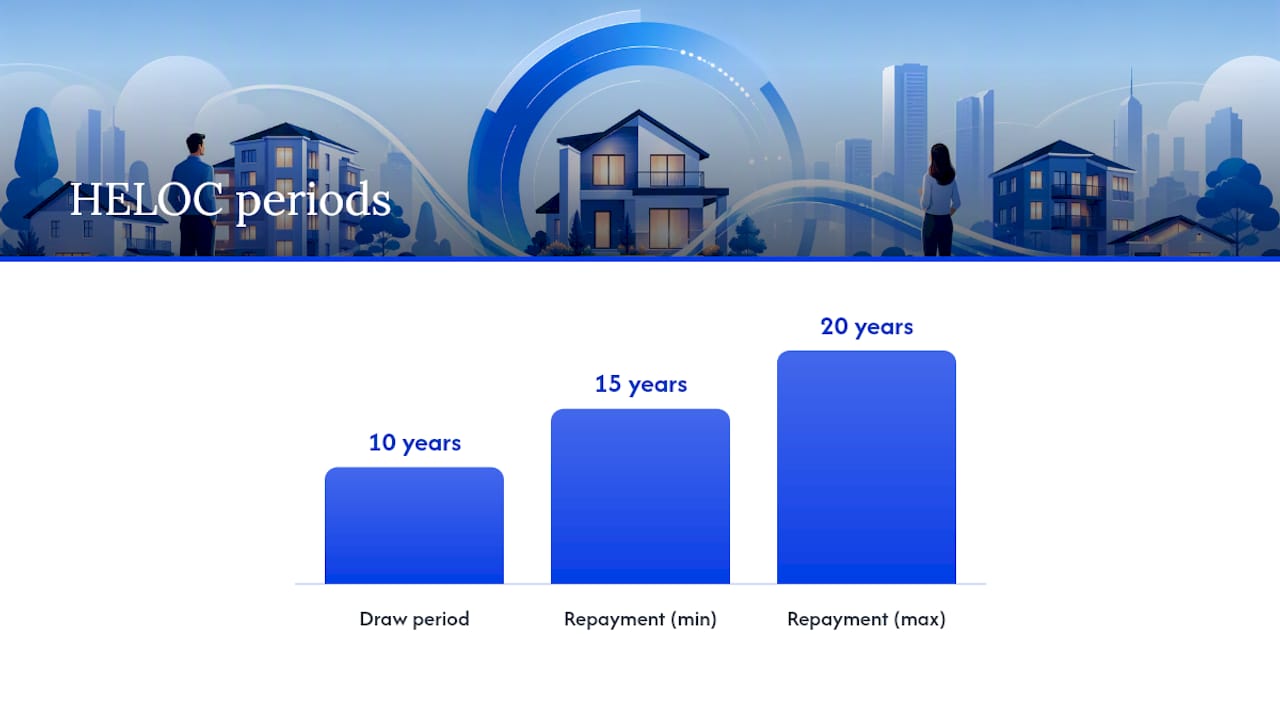
A rental HELOC runs on the same basic structure as any home equity line: a draw period, usually 10 years, where you borrow as needed and pay interest only on what you use, followed by a repayment period, often 15 to 20 years, where the balance amortizes and the payment jumps. What changes for an investment property is how much equity you can tap and what it costs you to tap it.
Primary-residence HELOCs frequently allow combined loan-to-value (CLTV) up to 85% or 90%. Investment-property HELOCs are more conservative, and lenders often cap CLTV lower to offset the added risk of a tenant-occupied asset. Finder’s lender research shows investment HELOCs commonly carry lower maximum CLTVs, stricter appraisal requirements, and may have a rate premium over what a homeowner would pay on the same line.
Here’s how the pricing typically breaks down:
Base rate: Most HELOCs price off the prime rate, then add a margin set by the lender.
Investor premium: Add another 0.5 to 2.0 percentage points because the property isn’t your home.
Draw-period payment: Interest-only, calculated on your outstanding balance, not the full credit limit.
Repayment-period payment: Principal and interest, recalculated once the draw period ends.
During the draw period, your interest-only payment is roughly $300 a month. If the property’s rent doesn’t move and prime rate rises two points, that same balance now costs closer to $367 a month, a swing that can erase a thin margin fast once repayment kicks in and principal gets added to the bill.
A rental HELOC also sits as a second mortgage behind your primary loan on that property. If the rental goes into foreclosure, your first mortgage lender gets paid before the HELOC lender sees a dime, which is exactly why HELOC lenders underwrite investment properties so carefully in the first place.
What Do Lenders Require for a Rental Property HELOC?
Getting approved for a HELOC on a rental property means clearing a higher bar than you would on your own home. LendEDU’s lender analysis confirms lenders typically require stronger credit, more equity, documented rental income, and larger cash reserves for investment-property lines than for primary-residence HELOCs.
Expect underwriters to check these boxes before they’ll cut you a credit line:
Credit score: Many lenders want 700 or higher for a rental HELOC, well above the minimums often accepted on a primary home.
Equity and CLTV: You’ll need substantial equity remaining after the line is factored in, since investment lines rarely stretch as high as owner-occupied ones.
Cash reserves: Underwriting commonly asks for six to twelve months of reserves covering the mortgage, taxes, and insurance on the subject property, sometimes across your whole portfolio.
Rental income verification: Lenders want to see the property paying for itself, not just look good on paper.
Debt-to-income calculation: Your DTI gets calculated using documented rent, not projected or estimated rent.
On the appraisal side, don’t be surprised if the lender orders an in-person appraisal rather than an automated valuation, and some lenders order a second one if the first comes back close to a lending threshold. Have your paperwork ready before you apply: two years of tax returns, Schedule E filings for the property, current signed leases, your existing mortgage statement, proof of insurance, and recent bank statements showing rent deposits. Lenders often want to see tenant rent rolls alongside those Schedule E filings specifically because it shows a pattern, not a single good month.
Pro Tip: Pull your Schedule E and rent roll together before you call a lender, not after. Underwriters move faster when the income story is already documented, and a clean paper trail can shave real time off your approval.
What Do Investors Actually Use a Rental HELOC For?
The most common use is funding a renovation that raises rent or resale value, whether that’s a kitchen update between tenants or a full unit conversion. The math only works if the rent increase or resale bump outpaces the interest cost over a realistic timeline, so run the numbers before you swing a hammer.
Beyond renovations, investors lean on a rental HELOC in a handful of recurring ways:
Bridge financing: Cover a down payment on a new acquisition while you wait for another property to sell or a refinance to close.
Turnover repairs: Handle the gap between tenants when a unit needs paint, flooring, or appliance replacement before it can rent again.
Standing reserve line: Keep the line open and mostly undrawn as a backstop against vacancy or an unexpected roof or HVAC failure.
Portfolio down payments: Pull equity from one stabilized rental to fund the down payment on your next purchase.
A HELOC fits best when your need is short-term, your equity is solid, and you have a clear plan to pay the balance down. It’s the wrong tool when you need a large, fixed amount for a long-term hold. In that case, a fixed-rate loan protects you from the exact rate volatility a HELOC exposes you to. The line works as a flexible tool, not a permanent financing solution.
When Can You Deduct HELOC Interest on a Rental Property?
The IRS applies interest tracing rules to HELOC debt, meaning deductibility depends on what you did with the money, not what property secures the loan. If you draw funds and spend them on rental-related expenses, such as a renovation, a repair, or even a down payment on another rental, that interest is generally deductible as a rental expense on Schedule E. If you draw the same line and use it to pay off a credit card or fund a vacation, that portion of the interest isn’t deductible as a rental expense, even though the same HELOC secures the same property.
That distinction makes documentation non-negotiable. Keep records that tie every draw to its purpose:
Bank transfers showing funds moving directly from the HELOC to a contractor or supplier
Signed contractor invoices and receipts matching the dollar amounts drawn
A simple ledger noting the date, amount, and purpose of each draw
Separate accounting if you ever use the line for a mix of rental and personal expenses
Mixed-use draws are where investors get into trouble. If you draw $20,000 and spend $15,000 on a rental repair but $5,000 on something personal, you need to allocate the interest proportionally rather than deduct the whole thing. Well-documented rental income and expense records also help your case if the IRS ever asks questions, and they double as the same paperwork lenders want to see during underwriting. A clear breakdown of cash flow versus taxable income helps you see how a deductible expense actually affects your bottom line differently than it affects your cash position.
The pitfall that trips up the most investors is treating a HELOC like a blank check and losing track of which dollar went where. Once the paper trail gets muddy, an accountant has a hard time defending the deduction, and a hard time is exactly what you don’t want in an audit.
How Do You Stress-Test a HELOC Before You Draw on It?
Before you pull a dollar from a rental HELOC, run the numbers as if rates were already against you. Business Insider’s guidance on HELOC financing recommends stress-testing cash flow for rate spikes precisely because these lines are variable-rate products that can erode profitability fast when prime rate climbs.
Run these steps on every property before you draw:
Add 2 to 4 percentage points to your current HELOC rate and recalculate the monthly payment at that higher rate.
Subtract one to three months of rent to simulate a realistic vacancy stretch.
Check whether the property still covers its mortgage, HELOC payment, taxes, and insurance under both stresses combined.
Size your reserves to cover several months of full payments, not just the HELOC piece, so a rough patch doesn’t force a fire sale.
If the property fails that test, either the HELOC amount is too large for that asset or the rent isn’t strong enough to support the borrowing yet.
Your exit plan matters as much as the stress test. Know before you draw whether you intend to sell the property, refinance the HELOC into a fixed-rate second mortgage, or pay it down aggressively from cash flow. Defining that exit before drawing funds keeps a flexible tool from turning into an open-ended liability.

Watch for these red flags before you commit: equity that’s thinner than it looks once you factor in closing costs, a rental market where comparable units are sitting vacant for weeks, or income that swings month to month because you’ve had turnover trouble. Any one of those should slow you down.
Pro Tip: Run your stress test against your worst month of the past two years, not your average month. If the property survives that scenario with the HELOC payment added in, you’ve built in a real cushion instead of a hopeful one.
What Documents Do You Need to Apply for a Rental HELOC?
Gather your paperwork before you call a single lender. Having it organized upfront signals to underwriters that you run your rentals like a business, and it genuinely speeds up the process.
Build this folder before you apply:
Two years of personal tax returns, including Schedule E for the rental property in question
Signed, current leases for every unit on the property
Your existing first-mortgage statement showing balance and payment history
Homeowner’s or landlord insurance declarations page
Two to three months of bank statements showing rent deposits
A reserve statement showing liquid assets available after closing
When you get a lender on the phone, ask direct questions:
What’s your maximum CLTV for an investment-property HELOC on this type of property?
What margin do you add over the index rate, and is there a rate floor?
Are there draw fees, an annual fee, or a minimum draw requirement?
How many months of reserves do you require after closing?
Regional banks, credit unions, and lenders who specialize in investor lending are often better options here than national consumer banks. Fewer lenders offer HELOCs on non-owner-occupied properties at all, and smaller local lenders sometimes price the investor premium more competitively than the biggest national names, which may decline investment-property applications outright. If you get denied, the fix is usually one of three things: build up reserves, pay down debt to lower your CLTV, or get better documentation on rental income before you reapply.
What Are the Alternatives to a HELOC for Rental Property Financing?
A HELOC isn’t the only way to pull equity out of a rental, and it isn’t always the best one. Match the tool to what you actually need the money for.
Cash-out refinance: Replaces your current mortgage with a new, larger fixed-rate loan and hands you the difference in cash. It beats a HELOC when you need a large, fixed amount and want rate certainty for years, not a revolving line you’ll pay down and redraw. A detailed comparison of refinancing versus HELOC strategies walks through when each makes more sense for a given property.
Portfolio loans: Multi-property investors sometimes qualify for a single loan underwritten against several properties at once, which can simplify financing as a portfolio grows past three or four units.
Primary-residence HELOC used for investing: Pulling equity from your own home to fund a rental purchase is common, but it puts your house at risk if the investment underperforms, and the same interest tracing rules apply to how you spend the money.
Hard money and bridge loans: These close fast and ask fewer questions about documentation, but the tradeoff is a steep interest rate and short term, best reserved for a flip or a purchase you’ll refinance out of quickly.
How Property Management Reduces the Risk of a HELOC-Funded Project
Borrowing against a rental only pays off if the money gets deployed well, and that’s where execution risk creeps in. A renovation that runs over budget or drags past its timeline eats into the exact cash flow you need to cover the HELOC payment.
2ndstreetpropertymanagement runs every HELOC-funded renovation through the same operational discipline we’d apply to any capital project on a managed property:
Budget oversight that flags cost overruns before they compound
Vendor vetting so the contractor doing the work is actually qualified and insured
Timeline controls that keep a renovation from stretching into extra months of lost rent
Post-renovation rent optimization to make sure the improvement actually moves the number you expected
An investor who draws $50,000 for a two-unit renovation and loses six weeks to a scheduling delay isn’t just paying interest on unused capital. They’re paying it while collecting zero rent from the unit under construction, and that gap is exactly where a HELOC-funded project can quietly turn unprofitable.
Good rental income reporting practices also matter here, since the same documentation that gets you approved for the HELOC is what proves the renovation paid off once it’s done.
A Lesson From Watching HELOC-Funded Renovations Go Sideways
The investors who get burned by a rental HELOC almost never get burned by the interest rate itself. They get burned by underestimating the renovation timeline and running out of runway before the project produces the extra rent they were counting on.
The honest caution here: a HELOC feels like flexible money, and that flexibility can tempt you into starting a project before you’ve nailed down contractor bids or a realistic schedule. Treat the draw period like a countdown, not an open-ended resource.
If your situation involves multiple properties, a first HELOC application, or a renovation with real complexity, it’s worth talking through the numbers with someone who manages these projects for a living before you sign anything.
How 2nd Street Property Management Supports HELOC-Funded Investors
2nd Street Property Management is the alternative to going it alone once you’ve drawn on a rental HELOC. Instead of managing contractors, chasing rent, and tracking a renovation budget yourself while the interest clock runs, you hand the execution side to a team built by investors, for investors.
We coordinate vendor oversight so the work on a HELOC-funded renovation actually finishes on budget and on schedule, and we handle rent optimization once the project wraps so the extra equity you borrowed translates into extra income, not just extra debt. We also help owners stress-test a project’s timeline against realistic vacancy windows before they draw a dollar, which is the same discipline that keeps a HELOC-funded upgrade from turning into a cash-flow problem. For owners weighing hidden costs on top of a renovation budget, our breakdown of rental property expenses that catch investors off guard is worth a read before you finalize your draw amount. If you’re planning a HELOC-funded project on a rental you own in our service area, reach out to 2nd Street Property Management to talk through management support before construction starts.
Where to Verify Lenders and Learn More
Confirm any lender’s licensing on NMLS Consumer Access before submitting an application. It’s the national registry that shows whether a mortgage company or loan officer is actually licensed to do business in your state.
For deeper reading on the mechanics and underwriting differences covered here:
Bankrate’s overview of investment-property HELOCs covers the basic structure and lender behavior.
LendEDU’s lender research details documentation and income-verification expectations.
Finder’s rate and CLTV analysis breaks down the pricing premium investors should expect.
Business Insider’s guidance on using a HELOC for investment properties covers stress-testing and exit planning in more depth.
Frequently Asked Questions
Can I use a HELOC on a rental property I already own? Yes, as long as you have enough equity and meet the lender’s underwriting requirements, which typically include a higher credit score and documented rental income than you’d need on your own home.
How much equity do I need for a rental property HELOC? Lenders generally cap CLTV lower on investment properties than on primary residences, so you’ll need more remaining equity in the property than the standard 80% to 85% cushion homeowners often see.
Is HELOC interest on a rental property tax deductible? It’s deductible as a rental expense on Schedule E when the borrowed funds are used for rental-related purposes, such as repairs or improvements, based on IRS tracing rules that follow how the money was actually spent.
What credit score do I need for a HELOC on an investment property? Many lenders look for a score of 700 or higher, noticeably above what’s often accepted for a primary-residence HELOC application.
Is a HELOC or a cash-out refinance better for a rental property? A HELOC suits shorter-term, flexible needs like renovations or reserves, while a cash-out refinance fits better when you need a large, fixed amount and want to lock in a rate for the long term.
This article is general information, not a substitute for advice from a qualified financial advisor. Consult a qualified financial professional about your own circumstances before acting on anything here.
Sources
Recommended
Comments