
Loss of Rent Insurance: Protecting Landlord Cash Flow
- Rey Rey Rodriguez

- 3 days ago
- 11 min read
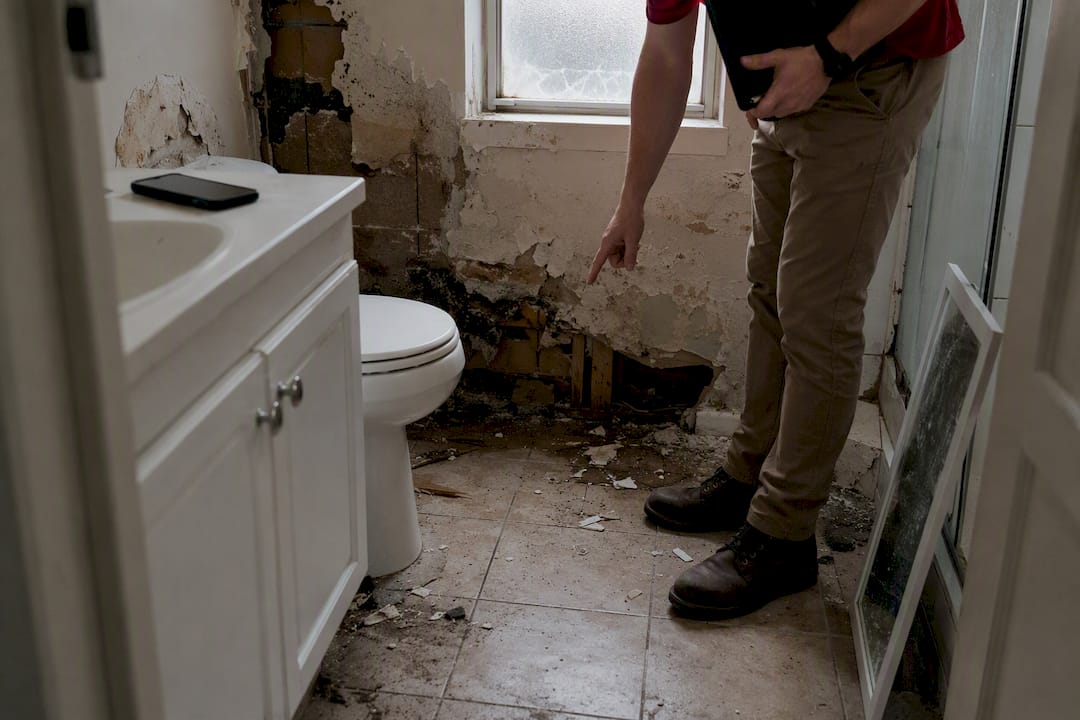
Loss of rent insurance replaces the rental income you lose when a covered physical loss, like a fire or burst pipe, makes your unit uninhabitable while repairs are underway. It doesn’t cover an empty unit between tenants, and it won’t bail you out when a tenant simply stops paying. The Insurance Information Institute and the NAIC both stress that landlords need to check their own policy’s fine print rather than assume this protection is automatic.
Here’s what determines whether a claim gets paid:
When it applies: A covered peril (fire, wind, burst pipe, vandalism) causes physical damage that forces tenants out or makes the space legally uninhabitable.
When it doesn’t: Ordinary vacancy, tenant nonpayment on a habitable unit, normal wear and tear, or excluded perils like flood unless you’ve added an endorsement.
What limits you. Most policies cap payouts at a limited number of months of gross rent, so a repair job that runs long can outlast your coverage. Property managers like 2ndstreetpropertymanagement see this gap trip up landlords more than almost any other policy detail.
Key Takeaways
Loss of rent insurance replaces rental income only when a covered physical loss makes a unit uninhabitable, and most landlords lose money by leaving outdated limits unreviewed.
Point | Details |
Coverage trigger | Payouts require a covered peril, like fire or a burst pipe, that makes the unit uninhabitable. |
Common exclusions | Tenant nonpayment, ordinary vacancy, and flood without an endorsement are not covered events. |
Sizing your limit | Base limits on current gross rent and a realistic repair timeline, reviewed every year. |
Claim documentation | Bring your lease, rent roll, bank statements, and contractor estimates to the adjuster meeting. |
Management advantage | 2ndstreetpropertymanagement pairs fast vendor coordination with clean rent-roll records to shorten claim timelines. |
Table of Contents
What Is Loss of Rent Insurance and How Does the Terminology Work?
What Policy Language Should You Double-Check With Your Agent?
How Professional Management Reduces Your Loss of Rent Exposure
Why I Push Loss of Rent Coverage Harder Than Almost Any Other Line Item
How 2ndstreetpropertymanagement Helps You Avoid a Loss of Rent Gap
What Is Loss of Rent Insurance and How Does the Terminology Work?
Loss of rent insurance goes by several names depending on who’s writing the policy. You’ll see it called loss of rents, rental income coverage, or fair rental value on a residential landlord policy. On commercial forms, insurers sometimes fold it into “business income” coverage, which confuses landlords who assume that language applies to them the same way it applies to a retail tenant’s lost sales.
A handful of terms show up in nearly every policy and every claims conversation:
Indemnity period: the stretch of time the insurer will pay, usually expressed in months.
Fair rental value: the market rent the unit would have earned had the loss not happened, used as the basis for your payout.
Waiting period (or deductible): a short delay, often 3 to 5 days, before payments start.
Vacancy clause: language that limits or voids coverage if the property sat empty before the loss.
Endorsement: an add-on that expands or modifies your base policy, like extended indemnity or flood protection.
Limits: either a time cap (months of coverage) or a dollar cap (aggregate payout), and sometimes both.
This coverage typically lives inside a standard landlord policy rather than as a stand-alone product. That’s different from rent guarantee insurance, which protects against tenant default rather than physical damage, and different again from business interruption coverage, which is built for a commercial tenant’s operating losses, not your rent roll.
What Events Actually Trigger a Loss of Rent Claim?
Coverage kicks in when a covered peril causes physical damage severe enough that tenants can’t safely occupy the unit. Fire is the classic example. So is a burst pipe that floods a kitchen and leaves drywall soaked for weeks, or a windstorm that rips off part of the roof and knocks out utilities. The common thread isn’t the type of disaster. It’s whether the unit becomes legally or practically uninhabitable as a direct result of that physical damage.
Picture a kitchen fire that displaces a family for six weeks while you rebuild cabinets and replace flooring. Or a second-floor pipe failure that soaks the unit below, forcing both tenants out during remediation. Storm damage that takes down power lines and leaves a property without electricity for an extended stretch qualifies too, even if the structure itself looks mostly intact.
The indemnity period generally starts on the date of the covered loss, not the date you file the claim, and it runs until the unit is restored to livable condition or your policy limit is reached, whichever comes first. Adjusters typically rely on contractor estimates and permit timelines to pin down that end date, which is why documentation speed matters from day one.
Pro Tip: Photograph the damage and the surrounding area immediately, even before you call your insurer. Timestamped photos help the adjuster establish the loss date and can shorten disputes over when the indemnity clock actually started.
What Does Loss of Rent Insurance Not Cover?
Landlords misread this coverage more often than almost any other line item on a policy, largely because the exclusions sound similar to situations that feel like they should qualify. A tenant who stops paying rent while the unit remains fully habitable isn’t a loss of rent claim. That’s a collections problem, and it falls outside this coverage entirely. The same goes for a unit sitting empty between leases. Ordinary vacancy is a normal cost of doing business, not an insurable event.
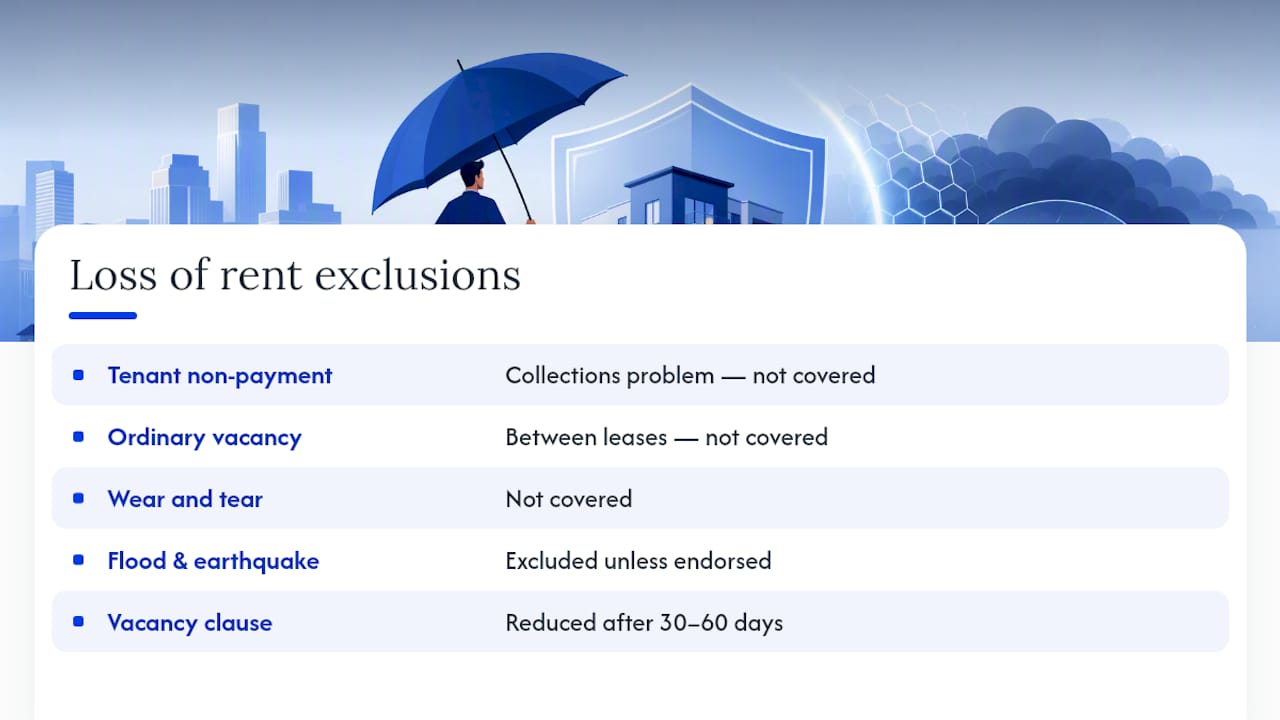
Wear and tear won’t trigger a payout either, and neither will flood or earthquake damage unless you’ve specifically endorsed your policy for those perils, since most standard property forms exclude them outright.
Watch for the vacancy clause specifically. Many policies reduce or suspend coverage if the property was already unoccupied for 30 to 60 days before the loss occurred, which matters if you’re mid-renovation or between tenants when disaster strikes. And don’t confuse a tenant’s own business interruption losses (their lost sales, their lost inventory) with your loss of rents. Those are two entirely separate coverages, often on two entirely separate policies.
How Are Loss of Rent Payments Calculated?
Insurers measure your loss against the indemnity period, which is either a set number of months or a dollar cap, sometimes both at once. Understanding which structure your policy uses matters more than most landlords realize, because a time cap and a dollar cap behave very differently when repairs run long.
The basic math works like this:
Start with your gross monthly rent, based on fair rental value at the time of loss.
Multiply by the number of months repairs are expected to take, up to your policy’s indemnity period.
Subtract any waiting period, typically the first 3 to 5 days after the loss.
Cap the total against your policy’s monthly or aggregate dollar limit, whichever applies.
Say you collect $2,200 a month in rent and a kitchen fire forces a four month rebuild. A policy with a 12 month indemnity period and no dollar cap would pay close to $8,800, minus the waiting period adjustment. But if that same policy carries a $6,000 aggregate cap, you’d hit the ceiling well before the repair work finishes, and you’d absorb the difference yourself. Vantage Point Risk’s analysis of loss-of-rents coverage points out that this gap between time caps and dollar caps is exactly where underinsured landlords get caught.
Insurers generally release funds in installments as repairs progress rather than one lump sum, and they’ll want proof of your prior rent collections (bank statements, lease copies, or a rent roll) before cutting the first check. GSA’s rent pricing and payments guidance offers a useful framework for how fair rental value gets documented and justified when a claim is under review.
How Much Loss of Rent Coverage Do You Actually Need?
Most landlords set this limit once, when they first bind the policy, and never touch it again. That’s a mistake, especially in a market where rents climb every year and your coverage doesn’t automatically climb with them.
Here’s a repeatable way to size it correctly:
Start with your current gross monthly rent across every unit on the policy, not what you charged when you first bought the property.
Estimate a realistic worst-case repair timeline for your specific property type. A single-family fire rebuild might run 4 to 6 months; a multi-unit building with permit delays and contractor backlogs can stretch past a year.
Add a margin for delays. Permitting offices and contractor schedules rarely move as fast as anyone hopes, and industry guidance recommends padding your estimate rather than betting on the best case.
Convert that timeline into months of coverage, then confirm your policy’s dollar cap can actually support that many months at your current rent level.
If you collect $2,500 a month and want a full year of protection, you need a policy that supports at least $30,000 in aggregate loss of rents coverage, not the $18,000 limit you might have locked in three rent increases ago.
A few rules of thumb worth following:
Aim for a full 12 month indemnity period if your property type has any history of long permit timelines.
Review your limit every year at lease renewal season, right alongside your rent roll.
Treat a rent increase as a trigger to revisit your coverage, not just your income projections.
Pro Tip: Set a calendar reminder tied to your annual insurance renewal date specifically to recheck your loss of rent limit against your current rent roll. This single habit closes the most common coverage gap landlords report.
How Do You File a Loss of Rent Claim?
Speed and documentation decide most claims. The moment you discover a covered loss, take these steps in order:
Secure the property and take reasonable steps to prevent further damage, such as shutting off water or boarding a broken window.
Contact your insurer immediately to open the claim, even before repairs are scheduled.
Photograph everything, including the damage, the surrounding areas, and any tenant belongings affected.
Notify your tenant in writing about the displacement and expected timeline, since insurers often want proof that the unit was actually vacated.
Gather your documentation packet before the adjuster arrives.
That packet should include your lease agreement, a current rent roll, bank statements showing past rent collections, contractor repair estimates, and any invoices already paid. If a tenant provides a written statement confirming the displacement date, include that too, since it’s one of the practical documentation steps NARPM’s property-management standards recommend for claims of this kind.
When you meet the adjuster, walk through your rent roll line by line and explain your repair timeline with contractor documentation in hand, not just a verbal estimate. Watch closely for how the insurer’s scope of repair compares to your contractor’s scope. A narrower insurer scope often means a shorter indemnity period than you’re expecting. Most insurers issue interim payments as repairs progress and finalize the claim once the unit is re-occupied or the policy limit is reached, a process that commonly takes several weeks from first adjuster visit to first check.
What Policy Language Should You Double-Check With Your Agent?
Read your loss of rents section the way you’d read a lease clause, because the specific wording decides whether a claim pays in full or gets pro-rated down to almost nothing. Four clauses deserve a close look before you ever need to file:
Vacancy clause: how many days of vacancy before or during the loss reduces or voids coverage.
Extended period of indemnity: whether coverage continues past physical repair completion to account for the time it realistically takes to re-lease a unit.
Ordinance or law exclusions: whether code-upgrade requirements during rebuild extend your repair timeline beyond what your indemnity period covers.
Time cap vs. dollar cap language: confirm which one governs, since this exact distinction determines how claims get paid or pro-rated.
Endorsements worth asking about include a vacancy permit (protects you during planned renovation vacancies), extended indemnity, agreed value for rental income, and additional peril coverage for flood or earthquake if your property sits in an exposed area. When you call your agent, ask directly: “Does my policy cover loss of rents automatically, or is it an add on? What’s my indemnity period in months, and is my limit a dollar cap, a time cap, or both?” Hippo’s guidance on landlord loss of rent makes the same point: some carriers bundle this coverage in by default, others sell it separately, and you won’t know which applies to you until you ask.
How Professional Management Reduces Your Loss of Rent Exposure
The fastest way to shorten an indemnity period isn’t a policy tweak. It’s operational speed. A management team with vendor relationships already in place can get a contractor on-site within days of a covered loss instead of weeks, and that difference compounds directly into a smaller claim.

Proactive maintenance catches slow leaks and aging roofs before they become fire or water losses in the first place. When a loss does happen, an accurate, well-organized rent roll and collections history speeds up the adjuster conversation because there’s no scrambling to reconstruct bank records under deadline pressure.
Pro Tip: Ask any property manager you’re evaluating how they handle emergency contractor dispatch. A team with pre-negotiated vendor relationships can often cut weeks off a repair timeline compared to a landlord sourcing contractors cold after a loss.
Why I Push Loss of Rent Coverage Harder Than Almost Any Other Line Item
I’ve watched landlords cut corners on loss of rents to save a small premium, then lose thousands in rental income during a repair stretch that ran longer than anyone expected. One case that stuck with me: a property owner with an outdated limit based on rent from three years earlier, facing a five month rebuild after a kitchen fire, and a coverage cap that ran out at month three. That gap is preventable, and it’s exactly why we build coverage reviews into every management program.
How 2ndstreetpropertymanagement Helps You Avoid a Loss of Rent Gap
Most landlords discover their coverage gap the hard way, mid-claim, when the insurer’s scope of repair doesn’t match the contractor’s timeline and the limit runs out before the tenant moves back in. 2ndstreetpropertymanagement closes that gap before it opens, by pairing tight rent-roll documentation with vendor relationships that get repairs moving in days, not weeks.
Our services built specifically around reducing lost-rent exposure include:
Tenant screening that lowers turnover and reduces gaps between leases.
Rent collection systems that produce clean, adjuster-ready documentation the moment you need it.
Maintenance coordination with vendors who respond fast enough to shorten your indemnity period.
Emergency repair dispatch that starts the restoration clock earlier than a landlord working solo typically can.
If you’re not sure whether your current policy would actually cover a worst-case repair timeline, request a property management consultation with our team and we’ll walk through your coverage alongside your rent roll to spot the gap before it costs you a season of income.
Frequently Asked Questions
Does loss of rent insurance cover a vacant unit between tenants? No. This coverage only responds to a covered physical loss that displaces an existing tenant. Ordinary vacancy between leases is treated as a normal business cost, not an insurable event.
How long does loss of rent coverage typically last? Most policies set an indemnity period between 6 and 12 months, though the exact duration depends on your policy’s time cap, dollar cap, or both. Review yours annually against current repair timelines in your area.
Is loss of rent insurance the same as rent guarantee insurance? No. Loss of rent responds to physical damage that makes a unit uninhabitable. Rent guarantee insurance protects against tenant default on an otherwise habitable property, which is a different risk entirely.
What documents do I need to file a loss of rent claim? Bring your lease agreement, current rent roll, bank statements showing prior rent collections, contractor repair estimates, photos of the damage, and a written tenant displacement statement if available.
Can I add flood coverage to my loss of rent policy? Standard policies typically exclude flood and earthquake damage unless you add a specific endorsement. Ask your agent directly whether these perils are covered or available as an add-on.
This article is general information, not a substitute for advice from a qualified financial advisor. Consult a qualified financial professional about your own circumstances before acting on anything here.
Sources
Recommended
Comments