
How to Manage Rental Property Remotely in 2026


Remote property management is the practice of overseeing rental operations from a distance using digital tools, local partnerships, and structured workflows to maintain profitability and tenant satisfaction without physical presence. This approach, sometimes called virtual property management, has become the default operating model for investors who own properties across multiple markets. The right software stack eliminates the need to be on-site for rent collection, lease signing, maintenance coordination, or tenant screening. Landlords who transition to a digital-first model can save 8–12% in monthly management fees, which translates to roughly $36,000 over five years on a five-unit portfolio. That is not a minor efficiency gain. That is capital you can redeploy into your next acquisition.
What tools do you need to manage rental property remotely?
The foundation of any remote management setup is a property management platform that centralizes rent collection, maintenance tracking, and tenant communication in one place. Without that single source of truth, you are constantly chasing information across email threads, spreadsheets, and voicemails. That confusion costs you time and, eventually, tenants.
Three platforms stand out for landlords who want to manage properties online without hiring a full management company:
MagicDoor centralizes all tenant communication, automates rent reminders, and applies AI to summarize messages and answer tenant FAQs. It enforces a no-personal-email policy, which keeps every interaction traceable and auditable.
TurnKey is built specifically for self-managing landlords who want to cut traditional fees while keeping control. Its dashboard covers rent collection, lease management, and financial reporting in one view.
Rentalize Core adds AI-driven predictive maintenance to the mix, reducing maintenance costs by approximately 40% by flagging issues before they become emergencies.
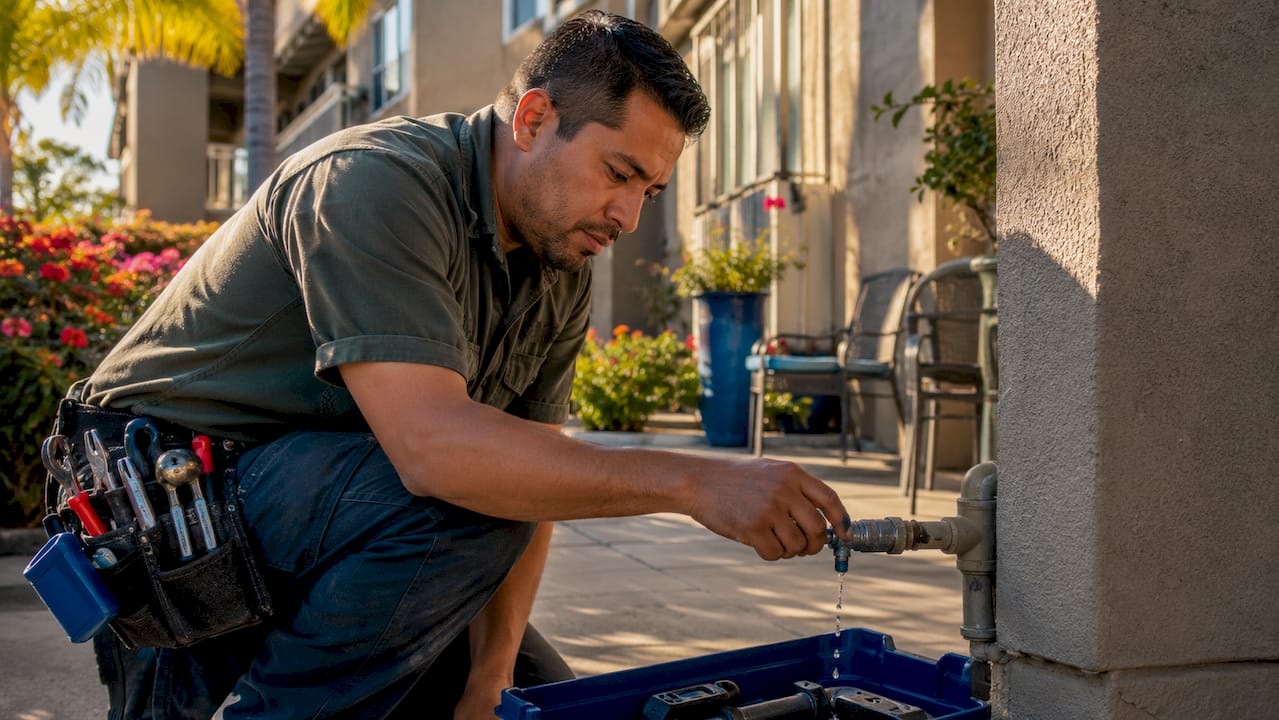
Beyond software, you need local operational support. A reliable local handyman, a licensed plumber, and a property inspector you trust are not optional extras. They are the human layer that makes remote management work when a pipe bursts at 11 p.m.
Platform | Rent Collection | Maintenance Tracking | AI Features | Best For |
MagicDoor | Yes | Yes | Communication AI | Communication-heavy portfolios |
TurnKey | Yes | Basic | Limited | Fee-conscious self-managers |
Rentalize Core | Yes | Advanced | Predictive maintenance | Investors scaling portfolios |
Pro Tip: Before committing to any platform, test its mobile app. You will manage most tasks from your phone, and a clunky mobile experience will slow you down more than any missing feature.
Virtual operational support partners like Corzly take automation further. These services reduce daily workload by 50–80% by automating messaging, scheduling, and revenue management. For landlords managing short-term rentals across multiple cities, that level of automation is the difference between a side income and a full-time job.
How to set up rent collection and lease management remotely
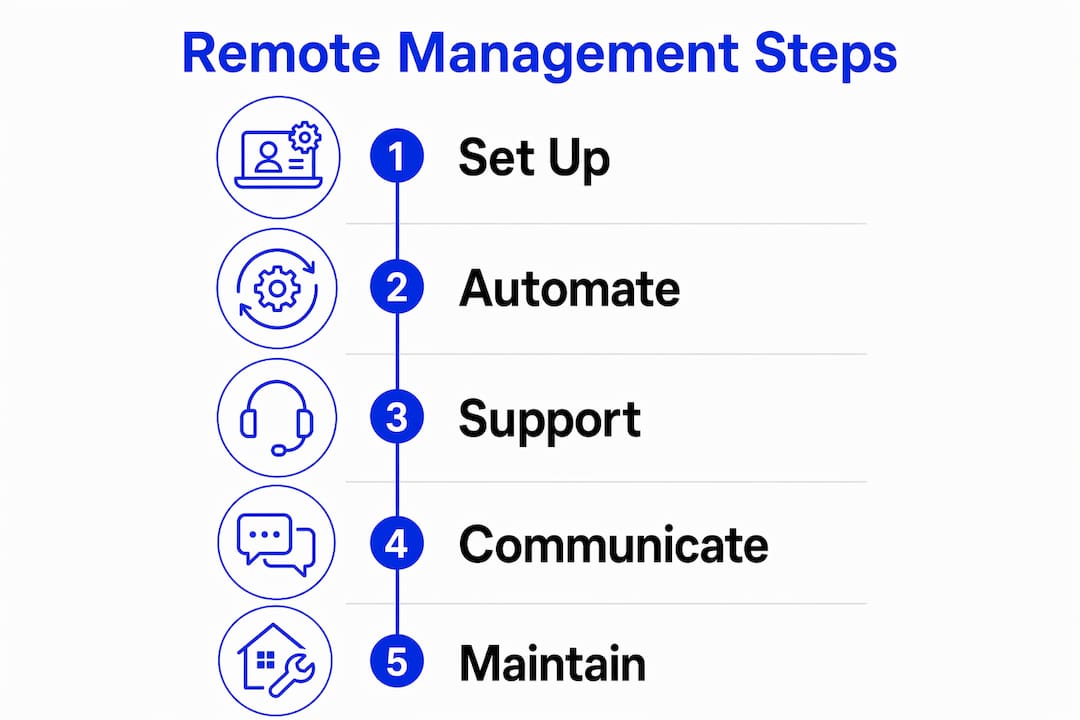
Rent collection is the task most landlords worry about first when they consider overseeing rental properties from afar. The solution is straightforward: eliminate checks entirely and move to auto-pay.
Set up ACH auto-pay through your property management platform. Auto-pay rent collection achieves over 95% tenant participation when offered at lease signing. Frame it as the default, not an option.
Automate rent reminders. Schedule reminders three days before the due date and one day after a missed payment. Most platforms handle this without any manual input from you.
Configure late fee triggers. Set your software to automatically apply late fees per your lease terms. This removes emotion from the process and keeps enforcement consistent.
Use DocuSign or a built-in e-signature tool for all leases. Digital lease signing tools like DocuSign allow fully online execution with legally binding signatures. No printing, no mailing, no in-person meetings.
Review your financial dashboard monthly. Your platform should generate a monthly report showing collected rent, outstanding balances, maintenance expenses, and net cash flow. Treat this report like a board meeting with yourself.
Pro Tip: Require auto-pay as a lease condition, not a preference. Landlords who make it mandatory report near-zero late payment issues compared to those who leave it optional.
The lease management side is equally straightforward. Store all signed leases, addendums, and move-in inspection reports in your platform’s document vault. When a tenant disputes a charge at move-out, you want that documentation accessible in 30 seconds, not 30 minutes. Reviewing self-manage vs. hire a property manager trade-offs can also help you decide how much of this workflow to own yourself versus delegate.
How do you handle maintenance and tenant communication remotely?
Maintenance is where remote management either proves itself or falls apart. The key is building a system where tenants submit requests digitally, vendors respond without your involvement, and you review completed work from a photo report.
Here is how to build that system:
Require photo or video with every maintenance request. Most property management platforms allow tenants to submit requests through a portal with attachments. A photo of a leaking faucet tells you immediately whether it is a $15 washer replacement or a $400 plumber call.
Build a pre-approved vendor list. Give your platform access to two or three vendors per trade category. When a request comes in, the system dispatches the right vendor automatically. Vendors upload before and after photos and invoices directly to the work order portal, so you have a complete audit trail.
Use AI communication tools. MagicDoor’s AI layer summarizes long tenant message threads and drafts responses. This matters when you are managing eight units and a tenant sends a five-paragraph complaint about a neighbor.
Set response time expectations in the lease. State that non-emergency requests receive a response within 24 hours and emergency requests within two hours. This sets a clear standard and protects you legally.
“Centralizing all tenant communication on one platform and applying AI tools to summarize and translate messages reduces landlord workload significantly, while keeping every interaction traceable.” — MagicDoor
Pro Tip: Schedule a virtual walkthrough with your tenant every six months using a video call. Ask them to walk through each room on camera. This catches deferred maintenance early and signals to tenants that you are an attentive landlord, even from a distance.
For inspections, hire a local property inspector once a year for a formal report. Between formal inspections, tenant-guided video walkthroughs using tools like Zoom or FaceTime cost you nothing and catch problems before they compound. You can find more detail on common self-management challenges and how to address them before they affect your ROI.
How to market, screen, and onboard tenants entirely remotely
Finding and placing a qualified tenant without ever meeting them in person is fully achievable with the right process. The tools exist. The only variable is how disciplined you are about using them consistently.
List on high-traffic platforms. Post your vacancy on Zillow, Apartments.com, and Facebook Marketplace simultaneously. These three platforms cover the vast majority of active renters in most U.S. markets. Write a listing with specific details: square footage, appliance brands, utility responsibilities, and pet policy.
Use self-showing lockboxes or a local agent for tours. Self-showing lockboxes allow pre-screened applicants to tour the property independently using a time-limited access code. A local real estate agent can also conduct showings for a flat fee, typically $50–$150 per showing.
Run online credit and background checks. Services integrated into most property management platforms pull credit reports, criminal background checks, and eviction history. Set minimum criteria before you review any application, such as a credit score above 650 and income at three times the monthly rent. Apply these criteria uniformly to every applicant.
Send the lease digitally and collect the deposit online. Once you approve an applicant, generate the lease in your platform, send it via DocuSign, and collect the security deposit through ACH transfer. The entire process can close in under 48 hours.
Conduct a move-in inspection via tenant-guided video. Ask the tenant to record a walkthrough on move-in day, narrating any existing damage. Store that video in your platform. This single step prevents most move-out deposit disputes.
Clear communication at the start of a tenancy sets the tone for the entire relationship. Send a welcome message that explains how to submit maintenance requests, where to pay rent, and who to contact in an emergency. Tenants who know the system from day one are far less likely to call your personal cell at 7 a.m. on a Saturday.
Key Takeaways
Landlords who combine the right software, pre-approved vendor networks, and digital workflows can manage rental property remotely with the same control and profitability as on-site management, at a fraction of the cost.
Point | Details |
Digital-first saves real money | Switching to a self-managed digital model saves 8–12% in monthly fees, up to $36,000 over five years on a five-unit portfolio. |
Platform choice drives efficiency | Tools like MagicDoor, TurnKey, and Rentalize Core each address different operational needs; match the platform to your portfolio size and priorities. |
Auto-pay eliminates collection friction | Requiring ACH auto-pay at lease signing achieves over 95% tenant participation and removes the need for any in-person rent collection. |
Maintenance needs a vendor network | Pre-approved vendors with portal access handle repairs end-to-end; AI predictive tools reduce maintenance costs by approximately 40%. |
Tenant onboarding is fully digital | Zillow listings, self-showing lockboxes, DocuSign leases, and video move-in inspections complete the entire tenant lifecycle without physical presence. |
What I have learned from building remote management systems
The biggest mistake I see investors make is treating remote management as a cost-cutting exercise rather than a systems-building exercise. They buy the cheapest software, skip the vendor network, and then wonder why they are still fielding calls at midnight. Remote management does not reduce your workload automatically. Structure reduces your workload. The software just enforces the structure.
The second mistake is underestimating the value of a single reliable local contact. One trusted handyman who responds within four hours is worth more than three vendor apps that promise 24-hour service. Technology coordinates the work. People do the work.
I have also seen landlords over-automate tenant communication to the point where tenants feel like they are dealing with a call center. AI tools are genuinely useful for summarizing threads and drafting responses, but a personal message from you twice a year, at lease renewal and on move-in anniversary, does more for retention than any automated drip sequence. Tenants who feel seen stay longer. Longer tenancies protect your cash flow better than any rent increase.
The property management tips for investors that actually move the needle are not complicated. They are consistent. Build the system once, audit it quarterly, and let it run.
— Main
How 2ndstreetpropertymanagement supports remote landlords
Managing a rental portfolio from a distance requires more than software. It requires a partner who understands the investor’s perspective, not just the property manager’s checklist.
2ndstreetpropertymanagement is built by investors for investors, which means every service and tool on the platform is designed around ROI, cash flow, and scalability. Whether you are managing two units in a different state or building a multi-market portfolio, their comprehensive property management solutions cover rent collection, maintenance coordination, tenant communication, and financial reporting in one place. If you are ready to take the manual work out of remote ownership, explore their full platform and see how it fits your portfolio.
FAQ
What is remote property management?
Remote property management is the practice of overseeing rental properties from a distance using digital tools, automated workflows, and local vendor networks instead of physical presence. It covers rent collection, maintenance, tenant communication, and leasing entirely online.
What are the best apps for rental management remotely?
MagicDoor, TurnKey, and Rentalize Core are three of the strongest platforms for landlords who want to manage properties online. Each handles rent collection and tenant communication, with Rentalize Core adding AI-driven predictive maintenance.
How do I collect rent without being on-site?
Set up ACH auto-pay through your property management platform at lease signing. Auto-pay rent collection achieves over 95% tenant participation and requires zero physical presence from the landlord.
Can I legally sign leases remotely?
Yes. Digital lease signing tools like DocuSign produce legally binding signatures in all 50 U.S. states. Most property management platforms include built-in e-signature tools that meet the same legal standard.
How do I handle maintenance emergencies from a distance?
Build a pre-approved vendor list in your property management platform and set automatic dispatch rules for emergency categories. Require vendors to upload before and after photos through the work order portal so you have a complete record without being on-site.
Recommended
Comments