
U.S. Investor Landlords: File Section 8 Rent Increases in 60 Days

Yes, you can request a rent increase for a Section 8 tenant, but it has to follow your HAP contract and your local PHA’s administrative plan. Most agencies allow one increase every 12 months, tied to the lease anniversary or annual recertification, and require written notice to both tenant and PHA. Your next move is simple: pull your HAP contract, find your PHA’s rent change request form, and check its notice deadline before you draft anything.
TL;DR:
Most agencies allow one rent increase every 12 months, with advance written notice at least 60 days before the effective date.
Rent increases must pass the rent reasonableness test, comparing your unit with similar nearby unassisted units, rather than relying on a flat percentage cap.
The payment standard caps the maximum subsidy from the PHA, with amounts above it shifting the increase to the tenant’s responsibility.
Submitting a comprehensive evidence packet with relevant comparables, utility allowances, and proper documentation is essential to avoid denial or delay.
Proper timing, accurate documentation, and adherence to notice requirements are key to getting your rent increase approved on the first attempt.
Table of Contents
Filing a Section 8 Rent Increase: Timing, Forms, and Notice
Getting the timing right matters more than getting the number right. A well-justified increase submitted late will still miss its effective date, and you will not get a second try until the next cycle. Here is the sequence that keeps a request on schedule.
Confirm your eligibility window. Most contracts bar a new increase until 12 months have passed since the lease started or since the last approved increase. Mark the anniversary or recertification date on your calendar the day you sign a new HAP contract.
Pull the correct PHA form. Every housing authority runs its own paperwork, usually called a Rent Change Request or Rent Increase Request, available through the PHA’s landlord portal or office. The San Diego Housing Commission’s landlord page is a solid example of how these forms and instructions typically look.
Calculate your effective date and submit early. Standard practice across housing authorities calls for written notice typically at least 60 days before the effective date, sent to both the tenant and the PHA. Local administrative plans can shorten or extend that window, so verify it in writing rather than assuming.
Send copies to everyone who needs them. Keep proof of delivery for the tenant notice and a submission receipt from the PHA. If you miss a deadline, most agencies simply push your request to the next allowable cycle rather than processing it retroactively.
Filing 90 days out instead of 61 gives you a buffer for the PHA’s rent reasonableness review, which rarely moves fast.
What Limits a Rent Increase: Reasonableness and Payment Standards
Two mechanisms decide what you can actually charge, and neither one is a flat percentage cap.
The first is rent reasonableness. Before approving any increase, the PHA compares your proposed rent to unassisted units of similar size, condition, location, and amenities. This is the gate every request passes through, and it is where most denials happen, not because the landlord asked for too much in the abstract, but because the comparables did not support it.
The second is the payment standard, built from the Fair Market Rent or Small Area Fair Market Rent for that ZIP code. This figure caps how much subsidy the PHA will pay. Anything above it does not get rejected outright. It just shifts to the tenant’s side of the ledger.
Rent reasonableness compares your unit against similar unassisted rentals nearby.
Payment standards set the ceiling on the Housing Assistance Payment, not on your asking rent.
Rent above the payment standard becomes additional tenant-paid rent, not automatic grounds for denial.
There is no national percentage cap on Section 8 rent increases in 2026. The practical ceiling comes from your local payment standard and from what the PHA determines a tenant can reasonably absorb, since tenant rent portions typically run around 30% of adjusted monthly income and can climb toward 40% in some cases. Push the rent too far past the payment standard, and you risk increasing the tenant’s payment portion, which may impact affordability.
Building the Evidence Packet That Gets Approved
A rent increase request lives or dies on the comparables you attach, not on the number you write in the box. PHAs run on documentation, and a thin submission invites a slower review or an outright rejection.
Assemble this before you file:
Three to five comparable unassisted units matching your property on size, condition, age, and location, pulled from current listings or recently signed leases.
The completed PHA rent change form with your requested amount and effective date clearly stated.
A copy of the tenant notice showing it was served on time.
An updated utility allowance analysis if utility costs have shifted materially since your last filing, since gross rent calculations depend on that figure.
Organize the packet in the order the reviewer will check it: form first, comparables second, utility documentation last. Keep a duplicate set. If the PHA denies or counters your request, you will need the same evidence again for an appeal, and reassembling it under a deadline is a preventable headache.
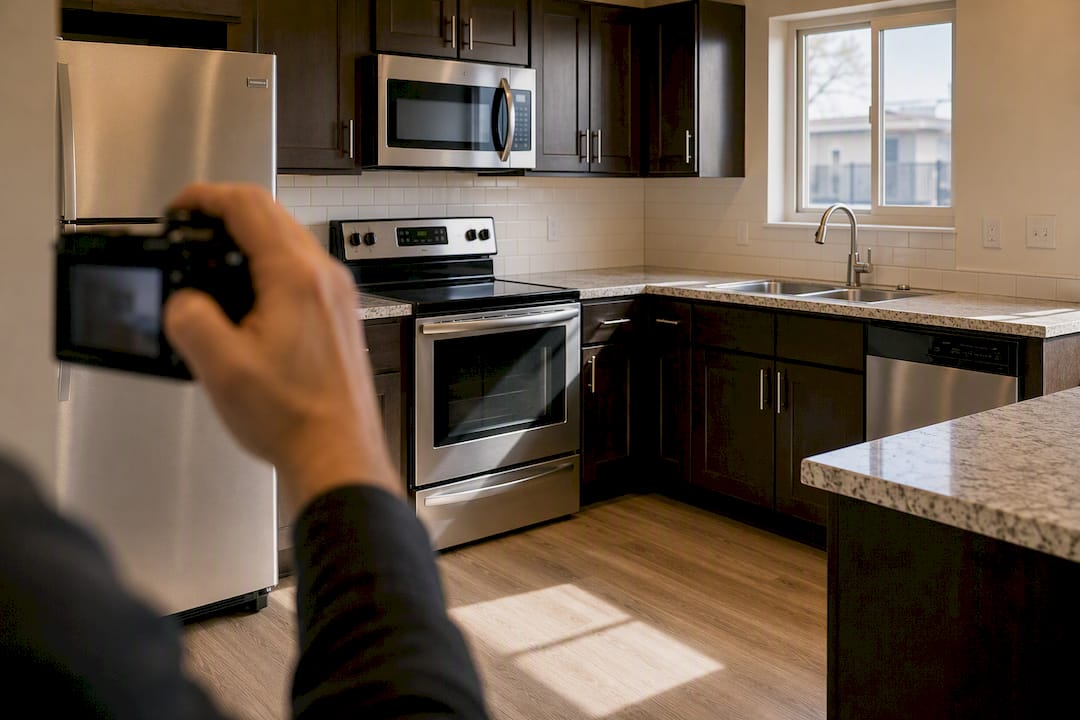
Pro Tip: Photograph your unit’s interior condition and upgrades the same week you pull comparables. A rent reasonableness reviewer weighing your unit against three similar listings will take renovated kitchens and updated flooring more seriously with visual proof attached, not just a claim on paper.
After You File: PHA Decisions, Timelines, and Appeals
The PHA will do one of three things once your packet lands: approve the rent as requested, approve a lower figure based on its own comparables, or deny the increase outright. Each outcome changes what the tenant owes and what the HAP contract pays going forward.
Approval as requested updates the HAP contract at your new figure, with any amount above the payment standard shifting to the tenant’s monthly share.
A reduced counteroffer usually means the PHA’s comparables did not support your full ask. You can accept the lower rent or resubmit with stronger documentation at the next allowable window.
A denial typically triggers an administrative appeal process. For HUD-regulated project-based contracts, Chapter 7 of HUD Handbook 4350.5 outlines the formal appeal procedure and required forms.
Most agencies process a complete, well-documented request within a few weeks of receiving it, though local administrative plans vary on exact timelines. If you get a counter, weigh whether accepting it now beats a resubmission delay of another full cycle.
HUD Rules Behind the Numbers: AAFs, SAFMR, and Utility Allowances
Landlords with HUD-administered contracts occasionally hit terminology that sounds more complicated than it is.
Automatic Annual Adjustment Factors (AAFs) apply to certain project-based contracts and let owners increase rent by a HUD-published factor without a full reasonableness review, as described in HUD Handbook 4350.5, Chapter 5. Budget-based increases follow a separate, more document-heavy process under the same chapter.
SAFMRs set payment standards at the ZIP-code level rather than by metro area, and PHAs may set exception payment standards up to 110% of the SAFMR where local rules allow it. That means two units a few miles apart can carry very different subsidy ceilings.
Utility allowances feed directly into gross rent. Update yours whenever local utility rates shift enough to change the tenant’s calculated share.
A Fast Checklist Before You Submit
Move through these in order, and you will avoid the delays that trip up most first-time filers.
Confirm your 12-month eligibility window against the lease anniversary or recertification date.
Pull three to five comparables and any updated utility allowance figures.
Complete your PHA’s specific rent change form.
Serve written notice to both the tenant and the PHA, including the current rent, proposed rent, and effective date.
Submit the full packet and track the decision against your PHA’s stated review timeline.
Your tenant notice needs to state the current rent, the proposed rent, and the exact effective date to hold up under review. If you need a template built for New Jersey compliance, our copy-ready sample notice walks through the five steps and gives you language to adapt directly.
Why Most Rent Increase Denials Are Preventable
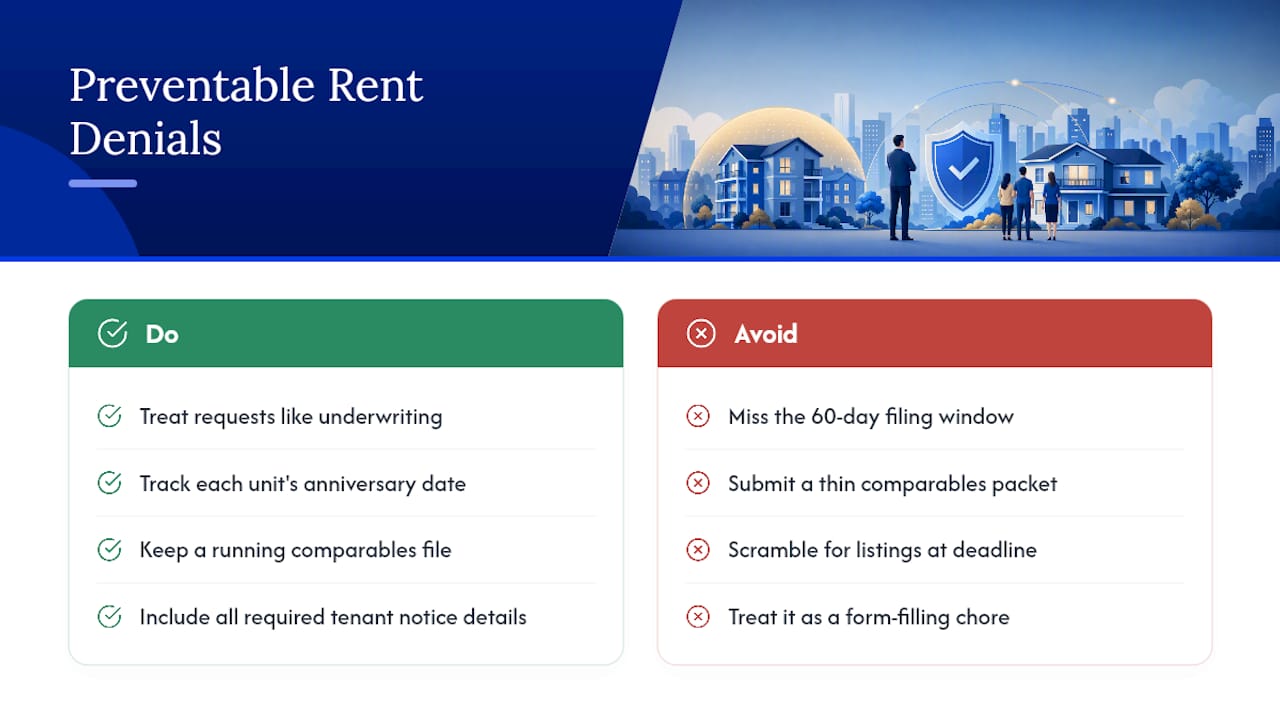
Most rent increase requests that get denied or reduced were not doomed by an unreasonable number. They were doomed by a thin comparables packet, a missed 60-day window, or a tenant notice that skipped a required detail. PHAs are not trying to cap your profit. They are protecting program integrity, which means the burden of proof sits squarely on you, the landlord, not on the housing authority.
The landlords who get approved on the first try treat this like an underwriting exercise, not a form-filling chore. They track their anniversary dates before the PHA has to remind them. They keep a running file of neighborhood comparables instead of scrambling for three listings the week before a deadline. That discipline is the real difference between a rent increase that sails through and one that bounces back for resubmission, costing you another full cycle. For a deeper look at how experienced investors structure their whole Section 8 approach, our investor field manual breaks down the mindset further.
— Main
Let 2ndstreetpropertymanagement Handle the Filing for You
Some property management companies offer alternatives to filing rent increase paperwork yourself between property showings and maintenance calls. They may handle PHA form submissions, compile the unassisted-unit comparables your reviewer will actually check, serve compliant tenant notices, and manage the appeal if a PHA comes back with a counteroffer instead of an approval.
If you are financing a new acquisition alongside your existing Section 8 portfolio, it is also worth reviewing financing considerations for first-time rental property buyers before your next purchase closes. For your current units, request a consult through our services and contact page and get your next rent increase filed correctly the first time, without missing the deadline that resets your entire cycle.
This article is general information, not a substitute for advice from a qualified lawyer. Consult a qualified legal professional about your own circumstances before acting on anything here.
Sources
Recommended

Comments