
Landlord Reference Letters: What They Prove and Free Templates
- Rey Rey Rodriguez

- 1 day ago
- 9 min read

A landlord reference letter documents a past tenancy’s dates, payment record, and lease compliance, information that can tip a borderline rental decision. It’s a written statement from a previous landlord confirming how a tenant actually behaved: did they pay on time, follow the lease, and leave the unit in decent shape? That’s the whole job of the document, and it does that job well when it sticks to facts.
Three things prospective landlords look for above everything else:
On-time rent payment across the full tenancy, not just the final few months
Lease compliance, including whether pets, occupancy limits, or noise rules were respected
Property condition at move-out, ideally backed by a walkthrough or inspection report
A reference letter rarely decides a rental application by itself. Credit and background checks establish whether someone can pay; the reference letter fills in the behavioral gap those reports cannot capture, which is exactly why it becomes decisive in tight markets where two applicants look identical on paper. When the numbers are borderline, the letter is often what separates an approval from a denial.
Key Takeaways
A landlord reference letter works best as documented, factual evidence of rent history and lease compliance, not as a substitute for full tenant screening.
Point | Details |
Letters aren’t legally required | No U.S. law forces a landlord to write one, but they remain a strong best practice for due diligence. |
Stick to checkable facts | Include dates, rent amounts, lease violations, and move-out condition instead of general opinions. |
Avoid protected-class language | Replace personal observations with documented behaviors to stay clear of Fair Housing Act risk. |
Tenants without a reference have options | Rent receipts, bank records, and employer letters can substitute when a prior landlord won’t respond. |
Verification works better peer-to-peer | Identifying as a fellow landlord increases candor and supports qualified-privilege protection during checks. |
Professional screening consolidates the process | 2ndstreetpropertymanagement folds reference checks into a documented, FCRA-aware screening workflow for landlords. |
Table of Contents
The Role of Landlord Reference Letters in a Complete Screening File
A reference letter earns its place in a tenant’s file only when it contains specific, checkable information. Vague praise (“great tenant, no issues”) does almost nothing for a landlord trying to make a real decision. Specific dates, dollar amounts, and documented conditions do.
Here’s what a complete letter needs, based on the fields property managers and rental platforms consistently recommend including:
Date of writing — letters older than 90 days start to lose credibility with the reader.
Landlord or property manager’s name and contact information — a phone number matters more than an email, since it lets the requesting landlord follow up directly.
Full rental property address and the exact tenancy start and end dates.
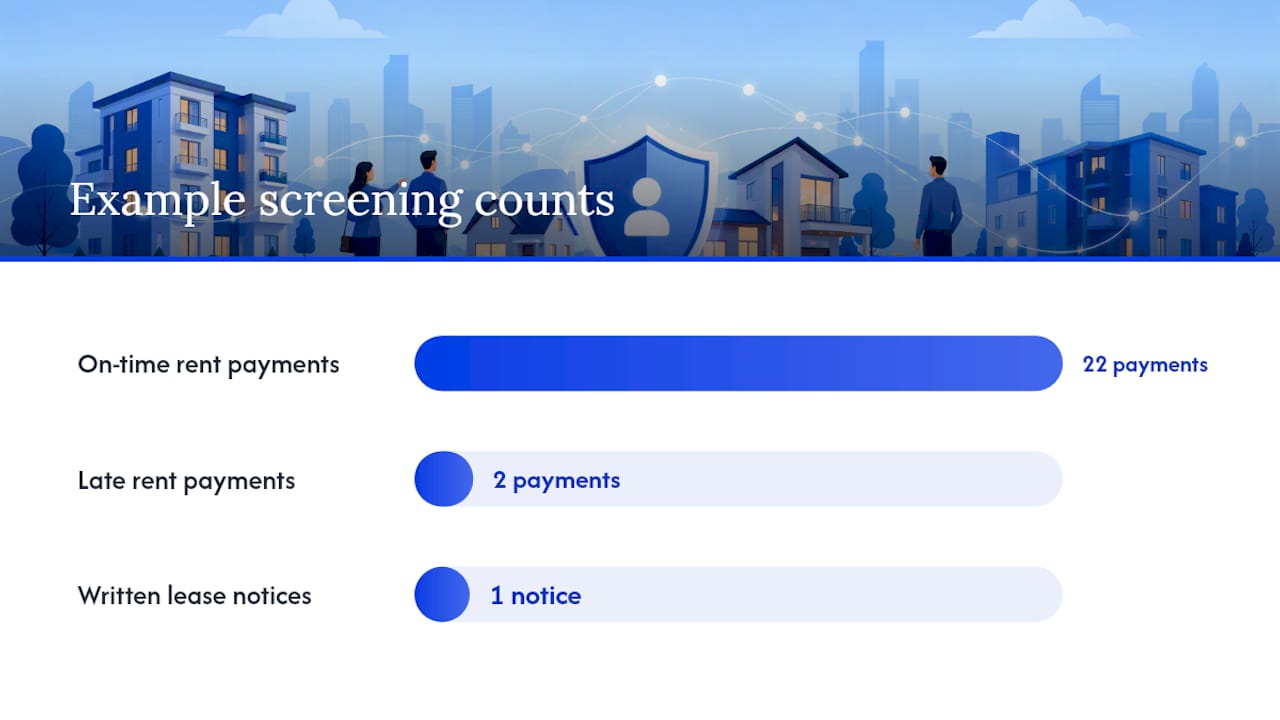
Rent payment history, stated factually: “Rent was paid on time for 22 of 24 months; two payments arrived 3 to 5 days late in December 2024 and January 2025.”
Lease violations, if any — noted by date and nature, never by opinion. “Received one written notice for an unauthorized pet on March 4, 2025” is usable. “Was sometimes difficult” is not.
Property condition at move-out, ideally cross-referenced against a signed inspection report or photos.
Neighbor complaints, if formally logged, with dates and whether they were resolved.
Signature and title of the person writing the letter, confirming they were the landlord or authorized manager of record.
The rent payment section trips up more writers than any other field. The instinct is to summarize (“mostly paid on time”) when the more defensible move is to count. Several months of timely payments with occasional late payments and one returned check in the first year: these numbers protect the writer and inform the reader in equal measure.
Pro Tip: Keep a simple spreadsheet during the tenancy logging rent receipt dates, maintenance requests, and any written notices. When it’s time to write a reference letter eighteen months later, you won’t be reconstructing memory. You’ll be transcribing a record.
Recordkeeping does double duty here. It protects the tenant from an inaccurate letter and protects the landlord from a defamation claim if the tenant disputes what’s written. A statement backed by a receipt or a signed inspection form is treated as fact, not opinion, and that distinction matters if the letter is ever challenged.
A Fillable Landlord Reference Letter Template and Two Samples
Every effective letter follows roughly the same skeleton. What changes is the tone and the level of detail, depending on whether the landlord wants to give a strong endorsement or simply confirm the basic facts. Here’s a fillable version you can adapt in five minutes:
[Date]
[Landlord/Property Manager Name], [Company, if applicable], [Phone], [Email]
To Whom It May Concern (or the requesting landlord’s name, if known)
Re: Tenancy Reference for [Tenant Full Name]
[Tenant Name] rented the property at [Full Address] from [Move-In Date] to [Move-Out Date].
During this tenancy, rent of $[Amount] was due monthly. [State payment record factually.]
[State lease violations, if any, with dates. If none, say so plainly: “No lease violations were recorded during the tenancy.”]
[Describe move-out condition, referencing an inspection report if one exists.]
[Closing statement and signature.]
Sample 1: Positive reference tied to documented facts
Sample 2: Neutral, dates-only reference
The neutral version isn’t a red flag. Plenty of larger management companies adopt a dates-only policy across every tenant, good or bad, to stay consistent and avoid liability. If you’re a landlord asked for a reference and you’d rather not editorialize, this format is a perfectly legitimate choice, and requesting landlords should read it as company policy rather than a warning sign.
Writing References Without Creating Legal Exposure
The single biggest risk in writing a landlord reference letter isn’t dishonesty. It’s including information that has nothing to do with tenancy performance and everything to do with a protected characteristic. The Fair Housing Act prohibits discrimination based on race, color, national origin, religion, sex, familial status, and disability, and a reference letter that references any of these, even in passing, can expose the writer to liability regardless of intent.
The fix is straightforward: replace every subjective or personal observation with a behavioral fact tied to a date.
Instead of “kept an unusual schedule,” write “no lease violations related to noise or occupancy were recorded.”
Instead of “seemed to have a lot of visitors,” write nothing at all unless it violated a specific occupancy clause in the lease.
Instead of commenting on family structure, household composition, or any protected class, stick to the unit, the rent, and the lease terms.
When a landlord isn’t comfortable writing a fuller reference, a dates-only response is always acceptable and often the safer default. There’s no legal requirement to say more, and offering only tenancy dates and rent amount is a common, defensible middle ground when the tenancy was complicated or the landlord simply doesn’t want to editorialize.
Statements backed by receipts, signed inspection reports, or written notices carry a legal concept called qualified privilege: honest, factual statements made in the ordinary course of a landlord relationship get more legal protection than unsupported opinions, because the writer can point to a record rather than a memory. This is also why standardizing how references get verified, rather than leaving each conversation to improvisation, closes most of the compliance gaps that show up when reference checks are handled inconsistently.
If a tenancy involved an eviction filing, a lawsuit, or any dispute that’s still active, that’s the moment to loop in an attorney before writing anything, or to decline the letter altogether and confirm dates only.
How to Ask for a Landlord Reference (and What to Do If You Can’t Get One)
Getting a landlord reference letter usually comes down to timing and effort, and most of the effort should be yours, not theirs.
Ask before you move out, not after. A landlord who’s still managing your unit is far more likely to respond quickly than one who’s already moved on to a new tenant three states away.
Offer to draft it yourself. Send a short template with the dates and rent amount already filled in and ask them to review, edit, and sign. This single step dramatically increases response rates from busy landlords who’d otherwise let the request sit for weeks.
Follow up once, politely, after five business days. A second reminder is normal. A third one starts to feel like pressure.
If the landlord won’t respond or refuses, build a substitute packet. Twelve months of rent receipts, bank statements showing consistent transfers, a letter from a rent-reporting service, or an employer reference confirming stable income can all stand in for a missing landlord reference and often carry just as much weight when presented together.
Address past issues directly instead of hoping they go unnoticed. A short, honest note explaining a late payment period, tied to a specific cause like a job loss or medical event, reads far better than silence a new landlord has to fill in themselves.
Bundle everything into one application packet. Reference letter, pay stubs, bank statements, and prior lease copy, submitted together, signal organization before a landlord reads a single word of the content.
How Landlords Verify References Without Slowing Down the Process
Verifying a reference works best when you start with facts a prior landlord can confirm in ten seconds: tenancy dates and rent amount. Once those check out, the conversation naturally opens up to more candid detail.
Identifying yourself as a fellow landlord or property manager, rather than a stranger cold-calling for information, meaningfully increases how candid and specific the prior landlord’s answers turn out to be. Peer framing also activates the qualified-privilege protection mentioned earlier, which makes both sides more comfortable speaking plainly.
Call, don’t just email, when possible; tone carries information a written form can’t.
Cross-check the letter’s claims against the applicant’s own account of the tenancy.
If you use an automated reference-check platform, remember that FCRA rules require an adverse-action notice if that report contributes to a denial.
Set a policy in advance: how many prior landlords you’ll contact (two is standard) and a verification window of 48 to 72 hours so you don’t violate first-qualified-applicant rules in states that have them.
Pro Tip: Publish your verification policy in writing before you need it. A landlord scrambling to figure out “how many references is enough” mid-application is far more likely to cut corners than one working from a rule they set when they weren’t under time pressure.
A Note on Fairness and Documentation
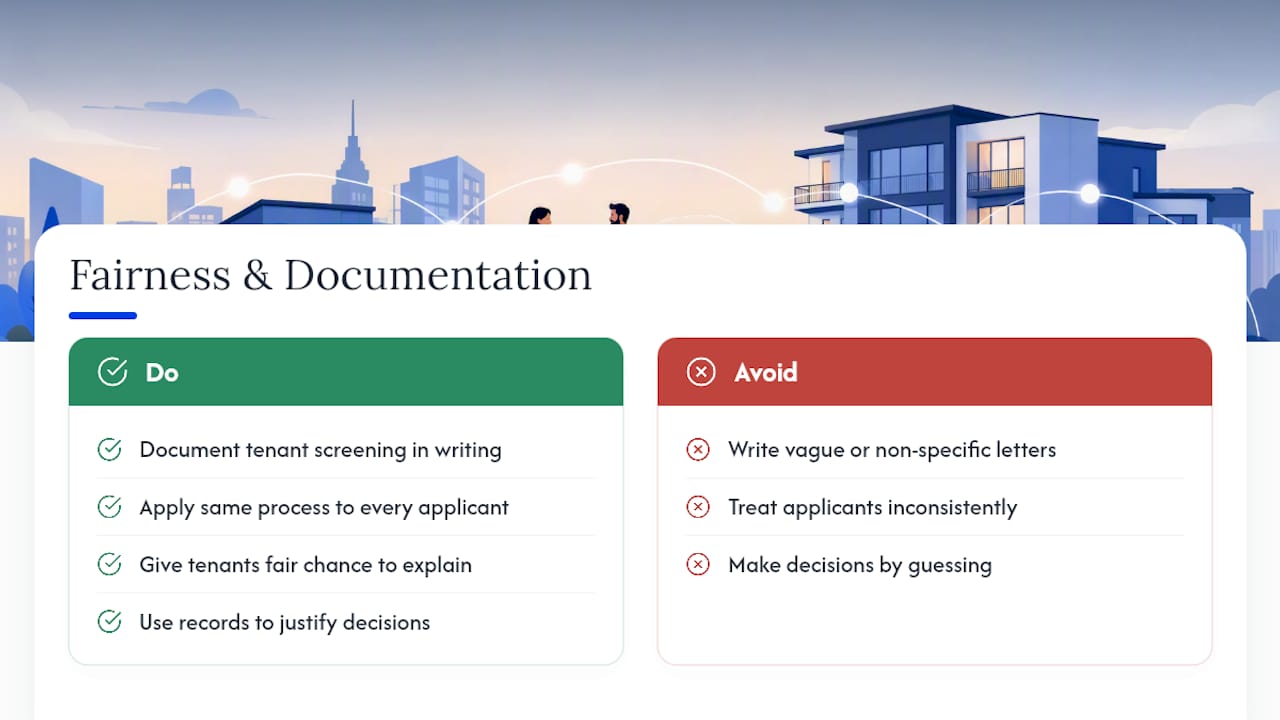
Reference letters work best when they protect both sides: the tenant’s shot at a fair read on their history, and the landlord’s need to reduce risk without guessing. Neither goal wins if the letter is vague or the process is inconsistent from one tenant to the next.
We’ve built our screening approach around that balance, treating documentation as the thing that makes a reference trustworthy in the first place. Landlords who want a closer look at how that process works in practice can review our tenant screening system.
Let a Screening Team Handle the Reference Checks for You
Calling prior landlords, chasing down late responses, and deciding what’s safe to ask under the Fair Housing Act eats up hours most independent landlords don’t have between applications. 2ndstreetpropertymanagement runs that entire verification process for you, backed by a documented, FCRA-aware policy that specifies how many prior landlords get contacted and how fast, so a slow reference never stalls a good applicant.

That same process ties reference checks directly into credit and background screening, so you get one consolidated risk picture instead of three disconnected reports to reconcile yourself. It also means the compliance judgment calls, what to ask, what to skip, when a dates-only answer is the safer route, are already built into the workflow rather than left to whoever happens to be making the call that day. If you manage rentals in Southern New Jersey and want that handled for you, visit 2ndstreetpropertymanagement to see how managed screening fits into your next vacancy.
Authoritative Resources and Templates
Free Landlord Reference Letter Template for a ready-made structure covering every required field.
Guidance on requesting and writing landlord references for context on legal status and best practice.
Reference verification and FHA/FCRA compliance guidance for landlords standardizing their process.
Alternatives when a landlord reference isn’t available for tenants building a substitute application packet.
Sources
Property managers don’t treat a reference letter as a standalone decision tool. It sits alongside credit reports, background checks, and income verification as one input among several, weighted more heavily when the tenancy history is longer and the documentation is stronger. Our own tenant screening checklist reflects this layered approach: no single data point overrides the others.
Consistent documentation, meaning inspection reports on file, dated correspondence, and a written verification policy, turns a reference from a courtesy into a defensible record. That’s the standard we hold every file to, and it’s the same standard we’d recommend any independent landlord adopt before the next vacancy hits the market.
Recommended

Comments