
No Savings? How to Stabilize Your Finances Now


Having no savings means you lack a financial buffer between your current income and any unexpected expense. This is not a personal failure. 54% of Americans reported living paycheck to paycheck in june 2026, up from 42% in 2021. That 12% jump reflects rising costs, stagnant wages, and debt loads that make saving feel impossible. The good news is that financial insecurity is a condition you can change, not a permanent identity. The strategies below are built for people who need results now, not someday.
What does having no savings actually mean for your finances?
No savings, in personal finance terms, means you have no liquid reserve to cover unplanned costs. The formal term is “zero emergency fund,” and financial planners define it as having less than one month of essential expenses set aside in accessible cash. 43% of Americans cannot cover a $1,000 emergency expense, and over 40% report no dedicated emergency fund at all. That means nearly half the country is one car repair or medical bill away from debt.
The real danger of a lack of savings is the cascade it triggers. You cannot cover the emergency, so you charge it to a credit card. The credit card balance grows. The minimum payment eats into next month’s budget. That leaves even less room to save, and the cycle repeats. When essential costs rise, households prioritize survival over savings, which deepens the vulnerability. Recognizing this pattern is the first step toward breaking it.

How to assess your current financial situation honestly
The starting point for anyone with no emergency fund is a clear, written picture of their money. You cannot fix what you cannot see. A detailed budget separates your income from your expenses and shows you exactly where the gap lives.
Build your financial snapshot using this framework:
Category | What to track | Example |
Gross income | All sources before tax | Salary, freelance, rental income |
Fixed expenses | Bills that don’t change | Rent, car payment, insurance |
Variable expenses | Bills that fluctuate | Groceries, utilities, gas |
Debt payments | Minimum monthly obligations | Credit cards, student loans |
Discretionary spending | Non-essential purchases | Subscriptions, dining out |
Once you fill in every row, subtract total expenses from total income. A negative number means you have an income problem, an expense problem, or both. 34% of people struggling to save cite rising living costs as the main barrier, while 12% point to insufficient income. Knowing which category applies to you determines your next move.
If expenses exceed income, cuts come first.
If income barely covers expenses, increasing cash flow is the priority.
If both are true, you need to work both sides simultaneously.
Pro Tip: Track every dollar for 30 days before making any cuts. Most people underestimate discretionary spending by 20–30% when guessing from memory.
What are the fastest ways to stabilize finances with no savings?
Financial stabilization when you are living paycheck to paycheck requires two things: stopping the bleeding and creating breathing room. These are not the same goal, and they require different tactics.
Cut the highest-cost discretionary expenses first. Streaming subscriptions, gym memberships, and food delivery services are the fastest cuts with the least daily impact. Cancel anything you use fewer than four times per month.
Negotiate fixed bills. Call your internet, insurance, and phone providers and ask for a lower rate or a loyalty discount. This works more often than most people expect, and it takes under an hour.
Sell unused items. Furniture, electronics, clothing, and tools sitting idle in your home represent cash. Platforms like Facebook Marketplace and eBay move items quickly. A single weekend of selling can generate $200–$500.
Add one income stream. A part-time gig, freelance project, or weekend shift adds cash without requiring a career change. Even $200 extra per month changes the math significantly.
Automate bill payments. Late fees and overdraft charges are silent budget killers. Automating minimum payments on every bill removes the risk of missing a due date and triggering penalties.
Use the zero-based budgeting method. Assign every dollar of income a job before the month starts. This technique, used by financial educators like Dave Ramsey, forces you to make spending decisions in advance rather than reacting to them.
Budgeting adoption rose from 39% in 2021 to 47% in 2026. That shift shows that more people are choosing structure over guessing, and it is working. The psychological barrier is real, but the mechanics are simple once you start.
Pro Tip: Set a “no-spend” rule for one category each week. Rotating the restriction keeps it manageable and builds the habit of intentional spending without feeling deprived.
How do you build a starter emergency fund from zero?
The first savings target for anyone with no emergency fund is $1,000. That number is not arbitrary. Reaching $1,000 shifts your behavior from reaching for a credit card during emergencies to paying cash, which breaks the high-interest debt cycle. Credit card APRs currently exceed 21% on average. Avoiding even one $1,000 charge at that rate saves you real money.
Only 46% of Americans have a three-month emergency fund, down from 53% in 2021. The trend is moving in the wrong direction. Building even a partial cushion puts you ahead of where most people are heading.
Here is how to build that $1,000 starter fund:
Treat savings as a fixed expense. Most people save only what is left after bills. Successful savers pay themselves first, moving money to savings on payday before spending anything else.
Open a separate savings account. Keeping savings in the same account as spending money makes it too easy to spend. A separate account, even at the same bank, creates a mental and practical barrier.
Start with $25 per week. At $25 per week, you reach $1,000 in 40 weeks. At $50 per week, you get there in 20 weeks. The amount matters less than the consistency.
Direct windfalls straight to savings. Tax refunds, bonuses, birthday money, and side income go directly to the emergency fund before they touch your checking account.
Build savings and pay debt at the same time. Simultaneously building a starter fund while paying down debt prevents the cycle of draining savings on emergencies and then returning to high-interest debt. Do not wait until debt is gone to start saving.
For readers thinking about long-term financial positioning, the guide on buying a first rental property with no savings shows how this same discipline applies to wealth-building goals.
Pro Tip: Label your savings account “Emergency Only.” The label alone reduces the temptation to dip into it for non-emergencies. Naming matters more than you think.
Common mistakes that keep people stuck with no savings
The most common error people make after starting to save is treating the emergency fund as a flexible spending account. 95.4% of those living paycheck to paycheck dipped into savings for everyday expenses in the past year. That behavior erases progress and restarts the cycle.
Watch for these specific mistakes:
Saving inconsistently. Skipping one month feels harmless. Skipping three months means you have not saved at all. Consistency beats amount every time.
Ignoring the budget after the first month. A budget is not a one-time document. Income changes, expenses shift, and the budget must reflect reality to stay useful.
Using the emergency fund for non-emergencies. A sale on concert tickets is not an emergency. A broken furnace in january is. Define what counts as an emergency before you need to make the call.
Focusing only on debt while ignoring savings. Paying off debt aggressively without any savings buffer means one unexpected expense sends you straight back into debt.
Building financial resilience is not about perfection. It is about making the next decision better than the last one. Every dollar saved is a vote for a more stable future, and small, consistent actions compound into real security over time.
Readers navigating property-related expenses alongside personal savings goals will find the landlord’s repair budgeting guide useful for managing costs without depleting personal reserves.
The uncomfortable truth about financial insecurity I’ve seen firsthand
Working alongside real estate investors and everyday families navigating tight budgets, I have noticed one pattern that separates those who turn things around from those who stay stuck. It is not income level. It is not debt amount. It is the decision to stop treating savings as optional.
The people who make progress fastest are the ones who get uncomfortable with their own numbers. They sit down, write out every dollar, and face the gap without flinching. That honesty is harder than any budgeting tactic, and it is also more powerful. You cannot negotiate with a problem you refuse to look at directly.
The second thing I have seen consistently is that small wins build real momentum. Saving $500 does not feel like much until the car needs a repair and you cover it without touching a credit card. That moment changes how you think about money. It shifts the identity from “someone who can’t save” to “someone who saves.” That shift is worth more than any specific dollar amount.
For those thinking beyond personal savings and into property investment, the financial strategy for landlords resource at 2ndstreetpropertymanagement covers how the same cash flow discipline applies at the investment level. The principles are identical. The scale is different.
— Main
Building a stronger financial foundation with 2ndstreetpropertymanagement
Rebuilding your finances from a position of no savings takes structure, patience, and the right resources at the right time.

2ndstreetpropertymanagement publishes practical financial content built for people who think like investors, whether they own property yet or not. The same cash flow discipline that makes a rental property profitable applies directly to personal budgeting. If you are ready to move from financial insecurity toward a position of strength, the 2ndstreetpropertymanagement resource library covers budgeting, property finance, and long-term wealth strategy in plain language. First-time homebuyers and renters navigating rising costs will also find real estate buyer tips from OwnInAZ a useful companion resource for understanding what financial readiness actually looks like before a purchase.
Key takeaways
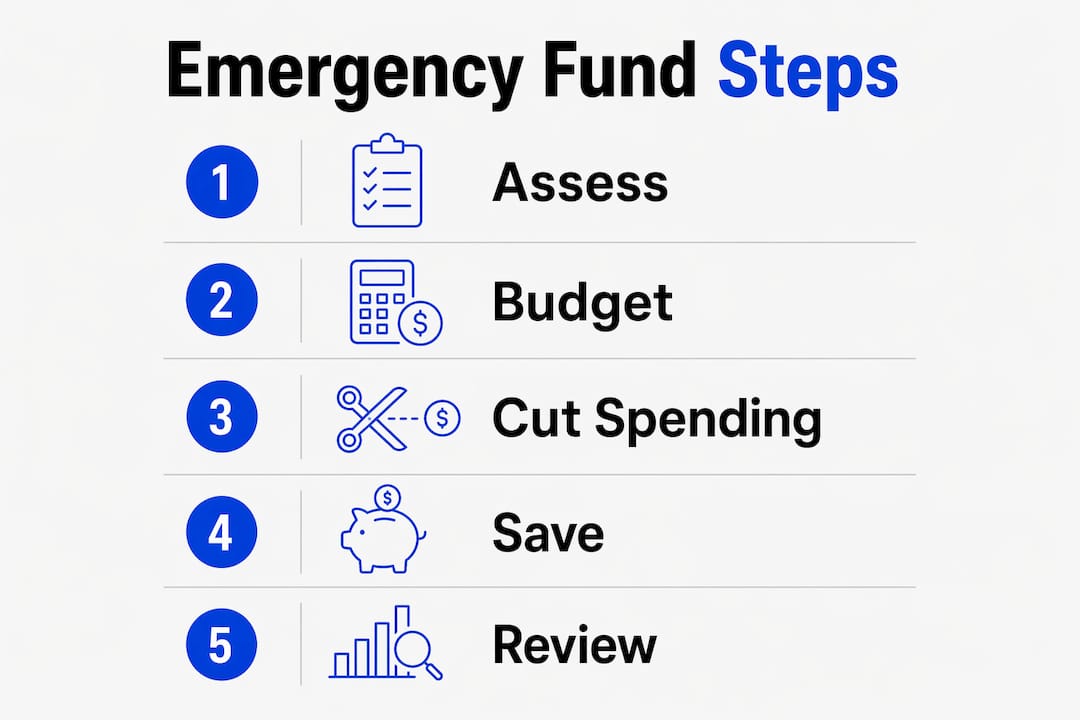
Building financial stability with no savings requires consistent, small actions applied in the right order. The most effective approach is to assess your full financial picture first, cut expenses before increasing income, and treat your first $1,000 in savings as a non-negotiable fixed expense.
Point | Details |
Define your gap first | Map all income, fixed costs, variable costs, and debt before making any changes. |
Cut discretionary spending immediately | Cancel low-use subscriptions and negotiate fixed bills before seeking extra income. |
Target $1,000 as your first savings goal | This threshold breaks the high-interest debt cycle and shifts your financial behavior. |
Automate savings on payday | Paying yourself first before spending removes the temptation to skip saving. |
Budget every month, not just once | A budget reflects reality only if you update it as income and expenses change. |
FAQ
What does it mean to have no savings?
Having no savings means you have no liquid cash reserve to cover unexpected expenses. Financial planners define this as holding less than one month of essential expenses in accessible funds.
How many Americans have no emergency fund?
Over 40% of Americans report no dedicated emergency fund, and 43% cannot cover a $1,000 emergency expense without borrowing or using credit.
What is the best first step when you have no savings?
The best first step is building a written budget that shows every dollar of income and every expense. This reveals whether your problem is too much spending, too little income, or both.
Why is $1,000 the recommended starter emergency fund target?
A $1,000 emergency fund covers most common emergencies without requiring credit card debt. Avoiding credit card charges at APRs above 21% saves significant money and stops the debt cycle from restarting.
How do you save money when there is nothing left after expenses?
Start by cutting the highest-cost discretionary expenses and selling unused items to generate immediate cash. Then automate a small fixed transfer, even $25 per week, to a separate savings account on every payday.
Recommended
Comments