
Property Management Benefits for Southern NJ Investors

Hiring a residential property manager delivers steady, protected cash flow, township-level compliance coverage, and the operational capacity to scale your Southern New Jersey portfolio without trading more of your time for every dollar of income. For landlords managing Section 8 rentals, condos, or PUDs across municipalities from Cherry Hill to Cape May, that combination is not a luxury. Local township rules, Housing Authority of New Jersey (HAPNJ) coordination, and HOA obligations create a compliance layer that rewards local expertise and punishes guesswork. 2ndstreetpropertymanagement was built by investors for investors, and the firm’s experience across Southern NJ’s distinct regulatory landscape shapes every recommendation in this guide.
Pro Tip: Before you read further, note your single biggest management pain point: vacancy, compliance, or time. Every section below maps directly to one of those three.
Key Takeaways
Professional property management in Southern New Jersey delivers its strongest ROI by preventing expensive failures — evictions, failed inspections, and compliance violations — not by marginally increasing gross rent.
Point | Details |
Eviction cost avoidance | A single avoided eviction saves $3,500–$10,000 in legal fees and lost rent, often exceeding a full year of management fees. |
Section 8 requires active management | HAP payments, HQS inspections, and PHA coordination demand organized systems; a manager absorbs that complexity. |
Break-even threshold | Most practitioners place the break-even for hiring a manager at 4–5 units; local presence is decisive even below that for out-of-area owners. |
Fee transparency matters | Monthly management fees run 5–10% of collected rent; always confirm placement fees, renewal fees, and any maintenance markup in writing before signing. |
2ndstreetpropertymanagement | Built by investors for Southern NJ landlords; covers Section 8, HOA/condo, and multi-township portfolios with transparent fees and local compliance expertise. |
Table of Contents
How residential property management benefits investors in Southern NJ
The benefits of professional property management show up most clearly in six places where self-managing landlords routinely lose money or time.
Steady rent collection. Automated collection systems and clear enforcement protocols reduce late payments and partial payments. Consistent cash flow makes debt service predictable.
Faster leasing and vacancy control. Managers use micro-pricing adjustments by season and neighborhood to price units competitively from day one. A unit priced $50 too high in January can sit vacant for six weeks in a slow South Jersey winter market.
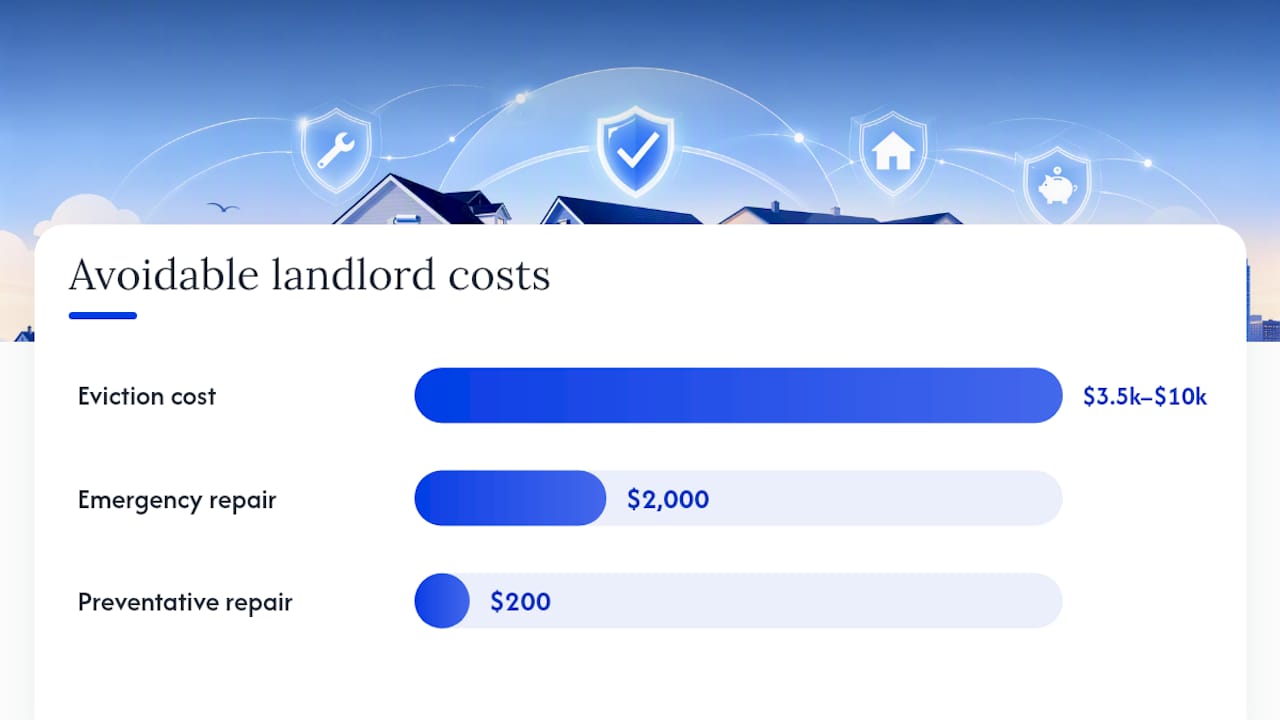
Tenant screening and lower eviction risk. Structured screening against income, credit, and rental history benchmarks filters out high-risk applicants before a lease is signed. Eviction events can cost landlords $3,500–$10,000 when legal fees and lost rent are combined.
Preventative maintenance and vendor discounts. Managers with established vendor networks negotiate better rates than individual landlords can. Catching a $200 plumbing issue before it becomes a $2,000 emergency is where net operating income is quietly protected.
Compliance and legal protection. Township-specific ordinances, HOA bylaws, and fair housing regulations change. A local manager tracks those changes; a self-managing landlord often finds out after a violation.
Clean financial reporting. Monthly income and expense statements, year-end summaries, and maintenance logs make tax preparation faster and portfolio decisions cleaner.
Nearly 75% of investors who use professional managers say the value justifies the fees, according to an industry write-up on rental performance.
Pro Tip: Ask any manager you interview for their average days-to-lease by season. A manager who tracks that number is pricing strategically; one who cannot answer it is not.
What changes when you own Section 8 properties
Section 8 rewrites the benefit mix in ways that catch landlords off guard. The upside is real: Housing Assistance Payment (HAP) contracts mean a portion of rent arrives directly from the local Public Housing Authority (PHA) on a fixed schedule, regardless of a tenant’s personal cash situation. Longer average tenancy and free listing exposure through HUD’s Go Section 8 network add to the appeal.
The obligations are equally real.
Annual HQS inspections. Every Section 8 unit must pass Housing Quality Standards inspections. A failed item delays HAP payments until the deficiency is corrected and re-inspected.
Rent limits tied to fair market rent. HUD sets local FMR ceilings. Your unit’s approved rent cannot exceed the PHA’s payment standard, which may fall below market rate in some Southern NJ zip codes.
PHA processing timelines. New HAP contracts and annual renewals move on the PHA’s schedule, not yours. Delays of several weeks are common during high-volume periods.
Paperwork volume. Lease addenda, HAP contract amendments, and inspection documentation require organized recordkeeping. For Section 8 portfolios, software and tight recordkeeping are essential to track HAP splits, inspection dates, and lease compliance at scale.
A professional manager handles inspection scheduling, submits correction documentation, tracks HAP contract renewal dates, and communicates directly with the PHA so you do not have to monitor a bureaucratic calendar. For more on turning these obligations into a repeatable system, see Section 8 management and consistent cash flow.
What a full-service property manager actually does for you
The service list sounds familiar until you map it to a real vacancy cycle. Here is what a full-service manager handles from the moment a unit turns over:
Marketing and leasing. Professional photos, MLS and rental platform syndication, Section 8 listing submission where applicable.
Tenant screening. Credit, income verification, criminal background, and prior landlord references against defined criteria.
Lease execution. State-compliant lease drafting, move-in inspection documentation, security deposit handling per New Jersey statute.
Rent collection and enforcement. Automated billing, late notices, and payment plans within lease terms.
Maintenance coordination. Work order intake, vendor dispatch, follow-up inspection, and cost approval within owner-set thresholds.
Emergency response. After-hours contact for habitability issues (no heat, water intrusion, electrical hazards).
HOA and condo administration. Tracking association dues, bylaw compliance, and violation responses for condo and PUD units.
Financial reporting. Monthly owner statements, maintenance cost summaries, and year-end reports.
Eviction handling. Notices, court filings, and coordination with legal counsel when required.
Section 8 and HUD interactions. HAP contract management, inspection scheduling, and PHA correspondence.
Services 5, 6, and 9 are where owner liability concentrates. A manager who handles those three consistently reduces your exposure to the most expensive failure modes. For a deeper look at how these comprehensive property management solutions map to investor outcomes, the firm’s overview covers the full scope.
Pro Tip: Request a sample monthly owner statement before signing any management agreement. If it does not break out maintenance costs by property and category, you cannot track where your money goes.

Understanding fees, break-even math, and traps to avoid
Management fees typically fall in the 5–10% range of collected rent, but the monthly percentage is rarely the whole picture.
Common fee components:
Monthly management fee: 5–10% of collected rent
Tenant placement fee: 50–100% of one month’s rent
Lease renewal fee: flat fee or partial month’s rent
Maintenance markup: 10–15% on vendor invoices (not universal; ask explicitly)
Eviction coordination fee: flat fee, varies by firm
If professional management reduces vacancy by even two weeks per year, that recovers roughly $750 in lost rent. Add one avoided eviction at a conservative $3,500 cost and the annual math favors professional management by a wide margin.
Red flags in management contracts:
Auto-renewal clauses with 60-day or longer notice requirements
Maintenance markups not disclosed in writing
No itemized owner statements
Vague “administrative fees” without defined triggers
Exclusivity clauses that prevent you from using your own licensed vendors
For a cost-effective property management framework that addresses fee transparency, 2ndstreetpropertymanagement publishes its service structure for owner review.
How professional management lets you scale your portfolio
Operational complexity grows faster than your unit count. Doubling from four units to eight does not double your workload; it compounds it, because maintenance calls, lease expirations, and inspections start overlapping. A professional manager absorbs that complexity through systems you cannot easily replicate solo.
Scaling enablers:
Centralized recordkeeping and property management software for lease tracking, maintenance logs, and financial reporting
Vetted vendor networks with pre-negotiated rates across plumbing, HVAC, electrical, and landscaping
Standardized screening and leasing templates that reduce per-unit setup time
Consistent inspection routines that catch deferred maintenance before it compounds
Financial reporting that gives lenders and partners the documentation they need to underwrite your next acquisition
Practitioner guidance commonly places the break-even for hiring a manager around 4–5 units, with local presence becoming decisive for out-of-area owners even at lower counts. Self-management tends to work for 1–3 local units where the owner can respond quickly; above that threshold, the operational load typically exceeds what most investors want to absorb.
Pro Tip: A hybrid approach works well for many investors: self-manage your simplest local units while outsourcing Section 8, out-of-area, or condo properties to a manager. It is a low-risk way to test the relationship before a full handoff. The DIY vs. professional management guide covers this staged transition in detail.
How to choose a local property manager in Southern New Jersey
The right manager is not the cheapest one or the one with the most units under management. It is the one whose systems match your portfolio’s specific risk profile.
Selection criteria:
Demonstrated Southern NJ experience (specific townships, not just “South Jersey”)
Section 8 track record with named PHAs (e.g., Housing Authority of the County of Camden, Atlantic City Housing Authority)
HOA and condo management experience if you own those asset types
Transparent, written fee schedule with no undisclosed markups
Technology stack that produces itemized owner statements monthly
Emergency response protocol with defined response windows
Vetted vendor network with references available
Licensing and professional affiliations (NARPM, IREM membership signals commitment to standards)
Questions to ask every candidate:
What is your average days-to-lease for a vacant unit in this zip code?
What is your eviction rate across your current portfolio?
How many Section 8 units do you currently manage, and which PHAs do you work with?
Can you provide two references from owners with portfolios similar to mine?
How do you handle a failed HQS inspection?
What is your maintenance markup policy, and is it in writing?
Red flags during interviews: vague answers about response times, reluctance to provide owner references, fee schedules that require “further discussion,” and no mention of software or reporting tools.
The role of property management companies in township compliance and vendor oversight is a useful external reference when building your evaluation criteria.
What to expect in your first 30, 60, and 90 days
Onboarding is where most management relationships succeed or fail. A conservative playbook calls for a full property and lease audit, competitive vendor bids, and deferred maintenance scheduling within the first 60 days.
Phase | Manager Actions | Owner Actions |
— | Property and lease audit; collect keys, vendor contacts, insurance certificates; set up owner portal and accounting | Transfer all leases, tenant contacts, maintenance history, and existing vendor agreements |
— | Schedule deferred maintenance; obtain two competitive vendor bids; complete initial property inspection; begin marketing any vacant units | Review and approve maintenance scope; confirm insurance coverage meets management agreement requirements |
— | First full monthly owner statement; active leasing if vacant; Section 8 inspection scheduling if applicable; HOA compliance review | Review first statement; confirm reporting format meets your needs; provide feedback on communication cadence |
Owner documents to prepare at handoff:
Executed leases for all current tenants
Security deposit amounts and holding account details
Existing vendor contracts and warranty documentation
Keys, access codes, and HOA contact information
Current insurance certificates
During onboarding, ask your manager to report three metrics weekly: active maintenance items, days-to-fill on any vacant unit, and pending inspection dates. Those three numbers tell you whether the transition is on track.
An investor’s honest take on what professional management actually changes
The conventional framing treats professional management as an expense to justify. That framing is wrong. The real question is whether your time and risk exposure are priced correctly when you self-manage.
Most investors who make the shift do so after a specific event: an expensive eviction, a failed Section 8 inspection that froze HAP payments for two months, or a maintenance emergency they handled badly because they were three hours away. The pain event is the data point that makes the opportunity cost visible.
What professional management actually changes is not your gross rent. It is your net operating income after accounting for vacancy, legal exposure, and the hours you stop spending on coordination. For a Southern NJ portfolio with any Section 8, condo, or multi-township complexity, the local compliance layer alone justifies the fee for most owners above four units. The investors who regret hiring a manager almost always hired the wrong one, not the wrong category of service.
2ndstreetpropertymanagement serves Southern NJ investors who want results, not excuses
Southern New Jersey investors with Section 8, condo, HOA, or multi-township portfolios need a manager who already knows the local PHAs, township ordinances, and vendor landscape. 2ndstreetpropertymanagement was built by investors who own rental properties themselves, which means the firm’s priorities align with yours: protect NOI, reduce vacancy, and keep compliance clean.
The firm’s services cover the full investor lifecycle: tenant screening and leasing, Section 8 HAP management and PHA coordination, HOA and condo administration, maintenance coordination through a vetted vendor network, and monthly financial reporting that gives you the data to make your next acquisition decision. Every service is structured around fee transparency and owner-first reporting.
If your portfolio is growing past the point where self-management makes sense, or if a recent pain event has made the cost of DIY visible, the next step is a portfolio review. Visit 2ndstreetpropertymanagement to request an assessment and see how the firm’s Southern NJ expertise applies to your specific properties.
Sources
For local PHA contacts and HUD fair market rent data for Southern New Jersey counties, visit HUD’s official resource locator and filter by New Jersey county.
This article is general information, not a substitute for advice from a qualified financial advisor. Consult a qualified financial professional about your own circumstances before acting on anything here.
Recommended
Comments