
Real Estate Accredited Investor Explained for Landlords
- Rey Rey Rodriguez

- 1 day ago
- 8 min read

In this article, a “real estate accredited investor” means a landlord or rental-property owner whose portfolio size, growth goals, or management complexity make professional property management a practical and financially sound choice. You don’t need a regulatory designation to qualify. You need a clear-eyed look at your time, your units, and your objectives.
The short recommendation: consider hiring a professional manager once the hours you spend on tenant calls, maintenance coordination, and lease administration consistently cost more than the management fee would. That crossover happens sooner than most owners expect.
You own multiple rental units or plan to add more within 12 months
Your property is more than 30 minutes from where you live or work
Tenant turnover, maintenance requests, or rent collection is consuming your evenings and weekends
You want to scale your portfolio without scaling your workload
You’re managing Section 8, condo, or HOA-governed properties with added compliance layers
Tools like Zillow Rental Manager help with listing and tenant marketing, but they don’t replace the full operational stack a professional manager provides. Industry bodies like IREM set the professional standards your manager should already meet.
Pro Tip: If you’re unsure whether you’re ready, track your management hours for one month. If the total exceeds 10 hours, the math on a professional manager almost always works in your favor.
Key Takeaways
Landlords who delegate operations to a professional manager convert ownership from a time-intensive job into a system that scales with their portfolio.
Point | Details |
When to hire | Consider a manager once you own 3+ units, manage remotely, or spend 10+ hours monthly on operations. |
Typical fee range | Monthly management fees run 5–10% of collected rent, plus leasing and setup fees. |
Top interview priority | Confirm state licensing, ask for a written fee schedule, and request two current client references. |
Accredited investor status | A net worth above $1M (excluding primary residence) or income above $200K annually likely qualifies you. |
2ndstreetpropertymanagement | Investor-focused management in Southern New Jersey covering screening, leasing, maintenance, Section 8, and HOA. |
Table of Contents
What does a property manager actually do for you?
Property management converts ownership from a second job into a system. The core recurring duties a manager handles include:
Tenant sourcing and screening: Background checks, credit pulls, income verification, and reference calls
Lease administration: Drafting, renewals, addenda, and legal compliance
Rent collection: Online payment processing, late-fee enforcement, and delinquency tracking
Maintenance coordination: Work orders, vendor dispatch, and follow-up inspections
Emergency response: Availability for urgent repairs
Move-in and move-out inspections: Documented condition reports that protect your deposit claims
Eviction processing: Notices, filings, and court coordination where the contract permits
You retain final say on major decisions: rent increases above a set threshold, capital improvements, and lease non-renewals. Service depth varies by contract, so read every clause before signing.
Pro Tip: Experienced managers run established vendor networks, which typically means faster response times and lower repair costs than an owner sourcing contractors individually. Ask every candidate how many active vendors they maintain and what their average work-order close time is.

The benefits of professional management go beyond convenience. Better screening reduces turnover. Faster maintenance response protects asset value. Consistent rent collection protects cash flow.
How are property management fees structured?
Management fees typically range around 5–10% of collected rent, depending on market, unit type, and service scope. Beyond the monthly percentage, expect these additional fee lines:
Setup fee: One-time onboarding charge, often $100–$300 per property
Leasing/placement fee: Charged when a new tenant is placed, commonly one-half to one full month’s rent
Maintenance coordination markup: Some firms add 10–15% to vendor invoices
Eviction fee: Flat fee or hourly rate for eviction processing, separate from legal costs
Early-termination fee: Charged if you exit the management agreement before the contract term ends
Fee drivers include local market rent levels, unit type, and whether services are bundled or unbundled. A portfolio account with five or more units often negotiates a lower percentage than a single-family standalone.
Always request a sample invoice and a full fee schedule before signing. Fee transparency is a baseline expectation, not a bonus.
How do you choose the right property manager?
When to hire: concrete triggers
You own three or more units and management tasks consume meaningful time weekly
Your property is out of your immediate area
Regulatory complexity (Section 8, HOA, condo rules) is adding compliance risk
Your opportunity cost of time is higher than the management fee
You’re planning to acquire additional properties within the next year
Decision frameworks show a portfolio-size breakpoint commonly in the 3–6 unit range where professional management typically makes financial and operational sense.
Interview questions to ask every candidate:
Are you licensed in this state, and does your firm carry E&O and general liability insurance?
What does your tenant-screening process include, and which platforms do you use?
How do you handle maintenance requests, and what is your average work-order close time?
How do you set and adjust rent, and how often do you review market rates?
What does your owner reporting look like, and how frequently do you send statements?
What are your termination terms, and is there a penalty for early exit?
Can you provide two references from current clients with similar property types?
Red flags to watch for:
Fees quoted verbally with no written schedule
No references or unwillingness to provide them
Missing local licensing (requirements vary by state)
No digital work-order or owner-portal system
Vague answers on vacancy turnaround times
What does onboarding look like, and how long does it take?
Getting a manager fully operational takes 1–2 weeks for initial setup and roughly 30 days before the first full month of operations runs without owner involvement.
Sign the management agreement and provide property documents (deed, insurance, existing leases)
Transfer or create leases with the manager named as the authorized agent
Notify current tenants in writing of the management change and new payment instructions
Complete a move-in inspection with photos and a documented punch list
Introduce vendors or transfer existing service contracts to the manager’s network
Set up owner portal access for real-time reporting and financial statements
Transfer security deposits per your state’s legal requirements
The first leasing cycle, if a unit is vacant at handover, typically runs 2–8 weeks depending on market conditions and how quickly the manager can list and show the property. Providing clean documentation upfront cuts that timeline significantly.
Avoid service gaps on day one by keeping one month’s operating reserve in the property account before handover. Fannie Mae guidance recommends that even owners who delegate management stay engaged enough to supervise their manager’s performance.
What tax and licensing basics should you know?
Professional property-management fees are commonly deductible as an ordinary business expense for investment properties. That deduction applies to the monthly management fee, leasing fees, and related charges. Confirm the specifics with a licensed tax advisor for your situation.
State licensing varies: Some states require property managers to hold a real estate broker’s license; others permit management under a salesperson license or impose no license requirement at all. Confirm your state’s rules before hiring.
Written contracts matter legally: A management agreement is a binding contract. Have an attorney review it if you’re uncertain about termination clauses or liability language.
Security deposit handling: Most states mandate that deposits be held in a separate escrow account. Verify your manager’s compliance before transferring funds.
Pro Tip: Ask your CPA whether your rental activity qualifies as a trade or business under IRS guidelines. That classification affects which deductions you can take and whether passive-loss rules apply to your situation.
This section is general information, not tax or legal advice. Consult a licensed tax advisor or attorney for guidance specific to your jurisdiction.
What qualifies you as a real estate accredited investor?
In the regulatory sense, an accredited investor meets specific financial thresholds set by the SEC: a net worth exceeding $1 million (excluding primary residence) or annual income above $200,000 as an individual ($300,000 jointly with a spouse) in each of the two most recent years, with a reasonable expectation of the same in the current year. Professional credentials, including certain FINRA licenses, also qualify.
For landlords, the practical relevance is this: if your rental portfolio has grown to the point where your net worth or income crosses these thresholds, you likely already qualify. Owning several cash-flowing properties, combined with equity appreciation, moves many active landlords into accredited territory without them realizing it.
What advantages does accredited status give landlords?
Accredited status opens access to private real estate offerings that are not available to the general public. These include private placements, real estate syndications, and certain types of real estate investments structured under SEC Regulation D. You can also access real estate crowdfunding platforms that offer institutional-grade deals with lower minimum investments than direct ownership.
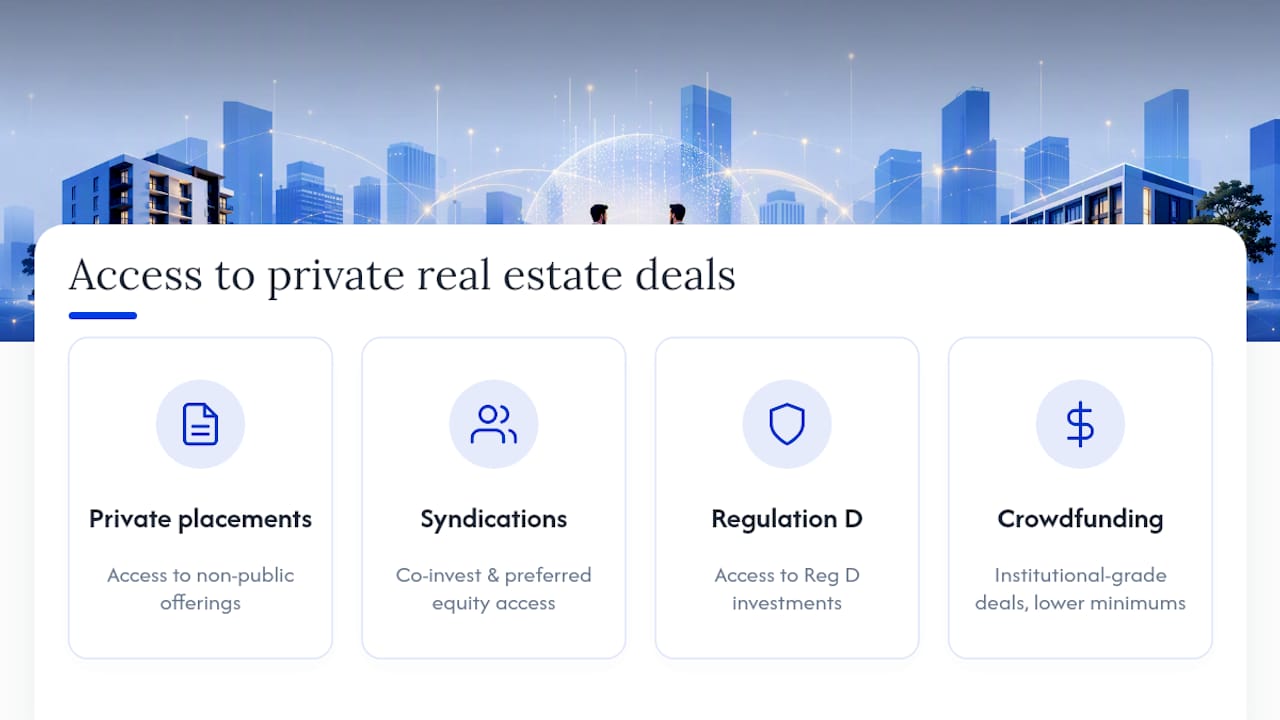
In a property management context, accredited status signals to operators and syndicators that you’re a sophisticated counterparty. That credibility can open doors to co-investment opportunities, preferred equity structures, and off-market deals that smaller or newer investors don’t see.
What are your next steps after understanding your investor status?
Verify your current net worth and income against the SEC thresholds above. A CPA or financial advisor can confirm whether you qualify.
Request a verification letter from your accountant or attorney. Many private offerings require written third-party confirmation of accredited status.
Identify accredited-only investment channels: real estate syndications, private REITs, Regulation D offerings, and select crowdfunding platforms.
Consult a securities attorney before committing capital to any private placement. These deals carry illiquidity risk and are not registered with the SEC.
Align your property management structure with your investment goals. If you’re scaling into syndications or additional rentals, delegating day-to-day operations to a professional manager frees the time and mental bandwidth that portfolio-level investing requires.
Why investor-focused management changes the outcome
Most property management companies are built for landlords who want their units handled. Fewer are built for investors who want their portfolio to perform. That distinction matters in practice, not just in marketing copy.
When a manager understands ROI, cash-on-cash return, and depreciation schedules, their decisions align with yours. They set rent to market, not to avoid a difficult conversation. They recommend a capital repair when it protects asset value, not when it’s easiest to schedule. They report in the language of returns, not just maintenance logs.
Zillow Rental Manager is a practical tool for listing and tenant marketing, and investor-focused managers use it as part of a broader workflow that includes screening platforms, owner portals, and vendor management systems. Technology shortens vacancy cycles. The right manager knows which tools to use and when.
The exit strategy implications of professional management are also underappreciated. A well-documented rental history, clean maintenance records, and consistent rent rolls make a property significantly easier to sell or refinance at favorable terms.
2ndstreetpropertymanagement: built for investors, not just landlords
2ndstreetpropertymanagement was built by investors, for investors. That means the fee structure is transparent, the reporting speaks in returns, and the vendor relationships are built to protect your margins, not pad ours.
Services cover the full management stack: tenant screening, leasing, rent collection, maintenance coordination, Section 8 housing management, and condo and HOA association oversight. Whether you own one rental or a growing portfolio across Southern New Jersey, the onboarding process starts with a portfolio evaluation and a custom proposal, so you know exactly what you’re getting before you sign anything.
Schedule a portfolio review and get a clear picture of what professional management would cost and return for your specific properties.
Sources
Recommended
Comments