
What Is a Rent-Ready Unit? Landlord's Complete Guide

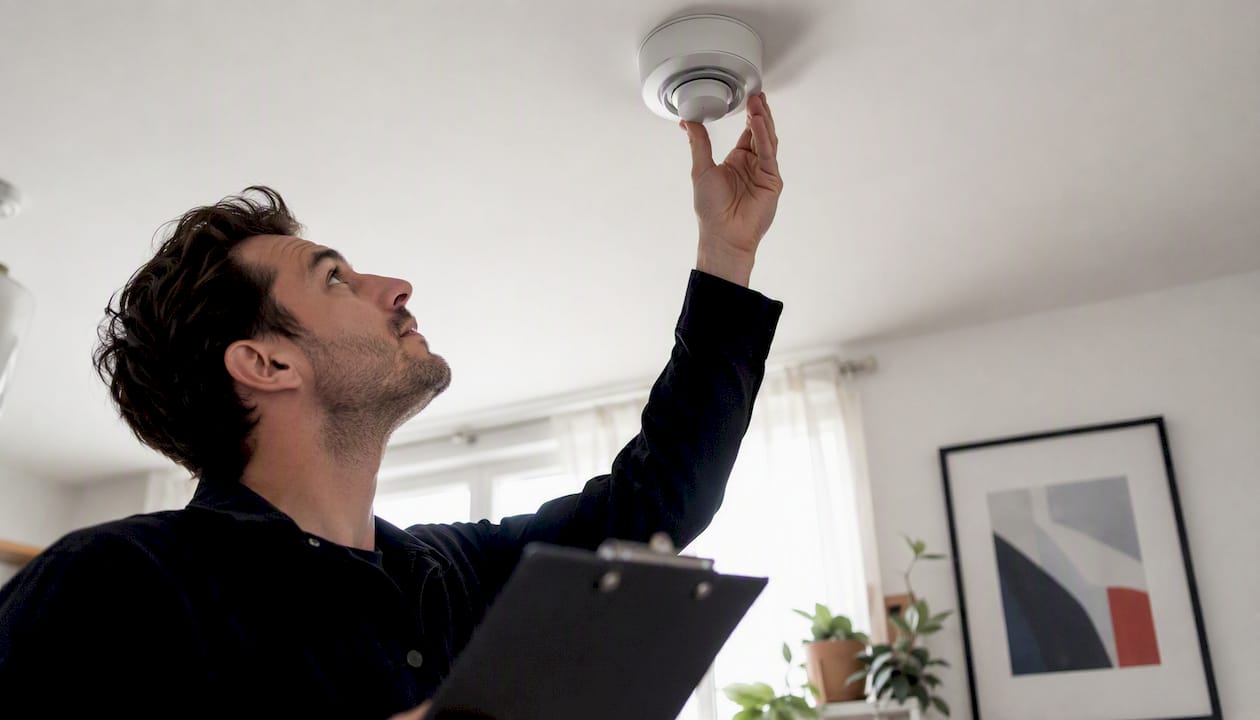
A rent-ready unit is a rental property that is clean, safe, fully functional, and legally habitable so a tenant can move in immediately without needing any repairs or corrections. According to REI Prime, meeting legal habitability is the first priority, followed by market-standard presentation. The moment a tenant signs a lease, the clock is running on your vacancy cost. Your first move: inspect the unit room by room, document its condition with timestamped photos, and sign off on every checklist item before you hand over the keys.
Four conditions must be true at handoff. The unit must be thoroughly cleaned. All utilities, including heat, hot water, and electricity, must be working. Every required safety device, such as smoke and carbon monoxide detectors, must be installed and tested. And every key, fob, or access code promised in the lease must be in the tenant’s hands on day one.
Key Takeaways
A rent-ready unit must meet legal habitability standards first, then market-standard presentation, before any tenant takes occupancy.
Point | Details |
Habitability comes first | Heat, hot water, safe electrical, and working smoke/CO alarms are non-negotiable before any cosmetic work. |
Use a vendor checklist | A fillable, signed checklist reduces post-move-in maintenance calls and keeps vendors accountable. |
Budget 1–3% of purchase price | REI Prime recommends this range for typical make-ready costs as part of first-year ownership planning. |
Document before handoff | Timestamped photos and a signed move-in condition form are your primary defense in any dispute. |
2ndstreetpropertymanagement | Handles full make-ready coordination for landlords in Southern New Jersey, from vendor scheduling to move-in documentation. |
Table of Contents
What a rent-ready checklist actually covers, room by room
A rent-ready checklist is your most reliable tool for consistent turnover quality. Using a fillable, vendor-facing version reduces post-move-in maintenance calls and keeps every vendor working to the same standard. Here is what a thorough checklist covers.
Cleaning and surfaces:
All rooms: floors swept, mopped, or vacuumed; baseboards wiped; walls spot-cleaned or repainted where scuffed
Kitchen: appliances cleaned inside and out (oven, refrigerator, dishwasher, microwave); cabinets wiped; sink and faucet descaled
Bathrooms: toilet, tub, shower, and sink scrubbed; grout cleaned; exhaust fan tested
Entry and common areas: light fixtures cleaned, door hardware wiped, closets emptied and swept
Systems and utilities:
HVAC: filter replaced, thermostat tested in both heat and cool modes
Hot water heater: temperature set to 120°F, no leaks, adequate recovery time
Plumbing: all drains clear, no drips at faucets or supply lines, water pressure adequate
Electrical: all outlets tested, no tripped breakers, all light fixtures working with new bulbs
Security and access:
Locks rekeyed or lock cylinders replaced between every tenancy
All keys, fobs, garage openers, and mailbox keys counted and documented
Deadbolts, chain locks, and sliding door security bars functioning
Safety and compliance:
Smoke detectors tested and batteries replaced; CO detectors installed per local code
GFCI outlets tested in kitchens, bathrooms, and exterior locations
For pre-1978 units: lead paint disclosure provided per federal law; no deteriorating paint surfaces
Window guards installed where required by local ordinance
Cosmetic and market items:
Fresh paint in high-wear areas (hallways, kitchens, around light switches)
Carpets professionally cleaned or replaced if worn beyond cleaning
Pest control treatment completed and documented
Pro Tip: Batch similar tasks across multiple units whenever possible. Scheduling one cleaning crew and one painter across three adjacent turnovers in the same week cuts per-unit cost and eliminates the scheduling gaps that stretch a single-unit turnover from three days to ten.
How lease language and U.S. habitability law define your obligations
“Rent-ready” is not just an operational phrase. It carries legal weight in both leases and purchase-sale agreements. Law Insider’s contract database shows that rent-ready condition clauses commonly specify fresh paint, cleaned carpets, working appliances, and functioning systems, and they often include credits or remedies when units are not delivered in that condition at closing.
Most U.S. jurisdictions impose an implied warranty of habitability, which requires landlords to deliver and maintain units with working heat, hot water, plumbing, safe electrical systems, and functioning smoke and CO alarms. These are not optional. Failing to meet habitability standards before move-in exposes you to rent withholding, repair-and-deduct claims, and code enforcement action. Your habitability compliance obligations should be the first column on any make-ready checklist, not an afterthought.
Contract variations matter too. “As-is” lease language does not waive habitability requirements in most states. In purchase-sale transactions, rent-ready apartment provisions commonly allocate repair responsibilities between buyer and seller, with walk-through timing and credit amounts negotiated in advance.
Consult your local housing authority or a licensed real estate attorney before relying on any contract language. Habitability requirements vary by state and municipality, and what is acceptable in one jurisdiction may be a code violation in another.
How long does make-ready take, and what does it cost?
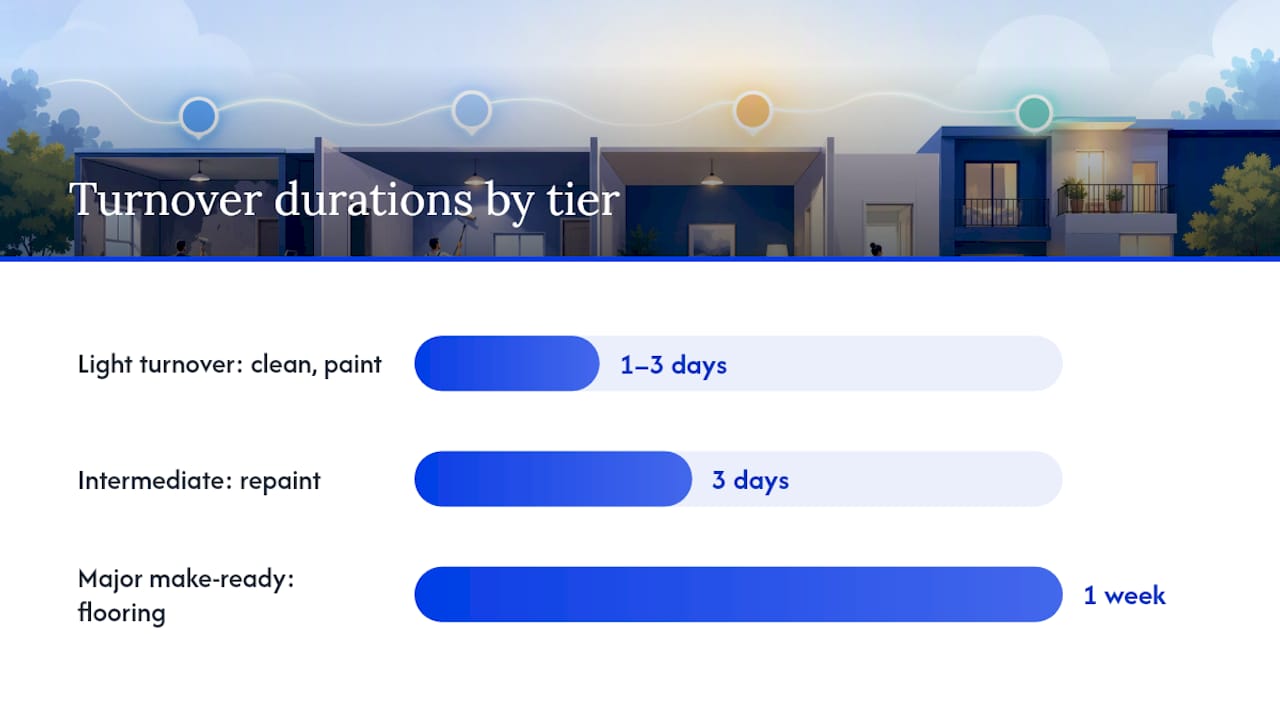
Turnaround time depends almost entirely on scope. REI Prime recommends budgeting 1–3% of purchase price for typical make-ready work, and that range maps closely to the three turnover tiers most managers use.
Scope | Typical Duration | Common Tasks |
Light turnover | 1–3 days | Deep clean, minor touch-up paint, lock rekey, detector test |
Intermediate | 3 days | Full repaint, carpet cleaning or replacement, appliance repair |
Major make-ready | 1 week | Flooring replacement, HVAC service, plumbing or electrical repairs |
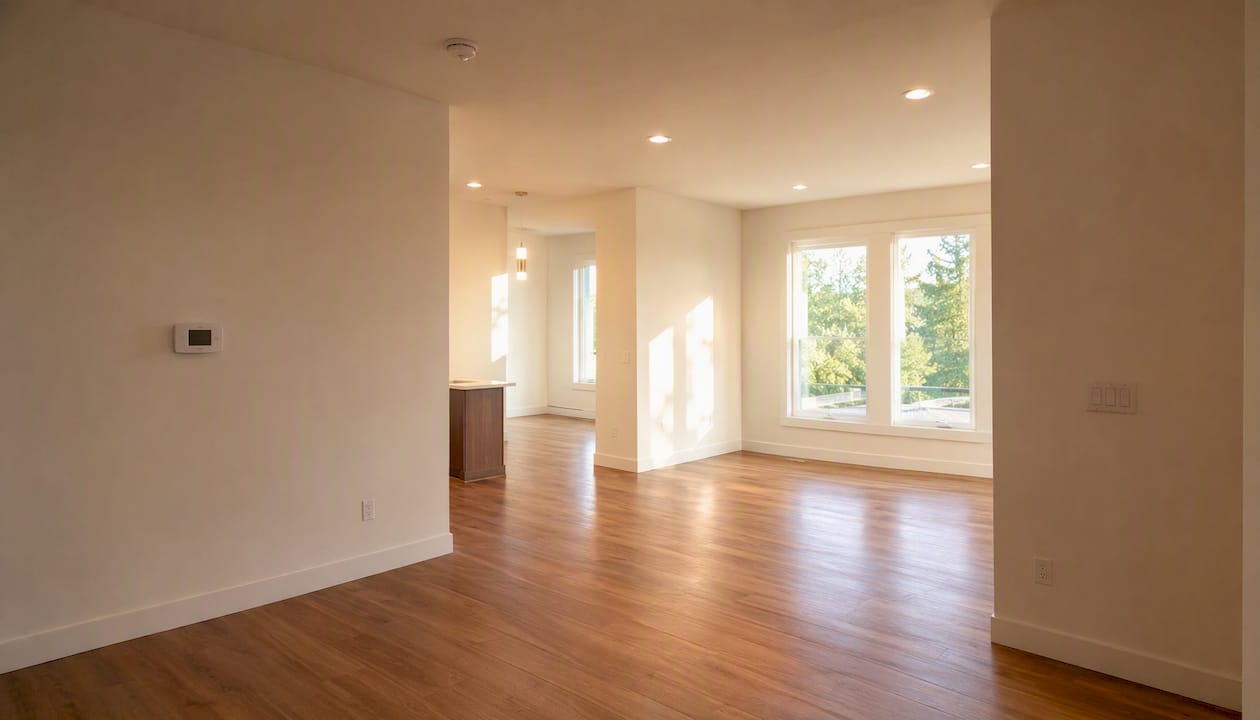
Cost drivers vary by market, but the categories are consistent. Cleaning runs $150–$400 for a standard apartment depending on size and condition. A full repaint of a two-bedroom unit typically costs $800–$2,000 with labor. Lock rekeying runs $50–$150 per unit. Appliance repair or replacement varies widely, but budgeting $200–$600 per appliance for repair is a reasonable starting point. Pest control treatments generally run $100–$300 for a standard treatment. For a deeper breakdown of how to categorize and estimate these expenses, the rental property maintenance cost guide covers each line item in detail.
Pro Tip: Get vendor quotes on a per-unit basis, but negotiate on volume. A painter who charges $1,400 per unit for a single job will often drop to $1,000 per unit when you commit to three units in the same building in the same month.
How to document condition and complete a tenant handoff
Documentation is what separates a smooth tenancy from a costly dispute at move-out. A repeatable handoff process protects both you and the tenant.
Pre-listing inspection: Walk the unit before vendors begin. Note every defect, existing damage, and item needing repair. This baseline is your starting point.
Vendor sign-off: Require each vendor (cleaner, painter, maintenance tech) to sign a completion form confirming their scope is done. This creates accountability before the final walk.
Final inspection: Walk the unit again after all work is complete. Confirm every checklist item is closed. Do not skip this step even when you trust the vendor.
Photo documentation: Photograph every room, every appliance, every fixture, and any area with prior damage. Use a phone or camera that timestamps images automatically. Store photos tied to the lease record, not just a generic folder.
Move-in condition form: Have the tenant sign a form at key handoff that lists appliances and their working status, existing cosmetic damage, meter readings, and the number of keys issued. Both parties keep a copy.
Record retention: Keep signed forms, photos, and vendor receipts for the full tenancy plus any applicable statute of limitations period in your state (often three to five years). A maintenance planning system helps you organize records so they are retrievable when you need them.
What happens when a unit isn’t rent-ready at move-in
If a tenant moves into a unit that does not meet habitability or the lease’s rent-ready standard, the consequences can escalate quickly. In most U.S. jurisdictions, tenants have the right to withhold rent, pursue repair-and-deduct remedies (where state law permits), or file a complaint with the local housing authority or code enforcement office. These are not edge cases. They are the standard remedies built into most state landlord-tenant statutes.
Your best response as a landlord is to act fast and document everything. Acknowledge the issue in writing, provide a realistic repair timeline, and offer a temporary remedy (a rent credit, for example) when the defect is significant and the repair will take more than a day or two. Do not ignore written complaints from tenants. An unanswered written complaint can be used as evidence of bad faith in a housing court proceeding.
Code enforcement involvement is appropriate when a defect poses a genuine health or safety risk and the landlord has not acted. For jurisdiction-specific guidance on tenant remedies, repair-and-deduct thresholds, and notice requirements, consult a licensed attorney in your state. General patterns are useful to know; local law is what actually governs.
Printable rent-ready checklist for landlords and vendors
Copy this checklist into a maintenance ticket, vendor work order, or print it for on-site use. Add any property-specific or locally required items before distributing.
Cleaning:
All floors cleaned (swept, mopped, or vacuumed)
All surfaces wiped (counters, cabinets, baseboards)
Kitchen appliances cleaned inside and out
Bathrooms scrubbed (toilet, tub, sink, tile)
Windows cleaned, tracks wiped
Systems:
HVAC filter replaced, system tested
Hot water heater checked, temperature set
All drains clear, no leaks
All outlets and switches working
All light fixtures working with new bulbs
Safety:
Smoke detectors tested, batteries replaced
CO detectors installed and tested
GFCI outlets tested
Lead paint disclosure provided (pre-1978 units)
Security:
Locks rekeyed or replaced
All keys counted and documented
Deadbolts and secondary locks functioning
Cosmetic:
Touch-up paint or full repaint completed
Carpets cleaned or replaced
Pest control completed and documented
For a more detailed version, the ultimate rental property checklist includes additional fields for property-specific items and local code requirements. Customize any checklist to reflect your local housing code before handing it to vendors.
The make-ready bottleneck most landlords overlook
The biggest delay in most turnovers is not the work itself. It is the gap between when a tenant vacates and when the first vendor shows up. Managers who schedule vendors before the unit is vacant, using the notice-to-vacate date as the trigger, consistently turn units faster than those who wait until the keys are back in hand.
One operational shift that makes a measurable difference: create a standard vendor packet that includes the checklist, unit photos from the prior move-in, and a written scope of work. Vendors who arrive with clear expectations complete the job in fewer visits. Fewer return trips mean fewer days of vacancy, and fewer days of vacancy directly protect your cash flow.
How 2ndstreetpropertymanagement handles rent-ready turnovers for you
Coordinating vendors, tracking checklist completion, and managing move-in documentation across multiple units is where vacancy days accumulate and liability exposure grows. 2ndstreetpropertymanagement handles the full make-ready cycle for landlords and investors in Southern New Jersey and the surrounding suburbs, including vendor coordination, pre- and post-turnover inspections, move-in condition documentation, and emergency repair response.
If you own rental property and want turnovers handled with the same discipline this guide describes, without managing the process yourself, contact 2ndstreetpropertymanagement to learn how the team manages make-ready from vacancy notice to signed move-in form.
Sources
For jurisdiction-specific habitability requirements, consult your local housing authority or a licensed real estate attorney. Local codes vary significantly and override any general guidance in this article.
This article is general information, not a substitute for advice from a qualified lawyer. Consult a qualified legal professional about your own circumstances before acting on anything here.
Recommended
Comments