
Avoid $1,000/Week Fines: 7 Step Lead Paint Compliance for NJ Landlords


If you own a rental built before 1978 in New Jersey, you are almost certainly subject to periodic lead paint inspections under state law, typically every three years or whenever a tenant turns over. A valid lead-safe certificate, good for two years, can exempt you from a turnover inspection. Your immediate move: confirm whether your unit has a current certificate, and if not, schedule an inspection while pulling together the federal disclosure paperwork your next lease will require.
TL;DR:
Inspections are required every three years or upon tenant turnover for units built before 1978, unless a valid lead-safe certificate is on file.
Municipalities may handle inspections directly or outsource to certified contractors; some high-risk areas require dust wipe sampling for elevated blood lead levels.
Federal disclosure rules demand providing tenants with lead hazard information and test records before leasing, separate from state physical inspections.
Businesses must choose between abatement, which is permanent and exempts units from further inspections, or interim controls with regular clearance testing for temporary hazard management.
Hiring certified contractors involves verifying credentials, insurance, and compliance with EPA and state standards, with recordkeeping essential for legal and sale purposes.
Table of Contents
Which Rental Units Fall Under Lead Paint Rules in NJ
The state’s lead paint rules, established under P.L.2021, c.182, cover single family rentals, two family homes, and multiple rental dwellings built before 1978. That covers a large share of New Jersey’s rental stock, since so much of it predates the 1978 federal ban on residential lead paint.
Not every older unit is on the hook, though. Common exemptions include:
Units constructed in 1978 or later, when lead paint was no longer legal for residential use.
Seasonal rentals occupied for less than six months per year.
Units holding a current lead-free or lead-safe certificate.
Multiple dwellings registered for 10 years or more with no cited paint violations.
Check your certificate of occupancy or county tax records for the construction year, and ask your municipal housing office whether a certificate is already on file before assuming you need a fresh inspection.
When Do Inspections Happen and Who Performs Them?
Under N.J.A.C. 5:28A, the compliance clock started running the moment the law took effect. Here is the sequence most landlords need to track:
Initial inspection was due within two years of the law’s effective date, with the first statutory deadline landing on July 22, 2024.
Recurring inspections follow every three years, or sooner if a tenant moves out and a new lease begins.
Valid lead-safe certificates pause that clock. If you already hold one, you skip the turnover inspection until it expires.
Municipalities with a permanent local housing agency handle inspections directly. Towns without one hire a certified lead evaluation contractor, and in some cases you can hire your own certified contractor instead, unless your municipality blocks that route over a conflict of interest.
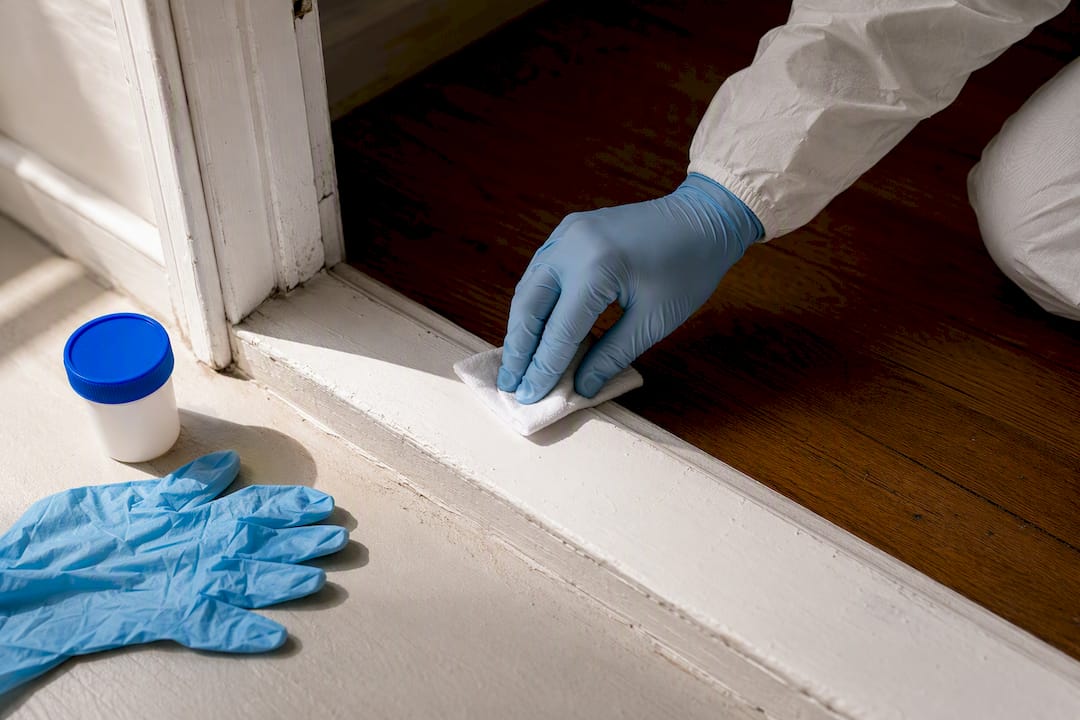
Statistic Callout: In municipalities where at least 3% of children tested show elevated blood lead levels, inspectors must use dust wipe sampling rather than a simple visual assessment, a threshold set under N.J.A.C. 5:28A specifically to catch hazards that a walkthrough alone would miss.
What Federal Disclosure and Renovation Rules Apply?
New Jersey’s inspection mandate runs alongside a separate set of federal obligations, and conflating the two is one of the most common compliance mistakes landlords make. Documentation duties under federal law do not substitute for the state’s physical inspection and remediation requirements, and vice versa.
Before any lease on pre-1978 housing becomes binding, you must:
Provide prospective tenants with the EPA-approved lead hazard information pamphlet.
Disclose any known lead paint or lead hazards in the unit.
Share copies of any existing test records or inspection reports.
That obligation comes from Section 1018 of Title X, the federal disclosure rule. Separately, any renovation that disturbs painted surfaces in a pre-1978 unit triggers the EPA’s Renovation, Repair and Painting rule, which requires an EPA-certified firm and trained renovators following lead-safe work practices. Painting a wall yourself is one thing; sanding it down before a new tenant moves in is another, and it puts you squarely inside RRP territory. For a fuller breakdown of what has to be disclosed and documented, see our rental property disclosure guide.
Abatement or Interim Controls: Which Remediation Fits?
Once an inspection turns up a hazard, you have two paths, and the right one depends on how long you plan to hold the property.
Abatement means permanent removal or enclosure of the lead hazard, governed by N.J.A.C. 5:17. It costs more upfront but, once you have a clearance certificate, it can exempt the unit from further periodic inspections.
Interim controls are temporary risk management measures, following HUD guidelines, meant to control a hazard without eliminating it. Owners choosing this route need dust wipe sampling within 60 days to confirm the hazard has actually been reduced.
Clearance testing under N.J.A.C. 5:17 uses specific thresholds: floors must test below 10 micrograms per square foot, interior window sills below 100, and window wells below 400. Anything above those numbers means the job is not done, regardless of what it looked like when the crew packed up.
Pro Tip: If you are holding a property for the long term, abatement usually pays for itself by removing you from the three-year inspection cycle entirely. If you are close to selling, interim controls with proper documentation may be the more cost-effective bridge.
Which certificate you end up with matters. A lead-free certificate typically removes the unit from future inspection cycles altogether. A lead-safe certificate buys you two years before the clock restarts.
How to Vet Certified Lead Contractors in New Jersey
Hiring the wrong contractor creates a paper trail that will not hold up if a municipality or tenant challenges your compliance later. Work through this before signing anything:
Confirm the firm’s certification directly with the NJ Department of Community Affairs, and check individual permits through the NJ Department of Health.
Ask for proof of liability insurance and current workers’ compensation coverage.
Request sample clearance reports from recent jobs so you know what your own report should look like.
Confirm the testing method they use, whether that is dust wipe sampling or an XRF handheld analyzer, and ask for at least two references.
If the scope includes removal or encapsulation, check with your local construction office on whether a UCC permit applies, similar to what you’d confirm for a certificate of occupancy update.
Confirm EPA RRP certification separately if the job involves any renovation work, since state lead certification and federal RRP certification are not automatically the same credential.
Recordkeeping, Fees, and What Happens If Your Town Falls Behind
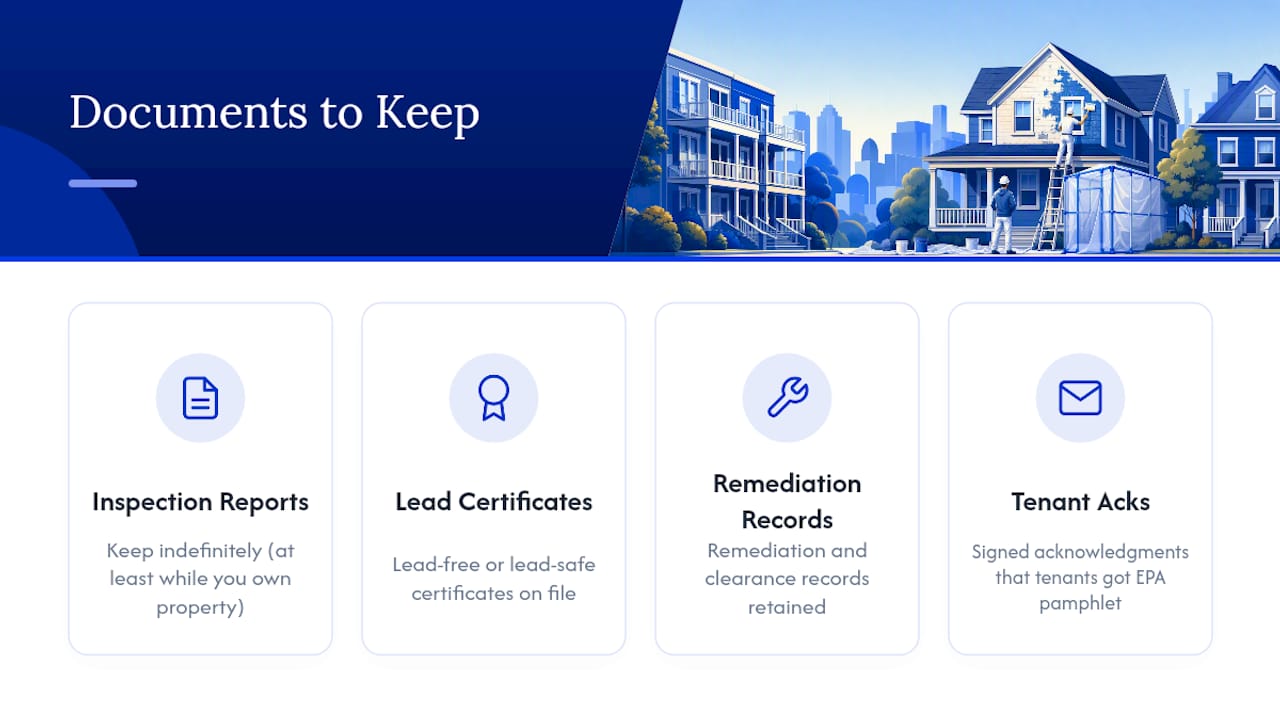
Keep four categories of documents on file indefinitely, or at minimum for as long as you own the property: inspection reports, lead-free or lead-safe certificates, remediation and clearance records, and signed acknowledgments that tenants received the EPA pamphlet.
On fees, P.L.2021, c.182 authorizes municipalities to charge an additional $20 per unit that feeds the Lead Hazard Control Assistance Fund, on top of whatever the inspection or contractor itself costs.
Statistic Callout: Landlords cited for noncompliance generally get a 30-day cure window, but penalties can run up to $1,000 per week once that window closes and the violation remains open.
Here is the part many owners miss: if your municipality never schedules the inspection, that inaction does not excuse you. The legal burden still sits with you as the property owner, so waiting on a notice that never comes is a losing strategy. Hiring your own certified contractor proactively is often the safer move, and pairing that inspection with your rental registration filing keeps your paperwork aligned with the municipality’s records.
A Practical Compliance Checklist for Every Turnover
Managing a portfolio of pre-1978 units means building a repeatable process, not scrambling every time a lease ends. Here is the sequence that keeps landlords out of enforcement trouble:
Verify whether the unit is covered and pull the construction year from tax records.
Check whether a valid lead-safe or lead-free certificate is already on file.
If no certificate exists or one has expired, schedule an inspection immediately.
Hire a certified lead evaluation contractor, verifying credentials as outlined above.
If remediation is needed, choose abatement or interim controls and run the required clearance test.
Archive every report, certificate, and pamphlet acknowledgment in one place.
Deliver the EPA disclosure pamphlet and any test records to the new tenant before the lease is binding.
Pro Tip: Set calendar reminders 90 days before each certificate’s expiration, not the week it lapses. Combining the lead inspection visit with other periodic checks, like smoke detector compliance, saves a trip and keeps your maintenance calendar from fragmenting into a dozen separate appointments.
Centralizing these records also pays off at sale time. Buyers and their attorneys will ask for exactly this documentation, and having it ready shaves weeks off closing.
Why Proactive Compliance Protects More Than Your Liability
Waiting for a municipal notice before addressing lead paint is a bet against your own property value. Every missed deadline compounds into turnover friction, tenant disputes, and remediation costs that grow the longer a hazard sits unaddressed. Owners who treat inspection cycles as a fixed cost of doing business, rather than an emergency to react to, spend less over the life of the property.
Centralizing this workflow, whether through your own tracking system or a property manager who already runs one, cuts the odds of a missed deadline dramatically. If you are unsure where your portfolio stands, a compliance review is worth requesting before your next tenant turnover, not after.
— Main
How 2ndstreetpropertymanagement Handles Lead Compliance for You
Chasing certificate expiration dates across a portfolio while also screening tenants and fielding maintenance calls is exactly where compliance slips through the cracks. 2ndstreetpropertymanagement is built by investors who have managed that same juggling act, with a focus on compliance and risk mitigation baked into how every property is handled, not bolted on afterward.
That means scheduling inspections before certificates lapse, vetting certified lead evaluation contractors so you are not doing that research solo, coordinating remediation and clearance testing from start to finish, and keeping every report and disclosure acknowledgment archived in one place. For association and condo portfolios, that same discipline extends to HOA compliance obligations alongside individual unit rules. If you would rather hand off the deadline tracking and contractor vetting than manage it yourself, visit 2ndstreetpropertymanagement to request a portfolio compliance review.
Sources
For formal verification or to download forms, go directly to the primary sources rather than relying on secondhand summaries. Start with the NJ DCA lead paint guidance page for inspection procedures, N.J.A.C. 5:28A for the inspection timetable and exemptions, and N.J.A.C. 5:17 for abatement standards and clearance thresholds. For federal obligations, bookmark the EPA Title X disclosure rule and the EPA RRP program page. The full statutory text lives in P.L.2021, c.182.
This article is general information, not a substitute for advice from a qualified lawyer. Consult a qualified legal professional about your own circumstances before acting on anything here.
FAQ
Does NJ Law Require Lead Paint Inspections for All Rentals?
No. It applies to single family, two family, and multiple rental dwellings built before 1978, with exemptions for post-1978 construction, short seasonal rentals, and units already holding a valid lead-free or lead-safe certificate.
How Often Must a Rental Be Inspected for Lead Paint in NJ?
Every three years, or at tenant turnover, whichever comes first, under N.J.A.C. 5:28A. A valid lead-safe certificate, good for two years, pauses the turnover requirement until it expires.
Who Pays for the Lead Inspection and Related Fees?
The property owner is responsible for inspection and remediation costs, plus a $20 per-unit fee some municipalities collect for the Lead Hazard Control Assistance Fund.
What Happens if I Don’t Comply With NJ Lead Paint Rules?
Landlords typically get a 30-day window to correct a violation once cited, after which penalties can reach $1,000 per week that noncompliance continues. Waiting on your municipality to act does not remove your obligation to inspect or hold a valid certificate.
Can 2ndstreetpropertymanagement Handle My Lead Compliance for Me?
Yes. 2ndstreetpropertymanagement coordinates inspection scheduling, vets certified contractors, and manages remediation and recordkeeping as part of its residential property management services; visit 2ndstreetpropertymanagement for details on your specific portfolio.
Recommended
Comments