
House Hacking in 2026: Build Wealth by Renting Out


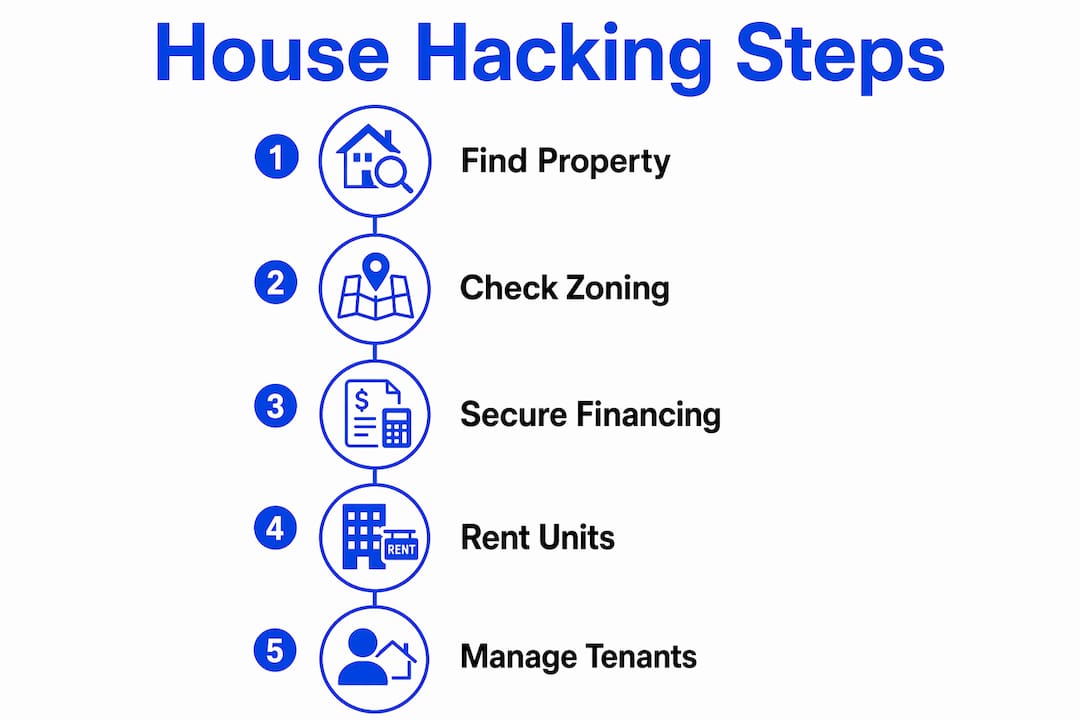
House hacking is defined as buying a 1–4 unit property or a single-family home with rentable space, living in one section, and renting out the rest to offset or eliminate your housing costs. This owner-occupied rental strategy sits at the intersection of real estate investing and personal finance, making it one of the most accessible entry points for building long-term wealth. Unlike passive income housing plays that require significant capital upfront, house hacking lets you use government-backed loans like FHA and VA financing to get started with a low down payment. The rules, lender expectations, and tax implications have all sharpened in 2026, and knowing them before you buy is what separates a profitable setup from an expensive mistake.
What is house hacking and which properties qualify?
House hacking is the practice of living in part of a property while renting out the remaining units or rooms to generate rental income. The industry term for this arrangement is “owner-occupied rental,” and lenders treat it differently from pure investment properties, which is exactly what makes it powerful.
Eligible property types fall into three categories:
Multifamily properties (2–4 units): Duplexes, triplexes, and fourplexes are the classic house hack vehicle. You live in one unit and rent the others. Each additional unit adds rental income potential and builds your experience as a landlord.
Single-family homes with ADUs: An accessory dwelling unit (ADU) is a self-contained living space on the same lot, such as a garage apartment or basement suite. ADUs give you a separate rental without sharing walls with tenants.
Single-family homes with spare bedrooms: Renting individual rooms is the lowest-cost entry point. It requires less capital but means sharing common spaces with tenants.
Location drives everything in this strategy. Stable rental demand exists in college towns, medical hubs, urban cores, and dense suburbs. These markets keep vacancy rates low and give you pricing power when setting rent.
Before you make an offer, check local zoning laws. Some municipalities restrict ADU construction or limit the number of unrelated occupants in a single-family home. Landlord-tenant laws also vary by state, and they govern everything from security deposit limits to eviction timelines.

Pro Tip: Run the numbers on a fourplex before defaulting to a duplex. Three rental units covering your mortgage gives you far more financial cushion than one, and FHA financing applies to all 1–4 unit owner-occupied properties.
Property Type | Down Payment (FHA) | Rental Units Available | Best For |
Duplex | 3.5% | 1 | First-time investors |
Triplex | 3.5% | 2 | Moderate cash flow goals |
Fourplex | 3.5% | 3 | Maximum income offset |
SFH with ADU | 3.5% | 1 | Privacy-focused investors |
How do you finance a house hack in 2026?
FHA loans are the primary financing tool for owner-occupied multifamily properties. They require as little as 3.5% down on 1–4 unit buildings, provided you live in one of the units as your primary residence. That low barrier makes FHA the most common path for first-time house hackers entering real estate investing.
Veterans have an even stronger option. VA loans support house hacking for eligible service members and require zero down payment on qualifying multifamily properties. That means you can acquire a duplex or triplex with no money down and immediately offset your mortgage with rental income.
Lender expectations have tightened considerably in 2026. Financial strength, credit score, cash reserves, and debt-to-income ratio are all examined strictly. Lenders now require borrowers to demonstrate the ability to carry the full mortgage without relying on perfect rental occupancy. That shift reflects a move away from creative income projections toward documented financial stability.
Key financing requirements to prepare for:
Credit score: Most FHA lenders want a minimum of 580 for the 3.5% down option.
Debt-to-income ratio: Keep total monthly debt payments below 43% of gross income.
Cash reserves: Lenders want to see reserves beyond the down payment and closing costs.
Rental income assumptions: Lenders may allow a portion of projected rental income to count toward qualification, but they will not accept optimistic projections.
Conventional loans are available for house hacking but require higher down payments, typically 5–15% for owner-occupied multifamily. The tradeoff is no mortgage insurance premium after reaching 20% equity, which improves long-term cash flow.
Pro Tip: Build your cash reserves before applying. Lenders in 2026 want to see that you can cover several months of mortgage payments independently of tenant rent. Thin reserves are one of the top reasons house hack applications get denied.
A conservative financial approach means budgeting for vacancies and unexpected repairs from day one. Assume one month of vacancy per unit per year when projecting income. That single assumption prevents most of the financial surprises that derail new landlords.
What are the legal and tax rules for renting part of your home?
Renting a room or unit in your home is a landlord-tenant relationship, not a roommate arrangement. That distinction matters legally. A formal, written lease is required to comply with landlord-tenant laws and avoid Fair Housing Act violations. Generic online templates carry real risk. A lease reviewed by a local real estate attorney costs a few hundred dollars and protects you from unenforceable terms and eviction complications.
The Fair Housing Act prohibits discrimination based on race, color, national origin, religion, sex, familial status, and disability. These rules apply even when you share the property with tenants. Ignorance of the law is not a defense, and violations carry significant financial penalties.
On the tax side, the IRS requires you to report rental income on Schedule E. Expenses must be allocated between personal and rental use based on the percentage of the property rented and the days it is used for each purpose. Deductible rental expenses include mortgage interest, property taxes, insurance, repairs, and depreciation, but only the rental portion qualifies.
“Rental expenses cannot exceed gross rental income when personal use exceeds the IRS threshold. Track every expense from day one.” — IRS Topic 415
The IRS provides one notable exception. Renting fewer than 15 days per year means you do not need to report that rental income at all. This rule applies to short-term hosting situations, such as renting your home during a major local event, and it removes all tax complexity for occasional rentals.
For international context, the UK’s Rent-a-Room Scheme allows owner-occupiers up to £7,500 tax-free in rental income per tax year from furnished rooms in their primary home. No equivalent blanket exemption exists in the U.S., which makes proper expense tracking and Schedule E reporting non-negotiable for American house hackers.
Tracking rental property expenses from the first month of ownership simplifies tax filing and protects your deductions if the IRS ever asks questions.
How do you set up and manage your house hack successfully?
Getting the property ready before your first tenant moves in prevents the most common early problems. Work through these steps in order.
Complete all necessary repairs. Fix anything that affects habitability: plumbing leaks, electrical issues, HVAC function, and exterior security. Deferred maintenance becomes a landlord liability once tenants occupy the space.
Meet safety and compliance requirements. Install working smoke detectors and carbon monoxide alarms in every unit. Confirm that your property meets local habitability codes. Failure here creates legal exposure and endangers tenants.
Set the right rent. Research comparable rentals in your neighborhood using current listings. Price at or slightly below market to attract qualified tenants quickly. A vacant unit earns nothing.
Screen tenants thoroughly. Run credit checks, verify income (aim for tenants earning at least three times the monthly rent), check rental history, and contact previous landlords. Tenant quality determines your experience as a landlord far more than any other factor.
Use a professionally reviewed lease. The lease must specify rent amount, due date, late fees, lease duration, rules for shared spaces, and the process for handling maintenance requests. Enforcement consistency is critical. Informal leniency on late payments creates legal complications if you ever need to pursue eviction.
Set up a separate bank account for rental income. Mixing rental income with personal funds creates accounting headaches and complicates tax filing.
Build a maintenance reserve. Set aside a portion of monthly rent, typically 5–10%, for repairs and capital expenditures. Roofs, water heaters, and appliances fail without warning.
Key ongoing management priorities:
Respond to maintenance requests within 24 hours. Slow responses damage tenant relationships and can create legal liability in some states.
Document everything in writing, including repair requests, payments received, and any lease violations.
Review rent annually against market rates. Leaving rent flat for years erodes your real returns.
Pro Tip: If you are renting individual rooms in a shared house, create a house rules addendum to the lease covering quiet hours, guest policies, kitchen use, and cleaning responsibilities. Clear rules prevent most conflicts before they start.
Understanding the hidden costs of rental property before you close on a purchase gives you a realistic picture of your actual cash flow, not just the optimistic version.
Key takeaways
Owner-occupied rental investing works when you treat it as a long-term housing strategy backed by disciplined financial planning, not a shortcut to passive income.
Point | Details |
Property selection drives returns | Choose markets with stable rental demand: college towns, medical hubs, and urban cores. |
FHA and VA loans are your best tools | Both allow low or zero down payments on owner-occupied 1–4 unit properties. |
Lenders require financial strength | Cash reserves, credit health, and a realistic debt-to-income ratio determine approval in 2026. |
Legal compliance is non-negotiable | Use a formally reviewed lease and follow Fair Housing Act rules from day one. |
Conservative projections protect you | Budget for vacancies and repairs; never assume perfect occupancy when modeling cash flow. |
The discipline gap is where most house hackers fail
The shortcuts in owner-occupied rental investing are gone. Lenders are stricter, markets are more competitive, and the investors who succeed in 2026 are the ones who treat this as a long-term housing strategy rather than a fast path to passive income.
What I have seen consistently is that investors who buy in strong rental markets, like college towns and medical hubs, and who plan for vacancies from the start, build real equity over time. The ones who struggle bought in weak markets chasing a deal, or assumed their tenants would always pay on time and the unit would never sit empty.
The landlord role is real work. You are responsible for habitability, legal compliance, and tenant relationships. If that does not fit your capacity or personality, passive real estate options exist. But if you are willing to do the work, owner-occupied rental investing is one of the few strategies where you build equity, reduce your housing cost, and gain landlord experience simultaneously. That combination is genuinely hard to replicate elsewhere in real estate investing.
Balancing your willingness for landlord duties against your financial goals is the honest first question to answer before you buy. Get that right, and the rest of the strategy follows logically.
— Main
How 2ndstreetpropertymanagement supports owner-occupied investors
Managing a rental unit while living on the same property sounds straightforward until the maintenance calls start coming in at 10 p.m. and lease renewals need negotiating.
2ndstreetpropertymanagement is built by investors for investors, which means the team understands exactly what a house hacker needs: tenant screening that protects your investment, lease management that holds up legally, and rent collection that stays consistent. For first-time landlords especially, having professional support behind your property management decisions removes the guesswork and lets you focus on building equity. Whether you own a duplex or a fourplex, the right management structure turns a good property into a reliable income asset.
FAQ
What is house hacking in simple terms?
House hacking means buying a property, living in part of it, and renting out the rest to offset your mortgage. It is one of the most accessible entry points into real estate investing because owner-occupied financing keeps down payments low.
Can you use an FHA loan for house hacking?
Yes. FHA loans apply to owner-occupied properties with 1–4 units and require as little as 3.5% down. You must live in one of the units as your primary residence to qualify.
Do you have to report rental income from house hacking?
The IRS requires rental income to be reported on Schedule E. The only exception is renting your property for fewer than 15 days per year, which does not require income reporting under IRS Topic 415.
What is the biggest risk in house hacking?
Vacancy and unexpected repairs are the two most common financial risks. Budgeting for one month of vacancy per unit per year and maintaining a cash reserve of 5–10% of monthly rent covers most scenarios.
Is house hacking worth it in 2026?
House hacking remains a sound strategy in markets with stable rental demand. Lenders now require stronger financial documentation, but the core benefit, using rental income to reduce or eliminate housing costs while building equity, is unchanged.
Recommended
Comments