
Rental Property Insurance Gaps Every Landlord Must Fix

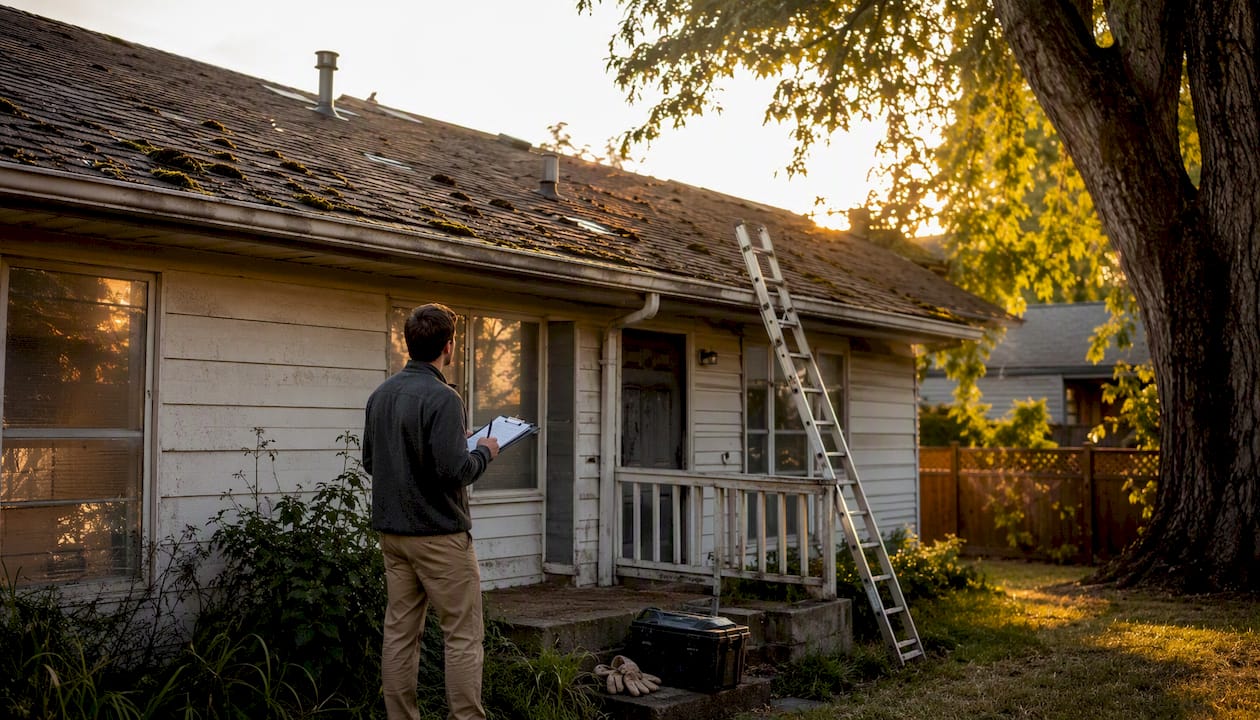
The most common rental property insurance gaps are loss-of-rents limits set too low, actual cash value (ACV) roof settlements, vacancy clause violations, short-term rental exclusions, missing flood and earthquake coverage, liability limits that fall short of real exposure, and named-insured mismatches. According to Vantage Point Risk, these are the predictable failures that cost landlords the most, and a focused coverage review can identify and close every one of them. This article works as a checklist: each section below names a specific gap, explains the claim consequence, and gives you the exact fix.
Do these five things in the next 24–72 hours:
Pull your declarations page and confirm the named insured matches the deed (LLC, trust, or individual).
Notify your insurer in writing if the property’s use has changed (long-term to short-term, owner-occupied to tenant-occupied).
Require every tenant to carry renters insurance with your property listed as an interested party.
Check your loss-of-rents limit — it should cover a full year’s worth of gross rent at current market rates.
Confirm your vacancy clause: know the period of consecutive days that trigger a change in coverage.
Key Takeaways
The most expensive rental property insurance gaps are predictable and fixable, but only if you find them before a claim does.
Point | Details |
Named insured must match the deed | An LLC or trust on the deed must be the named insured; a mismatch can void coverage at claim time. |
Loss-of-rents limit: 12 months gross rent | Set the limit at 12 months of current market rent and review it at every renewal. |
ACV vs. replacement cost matters most on roofs | An ACV settlement on an older roof can leave a five-figure gap; a replacement-cost endorsement closes it. |
STR activity requires insurer notification | Short-term rental use can trigger a business-pursuit exclusion; notify your insurer in writing before listing. |
2ndstreetpropertymanagement reduces claim exposure | Tenant screening, required renters insurance, and documented maintenance coordination keep your policy intact. |
Table of Contents
What are the most common rental property insurance gaps in property damage?
How do liability and rental-income gaps threaten your cash flow?
What exclusions apply to tenant damage, vacancy, and short-term rentals?
Which endorsements and policy forms actually close the gaps?
How do you audit your policy and what should you ask your agent?
What mold and water damage gaps does your policy likely miss?
What happens when legal expenses exceed your liability limits?
Which policy wording misunderstandings create the biggest unintentional gaps?
What are the most common rental property insurance gaps in property damage?
Property-damage gaps are where landlords most often discover their coverage was thinner than they thought, usually at the worst possible moment.
ACV vs. replacement cost: the settlement gap that surprises owners
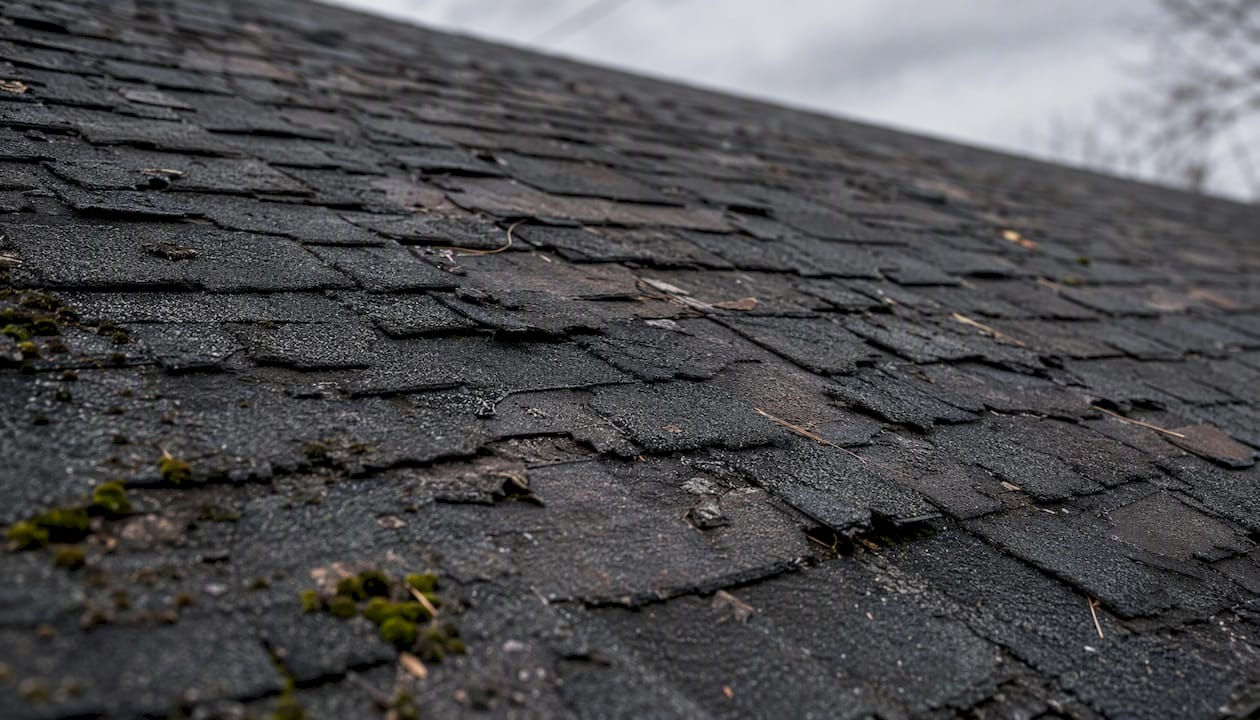
Actual cash value (ACV) settlement means the insurer pays the depreciated value of damaged property, not what it costs to replace it today. On a 15-year-old roof, that gap can easily reach five figures. A $30,000 roof replacement might yield a $9,000 ACV check after depreciation, leaving you to fund the rest out of pocket. Replacement cost value (RCV) coverage closes that gap by paying what the repair or rebuild actually costs, subject to your policy limit. Check your declarations page for the settlement basis on the dwelling and on major systems like HVAC and water heaters. If it reads “ACV,” ask your agent about a scheduled replacement-cost endorsement.
Excluded perils: flood, earthquake, and wear-and-tear
Standard landlord policies exclude flood and earthquake entirely. Flood coverage requires a separate policy, typically through the National Flood Insurance Program or a private carrier. Earthquake coverage requires its own endorsement or policy. Neither is automatic, and neither is cheap in high-risk zones. Wear-and-tear and deferred maintenance are also excluded, and carriers can use documented neglect to deny a claim that would otherwise be covered. A leaking roof that was never repaired is not a sudden loss; it is a maintenance failure, and your insurer will treat it that way.
Ordinance and law: the code-upgrade gap
When a covered loss triggers a rebuild, local building codes may require upgrades that your original policy does not cover. Older properties are especially exposed here. If your 1970s duplex suffers fire damage and local code now requires updated electrical, plumbing, or accessibility features, the cost of those upgrades falls on you unless you carry ordinance and law coverage. Standard landlord policies typically exclude this, and the endorsement is relatively inexpensive compared to the exposure.
Pro Tip: Document your property’s condition with dated photos and a written maintenance log at least once a year. If a claim arises, this record demonstrates that damage was sudden and accidental, not the result of neglect, which is the single most common basis for a denial on a property-damage claim.
How do liability and rental-income gaps threaten your cash flow?
These two gap categories produce the largest financial risk to a landlord’s operating position, and they are the ones most worth sizing correctly before anything else.
Loss-of-rents coverage: what it pays and when it triggers
Loss-of-rents (also called rental income or business-income coverage) reimburses you for rent you cannot collect while the property is uninhabitable after a covered loss. The critical word is “covered”: if the cause of the vacancy is not a covered peril, the loss-of-rents provision does not pay. RentalHousingJournal identifies loss-of-rents limits set too low as one of the most recurring gaps landlords face. A common mistake is sizing the limit based on current rent rather than market rent at the time of a claim, which may be higher. Set the limit at 12 months of gross rent at current market rates, then revisit it annually.
Liability limits and umbrella policies
Most baseline landlord policies carry liability coverage that may be below the level needed for typical claims. A single slip-and-fall lawsuit with medical costs, lost wages, and legal fees can exceed that in a mid-size market. NightlyData notes that many landlord policies carry $300,000–$2M in baseline liability, and operators commonly add umbrella limits of $1M or more. An umbrella policy sits above your primary liability limit and activates once that limit is exhausted. For a landlord with a net worth worth protecting, a $1M umbrella is a low-cost addition relative to the exposure it covers.
Gap | Claim consequence | Fix | When to buy |
Loss-of-rents limit too low | Months of uncollected rent not reimbursed | Set limit at a full year of gross rent; review regularly | At policy inception and every renewal |
Liability limit below exposure | Personal assets at risk after judgment | Raise base limit; add umbrella ($1M+) | Before tenant occupancy |
High deductible | Large out-of-pocket on partial losses | Balance premium savings against reserve capacity | When setting policy terms |
Short waiting period | Rent gap between loss and payout | Confirm waiting period matches your cash reserve | Before signing lease |
Deductible and waiting period gaps
A $10,000 deductible saves premium dollars but means you absorb the first $10,000 of every claim. On a partial loss, that may be the entire claim. Loss-of-rents provisions often include a waiting period (typically 72 hours) before payments begin. If repairs take four months, that waiting period is minor. But if your cash reserves are thin, even a short gap between the loss event and the first reimbursement check can create real pressure. Size your deductible against your actual cash reserve, not against the lowest premium option.
What exclusions apply to tenant damage, vacancy, and short-term rentals?
Tenant-caused damage vs. owner responsibility
Your landlord policy covers the structure and owner-owned appliances. It does not cover your tenant’s personal belongings, and it generally does not cover damage caused intentionally by a tenant. Tenant-caused damage to the structure (a hole in the wall, a broken door) may be covered under your policy, but the claim will likely trigger a deductible and a potential rate increase. The cleaner solution is requiring tenants to carry renters insurance, which shifts liability for their belongings and some damage scenarios back to their own policy. List yourself as an interested party on their renters insurance certificate so you receive notice of cancellation.
Vacancy and unoccupied property clauses
Most landlord policies reduce or eliminate coverage after 30–60 consecutive days of vacancy. The exact trigger varies by carrier and policy form. A property sitting empty between tenants, undergoing renovation, or listed but not yet leased can cross that threshold faster than you expect. When coverage is reduced, perils like vandalism and glass breakage are often the first to go. A vacancy endorsement or a dedicated vacant-property policy restores coverage during those periods, usually at a higher premium. Know your policy’s exact vacancy definition before you need it.
Short-term rental and commercial-use exclusions
Renting your property on platforms like Airbnb or Vrbo can convert what your insurer treats as a residential property into a commercial operation. Homeowners policies are not priced or written for tenant-occupied properties, and a standard HO policy used for a paid short-term rental is even more exposed. Frequent guest turnover, higher foot traffic, and commercial revenue all change the risk profile. Some carriers offer STR endorsements on existing policies; others require a switch to a DP-3 landlord form or a dedicated commercial STR policy. Check your local permit requirements as well, since operating an unlicensed STR can affect both your legal exposure and your coverage validity. For a deeper look at how these two rental models differ in risk and coverage, see this breakdown of long-term vs. short-term rental considerations.
Notify your insurer in writing before listing on any STR platform.
Confirm whether your current policy covers paid short-term stays or explicitly excludes them.
Ask about STR endorsements, DP-3 forms, or dedicated STR policies.
Review local ordinances and permit requirements that could affect coverage validity.
Treat platform host-protection programs as supplemental, not primary coverage.
Which endorsements and policy forms actually close the gaps?
Choosing the right policy form is the foundation. A DP-3 (dwelling policy, open-peril form) is the standard for tenant-occupied residential rentals and covers the structure, loss of rents, and liability. An HO-3 homeowners form is designed for owner-occupied properties and is generally not appropriate once tenants move in. For landlords operating multiple short-term units or commercial-scale operations, a commercial property policy or a dedicated STR policy may be required. Commercial insurance guidance is worth reviewing when your rental activity starts to look more like a business than a passive investment.
Common endorsements that close the most frequent gaps:
Loss-of-rents / business-income endorsement: Adds or extends rental income reimbursement after a covered loss.
Ordinance and law endorsement: Covers code-upgrade costs required during a rebuild.
Sewer and water backup endorsement: Standard policies exclude sewer backup; this endorsement restores it.
Mold limitation endorsement: Extends coverage for mold remediation beyond the standard sub-limit.
Vacancy / occupancy endorsement: Maintains coverage during extended vacancy periods.
Scheduled replacement-cost endorsement: Settles specific items (roof, HVAC) at replacement cost rather than ACV.
Flood policy (separate): Required for flood coverage; available through NFIP or private carriers.
An umbrella policy typically adds $1M in excess liability for a relatively modest annual premium, making it one of the highest-value additions for landlords with meaningful net worth to protect.
Pro Tip: When you add an endorsement, ask your agent to confirm it in writing and send you the updated declarations page. Verbal confirmations do not bind coverage. A written endorsement attached to your policy is the only version that matters at claim time.
How do you audit your policy and what should you ask your agent?
A declarations page review takes about 20 minutes and can reveal gaps that would take months of lost rent or a six-figure judgment to discover otherwise.
Confirm the named insured. The name on the policy must match the deed. If you hold the property in an LLC or trust, the entity must be the named insured, not you personally. Anderson Advisors identifies named-insured mismatch as one of the most common administrative gaps that voids coverage at claim time.
Identify the policy form. Look for DP-1, DP-2, DP-3, or HO designation. DP-3 is the preferred form for most tenant-occupied rentals. An HO form on a tenant-occupied property is a red flag.
Check the dwelling settlement basis. Find “ACV” or “replacement cost” next to the dwelling limit. If it reads ACV, request a replacement-cost endorsement quote.
Verify the loss-of-rents limit. Confirm it covers at least 12 months of gross rent at current market rates. Note any waiting period.
Read the vacancy clause. Find the exact number of consecutive days that trigger a coverage change. Write it down.
List all endorsements. Confirm sewer backup, ordinance and law, and any mold or equipment endorsements are attached.
Check liability limits. Note the per-occurrence and aggregate limits. If they are below $300,000, discuss raising them or adding an umbrella.
Look for sub-limits. Mold, sewer backup, and equipment breakdown often carry sub-limits well below the main policy limit.
Exact questions to ask your agent:
“Does this policy cover paid short-term rentals? If not, what endorsement or policy form does?”
“Is the roof and HVAC settled at ACV or replacement cost?”
“What is the exact vacancy period that reduces or eliminates coverage?”
“Is the named insured on this policy the same entity that holds title?”
“What is the waiting period on loss-of-rents, and what perils trigger it?”
“Does this policy include ordinance and law coverage? If not, what does that endorsement cost?”
After the review, request written confirmation of any coverage change, and schedule a formal review at every renewal and after any renovation or use change.
Why are short-term rentals a distinct insurance risk?
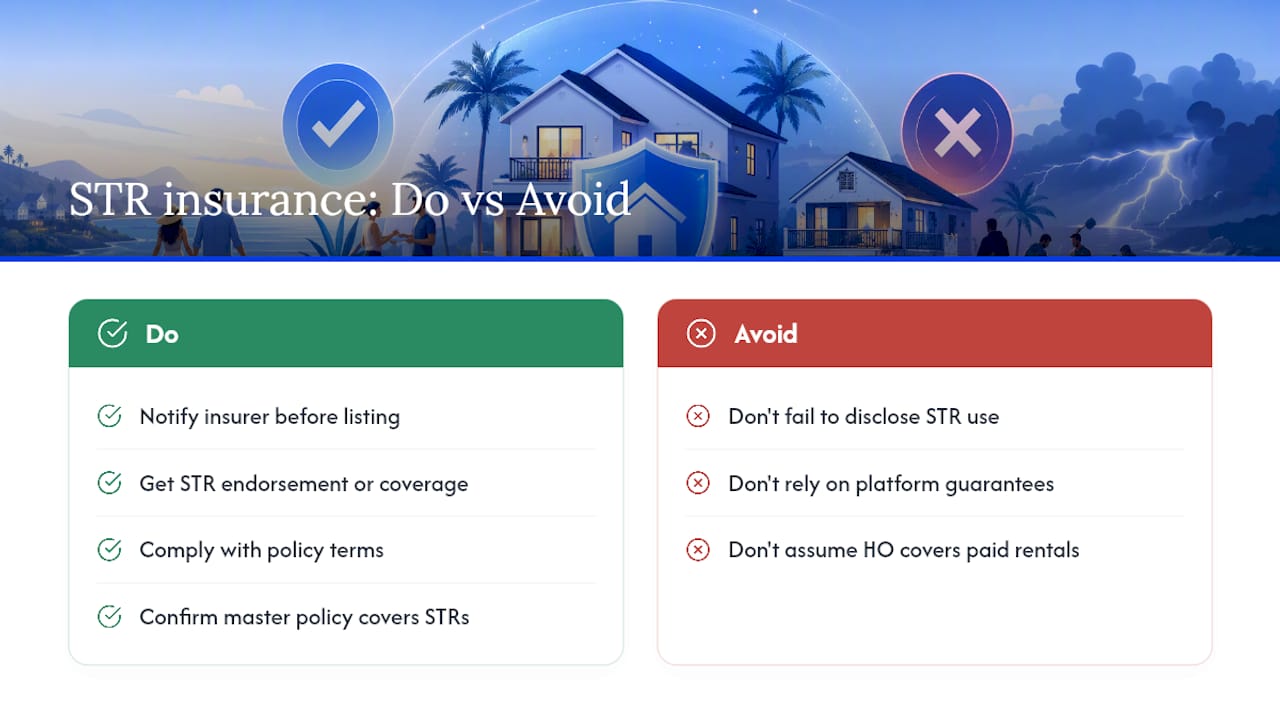
Short-term rental activity commonly changes coverage needs and can trigger denials if the use is undisclosed. Triple-I recommends notifying your insurer, complying with policy terms, and obtaining appropriate coverage or endorsements before listing a property on any STR platform.
Standard homeowners policies often exclude business pursuits. Renting your property for pay, even occasionally, can constitute a business pursuit under your policy’s language, removing coverage for the entire stay and potentially for the period surrounding it. The exclusion does not require intent — it requires only that the activity fits the definition.
Carrier approaches to STRs vary. Some offer an STR endorsement on an existing HO or DP policy for occasional rentals. Others require a full switch to a DP-3 landlord form or a dedicated commercial STR policy for frequent or full-time short-term use. When your rental activity rises to a commercial scale, commercial property insurance guidance becomes relevant.
Platform guarantees are not insurance. NightlyData is direct on this point: Airbnb’s Host Damage Protection and similar programs do not substitute for building coverage or business-income insurance. They are limited, platform-controlled programs with their own exclusions and claim processes. Treat them as supplemental protection at best. For landlords in multi-unit buildings, confirm whether a master policy covers STR activity or explicitly excludes it.
What mold and water damage gaps does your policy likely miss?
Standard landlord policies cover sudden and accidental water damage, such as a burst pipe. They do not cover gradual leaks, seepage, or flooding. Mold that results from a covered water event may be partially covered, but most policies impose a sub-limit on mold remediation, often $5,000–$10,000, which falls well short of a serious remediation job. Mold that develops from a slow leak, poor ventilation, or deferred maintenance is typically excluded entirely.
Sewer and water backup is a separate exclusion on most standard forms. A backed-up sewer line that floods a basement is not a sudden pipe burst; it is a backup event, and without a specific endorsement, your policy will not pay for it. The endorsement is inexpensive relative to the exposure and should be standard on every rental property policy. For properties in flood-prone areas, a separate flood policy through the NFIP or a private carrier is the only way to cover water intrusion from outside the structure. See the detailed guide on rental property flood insurance for coverage specifics.
Does your policy cover HVAC and equipment breakdown?
Standard landlord policies cover damage to systems caused by a covered peril, such as fire or a falling tree. They do not cover mechanical or electrical breakdown of HVAC units, water heaters, or other systems from internal failure. A compressor that burns out in July is a maintenance event, not a covered loss, under a standard DP-3 form.
Equipment breakdown coverage (sometimes called boiler and machinery coverage) is a separate endorsement or policy that covers sudden mechanical or electrical failure of covered equipment. For landlords with newer, higher-value HVAC systems or properties where a system failure would make the unit uninhabitable, this endorsement is worth pricing. The cost is modest, and a single HVAC replacement in a mid-size market can run $5,000–$12,000 or more. Pair this with a documented maintenance schedule, since carriers can deny equipment breakdown claims when records show the system was not serviced.
What happens when legal expenses exceed your liability limits?
Your liability coverage pays for bodily injury and property damage claims up to the policy limit, and it typically includes defense costs. The problem is that defense costs often consume a significant portion of the liability limit before any judgment is paid. A lawsuit that costs $80,000 to defend and results in a $150,000 judgment can exhaust a $200,000 liability limit, leaving you personally responsible for the remainder.
Legal expense coverage beyond liability limits requires either a higher base liability limit or an umbrella policy. Some landlord policies offer a separate legal defense endorsement, but the more reliable solution is a properly sized umbrella. For landlords with multiple properties, the exposure multiplies: each property is a separate liability source, and a single umbrella policy can cover all of them above their respective base limits. Rental property asset protection strategies that combine adequate liability limits, umbrella coverage, and entity structuring (LLC) provide the most complete legal expense protection.
Which policy wording misunderstandings create the biggest unintentional gaps?
The most costly misunderstandings tend to cluster around a few specific terms.
“Loss of use” in a homeowners policy is not the same as “loss of rents” in a landlord policy. Loss of use pays for your own living expenses if you are displaced from your primary residence. Loss of rents pays you the income you lose when a tenant cannot occupy the property after a covered loss. Landlords who carry an HO policy on a rental property often assume loss-of-use coverage functions as rental income protection. It does not.
“All-risk” or “open-peril” does not mean all perils are covered. It means all perils are covered except those specifically excluded. Flood, earthquake, wear-and-tear, and intentional acts are excluded on virtually every open-peril form. The label sounds comprehensive; the exclusions list tells the real story.
“Replacement cost” on personal property does not automatically apply to the dwelling. A policy can settle personal property at replacement cost while settling the dwelling at ACV, or vice versa. Read both sections of the declarations page separately.
Named-insured errors are administrative but consequential. If the property is titled in an LLC and the policy names you personally, the insurer may deny a claim on the grounds that the named insured has no insurable interest in the loss. This is a low-cost fix with a high-cost consequence if ignored.
How does your property’s location affect coverage gaps?
Geographic location shapes which gaps are most urgent. Properties in FEMA-designated flood zones carry mandatory flood insurance requirements for federally backed mortgages, but landlords without such mortgages can and do skip flood coverage, sometimes until a claim makes the gap obvious. Properties in California, the Pacific Northwest, or the New Madrid Seismic Zone face earthquake exposure that standard policies exclude entirely.
Coastal properties in hurricane-prone states often face wind and hail deductibles that are percentage-based rather than flat-dollar amounts. That is a materially different exposure than a $1,000 flat deductible, and many landlords do not notice the difference until they file a claim.
Local ordinances also vary. Some municipalities require landlords to register rental properties, carry minimum liability limits, or comply with specific habitability standards. Operating outside those requirements can affect both your legal standing and your coverage. Review rental property disclosure requirements for your jurisdiction before assuming your current policy structure is compliant.
The coverage review that actually protects your investment
Most bad claim outcomes do not result from having no policy. They result from a narrow sub-limit, an exclusion, or an administrative mismatch that removes coverage at exactly the moment it is needed. That pattern repeats across every property type and every market. The fix is not a more expensive policy; it is a more precise one.
The right priority order is this: size your loss-of-rents limit and liability coverage first, because those two gaps produce the largest financial damage. Then address the property settlement basis (ACV vs. replacement cost) and vacancy rules, which are the most common administrative traps. Endorsements for sewer backup, ordinance and law, and mold come next, followed by location-specific perils like flood and earthquake.
A property management relationship changes this calculus in a practical way. When a manager requires renters insurance from every tenant, coordinates maintenance on a documented schedule, and flags vacancy periods before they cross the policy threshold, the number of claim-triggering events drops. Tenant screening reduces the likelihood of intentional damage. Maintenance coordination reduces the likelihood of a gradual-damage exclusion being applied. These are not insurance products; they are operational practices that keep your policy intact and your claims record clean.
How 2ndstreetpropertymanagement helps you close these gaps
Owning rental property in Southern New Jersey means managing real exposure: vacancy windows, tenant turnover, aging systems, and local permit requirements that can affect your coverage. 2ndstreetpropertymanagement was built by investors for investors, and the services we provide map directly to the gaps this article covers.
We require renters insurance from every tenant and list the property owner as an interested party. We coordinate maintenance on a documented schedule, which protects your policy’s coverage against gradual-damage exclusions. We manage vacancy periods actively, reducing the risk of crossing your policy’s vacancy threshold. And we handle leasing and tenant screening in ways that reduce the liability exposure that makes adequate limits so important. For landlords who want a structured approach to protecting their rental property investment, a conversation with our team is a practical next step. Reach out at 2ndstreetpropertymanagement to schedule a consultation and get a clear picture of where your current coverage and management practices stand.
Sources
This article is general information, not a substitute for advice from a qualified financial advisor. Consult a qualified financial professional about your own circumstances before acting on anything here.
Recommended
Comments