
California Rental Laws: What Landlords & Tenants Must Know

California rental law rests on three pillars: the Tenant Protection Act caps most annual rent increases at the lower of 5% plus local inflation or 10%, landlords may only evict for a legally defined “just cause,” and security deposits must be returned within 21 calendar days of move-out. These rules come from AB 1482 and California Civil Code Section 1950.5, with enforcement guidance published by the California Department of Justice and the Department of Real Estate. Local ordinances often layer stricter protections on top.
Before you sign a lease, serve a notice, or make a rent decision, take these three steps:
Check whether your city or county has its own rent-control or just-cause ordinance
Keep every notice, receipt, and repair request in writing
Photograph move-in condition before a tenant takes possession
Key Takeaways
California rental law sets a statewide floor on rent caps, eviction cause, and deposit rules, but local ordinances and 2025–2026 legislative changes now require closer, more frequent compliance checks.
Point | Details |
Rent caps have a formula | AB 1482 limits most increases to 5% plus CPI or 10%, whichever is lower, over 12 months. |
Eviction needs just cause | Landlords must cite a legally recognized reason and follow strict notice and court timelines. |
Deposits return in 21 days | Landlords must return deposits or send an itemized deduction statement within 21 calendar days. |
UD response time doubled | Tenants now have 10 days, not 5, to respond to an eviction summons as of 2025. |
Local rules can add protection | Always check city or county ordinances, since they can exceed state minimums. |
This article is general information, not a substitute for advice from a qualified lawyer. Consult a qualified legal professional about your own circumstances before acting on anything here.
Table of Contents
What Are California Rental Laws, and Who Do They Cover?
California rental laws split into two layers: statewide statutes that set a floor, and local ordinances that can raise it. The state floor comes primarily from the Tenant Protection Act (AB 1482) and the Civil Code, which govern rent caps, eviction cause, deposits, and habitability for most residential rentals statewide.
Local governments can go further. Cities like Los Angeles, San Francisco, and Oakland have their own rent boards, registration requirements, and just-cause standards that exceed the state minimum. When state and local rules conflict, the more tenant-protective rule usually controls for that jurisdiction.
Here’s how to confirm what applies to your property:
Search your city or county name plus “rent control ordinance” or “rent board.”
Check whether your unit is registered with a local rent board, since unregistered units can lose legal protections in disputes.
Review the municipal code section on evictions, which sometimes adds notice requirements beyond state law.
Pro Tip: Bookmark your local rent board’s calendar. Many cities publish annual allowable rent-increase percentages every summer, and missing that update is one of the most common ways landlords accidentally overcharge.
How Do Rent Increases Work Under California Law?
The Tenant Protection Act caps rent increases for covered units at the lower of 5% plus the regional Consumer Price Index change, or 10%, over any 12-month period. That formula applies statewide unless your local ordinance sets a lower cap.
Not every unit is covered. AB 1482 excludes single-family homes not owned by a corporate entity or REIT (with proper notice to the tenant), condos, and buildings less than 15 years old, among other categories. Confirming coverage means checking the building’s certificate of occupancy date, ownership structure, and whether any deed restrictions apply.
Notice timing matters as much as the percentage:
Increases of 10% or less within 12 months generally require 30 days’ written notice.
Increases above 10% (only possible where the unit is exempt from AB 1482) require 90 days’ notice.
The 12-month lookback counts cumulative increases, not just the most recent one, so stacking two smaller increases can still trigger the higher notice threshold.
The DOJ’s tenant fact sheet tracks statewide rent caps through July 31, 2026, and remains the fastest way to verify the current percentage before you send a notice.
What Counts as Just Cause for Eviction in California?
Landlords can only remove a tenant for a reason the law recognizes as “just cause.” That short phrase carries enormous weight: it means a landlord cannot terminate a tenancy simply because a lease term ends or because they’d prefer a different tenant.
Just cause falls into two buckets. “At fault” causes include nonpayment of rent, a lease violation, or criminal activity on the property. “No fault” causes include owner move-in, permanent removal from the rental market (an Ellis Act withdrawal), or substantial remodel. Owner move-in and substantial remodel carry extra statutory conditions, including relocation assistance and, for remodels, proof the work actually requires the unit to be vacant.
Notice and court timelines follow a strict sequence:
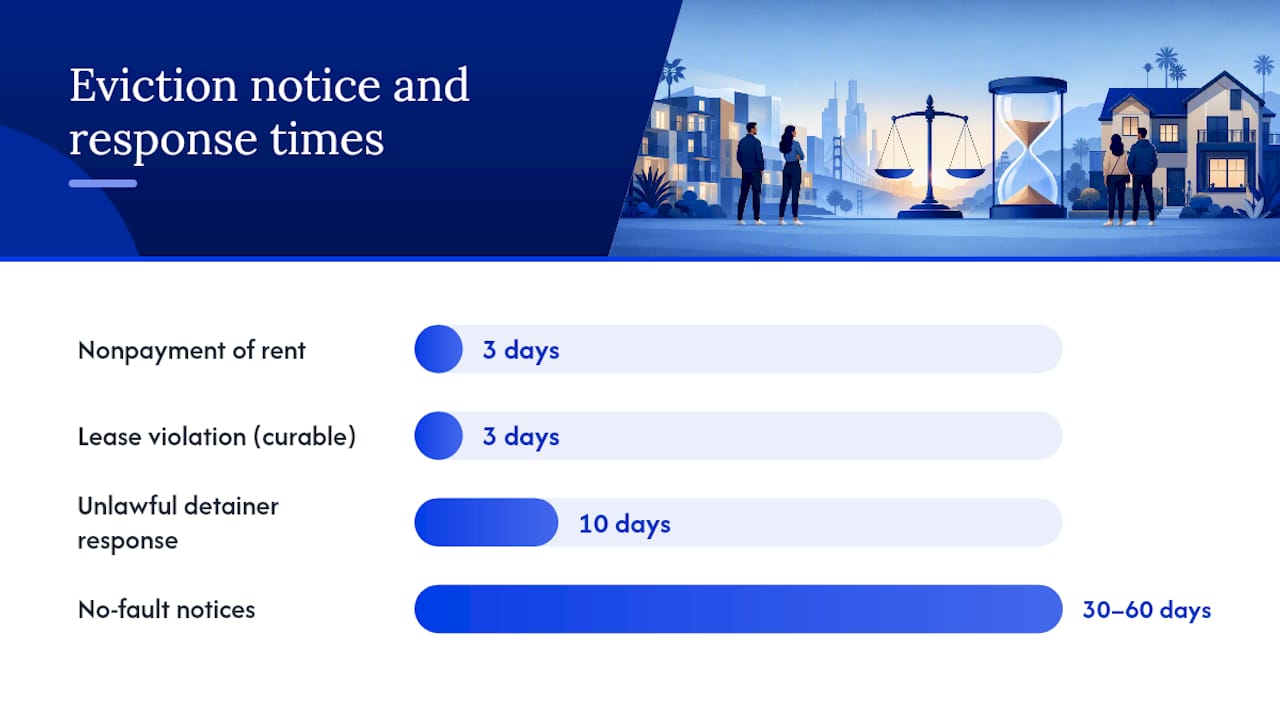
Nonpayment of rent: a 3-day notice to pay or quit.
Lease violation (curable): typically a 3-day notice to cure or quit.
No-fault causes: a 30-day or 60-day notice depending on tenancy length.
Unlawful detainer response: as of 2025, tenants now have 10 days (up from 5) to respond after being served with an eviction summons, a change tied to recent DRE guidance on court procedure updates.
A landlord cannot force a tenant out by shutting off utilities, changing the locks, or removing belongings. The DOJ is explicit that self-help eviction is illegal, and a tenant subjected to it may be entitled to damages regardless of how the underlying dispute turns out.
If you’re a tenant facing a lockout, document the date and call your local police non-emergency line, then contact legal aid the same day.
How Much Can a Landlord Charge for a Security Deposit?
Most landlords can charge up to one month’s rent as a security deposit, but qualifying small landlords, natural persons or single-member LLCs owning two or fewer rental properties totaling four units or fewer, may collect up to two months’ rent. Regardless of the amount, the deposit must be returned, or accompanied by an itemized statement of deductions, within 21 calendar days after the tenant moves out.
Deductions are limited to three categories:
Unpaid rent owed at move-out
Cleaning necessary to return the unit to its move-in condition
Repairs for damage beyond ordinary wear and tear
A landlord who deducts for normal wear and tear, worn carpet after years of tenancy, faded paint, minor scuffs, risks a bad-faith deposit claim, which can carry penalties beyond just returning the money.
Picture a tenant who moves out after three years. The landlord photographs a cracked tile and a stained countertop, attaches a contractor’s itemized invoice, and mails the statement with the remaining deposit balance on day 19. That’s a defensible deduction. Guessing at a “cleaning fee” with no receipt, on the other hand, invites a dispute.
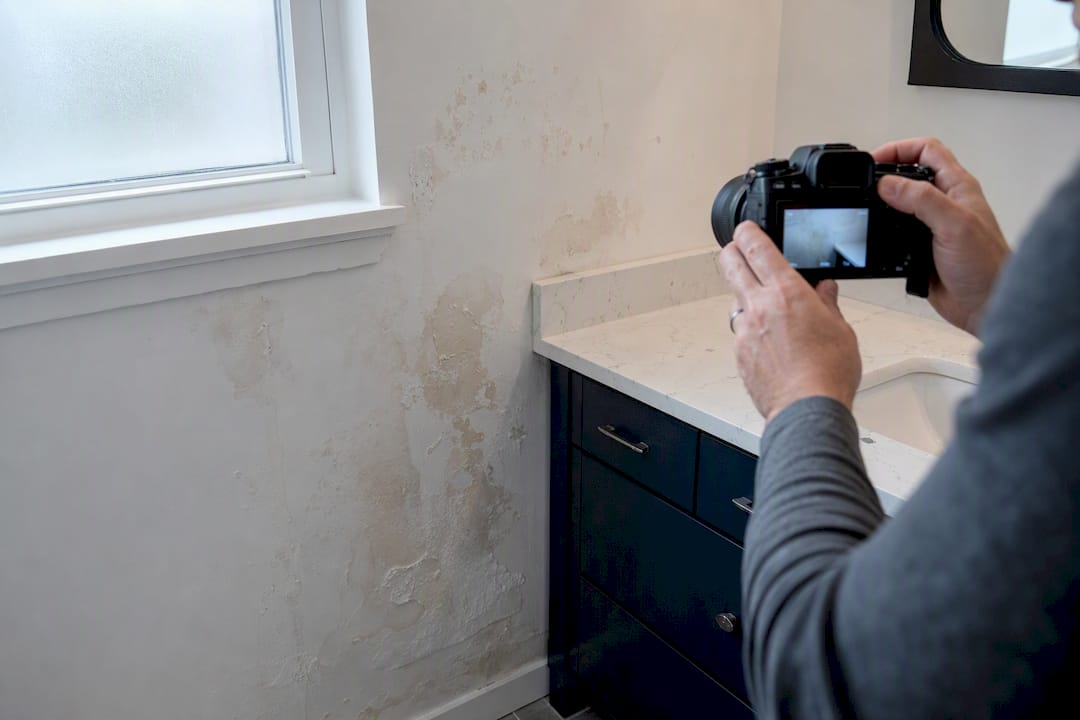
Pro Tip: Do your move-in and move-out inspections with the same checklist and the same camera angles. Side-by-side photos are the single most persuasive piece of evidence in a deposit dispute.
What Makes a Rental Unit Legally Habitable?
California law requires every rental to meet basic habitability standards under state and local housing codes, covering working plumbing, adequate heat, safe electrical systems, and, under AB 628, a functioning stove and refrigerator in units where the law requires them.
Common habitability failures that demand prompt landlord action include:
No hot water or heat
Persistent pest infestations, including bed bugs
Mold growth or active roof leaks
A broken stove or refrigerator where AB 628 applies
Faulty locks or broken windows affecting security
Tenants should put repair requests in writing, keep dated copies, and contact the local code enforcement or housing agency if a landlord doesn’t respond within a reasonable time, generally 30 days for non-urgent issues, sooner for anything affecting health or safety.
Repair-and-deduct and rent withholding exist as remedies, but they carry real risk if used incorrectly, so tenants should treat them as a last resort after written notice, not a first move. Landlords managing multiple units should build their own maintenance obligation checklist so repair timelines never become the reason a habitability dispute escalates.
When Can a Landlord Charge an Application or Screening Fee?
Screening fees are only lawful when the landlord actually performs a screening process, an application fee charged for a unit that’s already been rented, or never seriously offered, is not permitted.
A compliant screening process generally includes:
A written screening policy applied consistently to every applicant
A receipt showing the actual cost of the credit or background check
Nondiscriminatory criteria applied the same way regardless of protected class
Limited use of criminal history, since blanket bans on applicants with certain convictions can violate fair housing rules
Any fee collected beyond the cost of screening should count toward, or be refunded from, the security deposit rather than kept as separate revenue. Landlords building a tenant screening checklist should treat consistency, not just legality, as the goal: the same criteria for every applicant is what protects you if a denied applicant later claims discrimination.
What Fair Housing Protections Do California Tenants Have?
California law prohibits housing discrimination based on race, religion, disability, familial status, immigration status, gender identity, and source of income, meaning a landlord cannot refuse an applicant simply because they pay with a Section 8 voucher.
Unlawful actions include refusing to accept a housing voucher, denying a reasonable accommodation request for a disability without any review process, or applying screening criteria more strictly to applicants of a particular background. A landlord who denies a wheelchair ramp modification outright, without even evaluating the request, is a textbook example of a reasonable-accommodation violation.
Tenants who suspect discrimination should document the interaction and file a complaint with the California Civil Rights Department. Landlords protect themselves the same way they’d defend any other claim: written policies, consistent application across every applicant, and a documented process for reviewing accommodation requests promptly.
Pro Tip: Never respond to an accommodation request verbally only. A short written acknowledgment, even “we’re reviewing your request and will respond within X days,” creates the paper trail that protects you later.
What Changed in California Rental Law for 2025–2026?
The biggest operational shift is the unlawful detainer response window, which grew from 5 to 10 days, giving tenants more time to respond to an eviction summons before a default judgment can be entered. Several other bills reshape day-to-day compliance:
AB 628 requires a working stove and refrigerator as part of habitability in covered units, with specific exceptions written into the bill text.
AB 2747 requires landlords of certain larger properties to offer tenants the option to have on-time rent payments reported to credit bureaus, a change worth understanding through the lens of rental income reporting practices.
Updated deposit-related provisions clarify itemized statement and digital-return procedures for landlords who return deposits electronically.
Lock-change protections limit when and how a landlord can change locks during an active tenancy dispute.
Practitioners who treat AB 1482 as a floor rather than the whole picture avoid the most common compliance mistake: assuming state law is the only law that applies to a given property.
Update your lease addenda, notice templates, and intake forms now rather than waiting for a dispute to reveal the gap.
What Should You Do if a Rental Dispute Arises?
Start by preserving records: every text, email, notice, and photo related to the issue. Respond to any legal notice in writing and on time, since missing a deadline can forfeit rights you’d otherwise have.
Before heading to court, check whether local mediation is available. Many California counties fund free or low-cost mediation programs for landlord-tenant disputes, and mediation often resolves issues faster and cheaper than litigation.
Useful official resources include:
The DOJ’s tenant guidance page for a plain-language overview of rights
The DRE’s Landlord-Tenant Guide for procedural detail
Judicial Council eviction summons and response forms, required for any unlawful detainer filing
Local legal-aid organizations, which often handle both eviction defense and habitability complaints
Disaster-related habitability claims (after a fire, flood, or utility failure) are generally treated with the same urgency as any other serious habitability failure, but timelines can shift depending on local emergency declarations, so check with local housing authorities when a declared disaster is involved.
Which Landlord Practices Actually Reduce Legal Risk?
Every dispute we see traces back to one of a handful of preventable gaps. Close them before they cost you:
A written, signed lease with clear terms, no verbal side agreements
Move-in condition documented with dated, timestamped photos
Standard notice templates reviewed for current statutory language
The same screening criteria applied to every applicant, every time
A record-retention policy that keeps lease files, notices, and repair logs for years, not months
When collecting applicant data, stick to income verification, rental history, and credit and background checks relevant to tenancy. Avoid asking about immigration status or anything unrelated to the ability to pay rent and maintain the property.
Pro Tip: Run a quarterly compliance audit against your local rent board’s calendar. Rent caps, registration deadlines, and notice requirements shift often enough that an annual check isn’t frequent enough.
Why Documentation Is the Real Compliance Strategy
The landlords who avoid costly disputes aren’t the ones who know every statute by heart. They’re the ones who write everything down, the lease terms, the repair requests, the move-in photos, before a disagreement ever starts.
We’ve seen a single move-in photo checklist prevent what could have become a drawn-out deposit dispute, simply because the documentation left no room for argument. That’s the pattern worth building into every property you manage.
Sources
Recommended
Comments